
Podcasts
Cynthia Bourgeault: The Christian Contemplative Tradition and the Practice of Centering Prayer
The radical theologian talks about Jesus as a wisdom teacher and a master of the transformation of consciousness, the practice of ‘self-emptying’ and Centering Prayer as vehicles for this transformation, her understanding of Mary Magdalene, and the transitional nature of our times: ‘We’re basically stuck in a very, very difficult birth canal…’
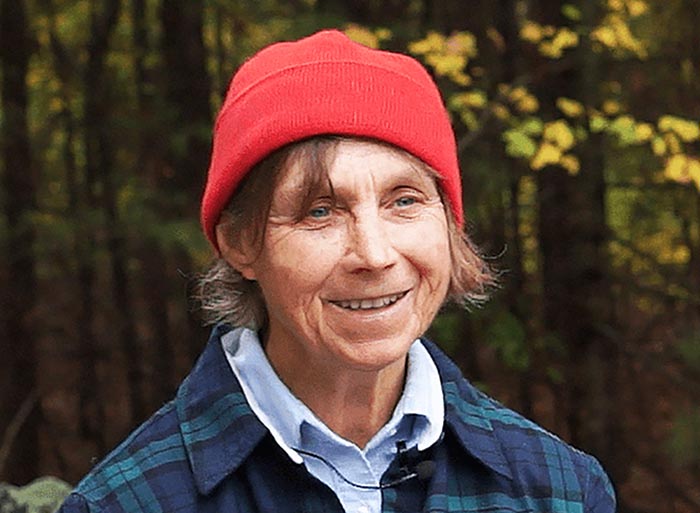
An Interview with Cynthia Bourgeault
Transcript
Nick: Hello and welcome to the Beshara Magazine podcast. I’m Nikos Yiangou, podcast editor for the magazine, and I’m joined today by my fellow editor, Peter Huitson. Hello, Peter.
Peter: Hello, Nick.
Nick: Today we interview Cynthia Bourgeault, Episcopal priest, writer and internationally known retreat leader who has been described as ‘a modern-day mystic’. Her life work has been the recovery of the Christian contemplative and wisdom paths, very much influenced by the recovery of the Gnostic Gospels. She has also been deeply influenced by people like Gurdjieff, Tielhard de Chardin, Jean Gebser and Ken Wilber’s integral approach, who see human consciousness as constantly developing. She has authored numerous books, including Eye of the Heart, The Wisdom Jesus, and The Meaning of Mary Magdalene. Her latest is on the 20th century contemplative, Thomas Keating, whose practice of meditation and Centering Prayer she closely follows. Her works and words have sparked controversies and many debates, and with her latest blogs, she shows no sign of slowing down.
Nick: Hi Cynthia. Hello. How are you?
Cynthia: Oh, we’re just fine. Thank you.
Nick: One of the great contributions you’ve made is this focus on contemplative Christianity, and particularly the practice of prayer as a vehicle of transformation to realise our full humanity. So if it’s okay with you, we’ll like to make that the focus of our interview to start with.
Cynthia: Certainly.
Nick: Great. All right. Well, let’s jump in. So you say that the contemplative tradition in Christianity, which was largely lost around the third to fourth centuries, has now been revived in the 20th thanks to the groundbreaking work by Christian contemplative such as Thomas Merton, Thomas Keating and others. And you’ve added your own ideas to the stream that you call ‘the wisdom tradition’, which you say has always been native to Christianity and which is now being recovered, thanks in no small part to the discovery of the Gnostic Gospels. So could we start out by having you explain what was lost and what is different about this new breakthrough understanding of Christianity?
Cynthia: Well, I think what was lost was really the insight that Jesus was a teacher and a catalyst of the transformation of consciousness in his era. This is really the best sort of buttonhole to pigeonhole him in if you’re going to do one. And that what he was passionately interested in was pointing out to people how they were caught in a hall of mirrors that’s characteristic of the state of consciousness that human beings sort of normally live at, and to introduce something that has a variety of different names: the fashion is to call it non-dual consciousness nowadays, borrowing from the Eastern religions, where I think it means something a little bit different. But it’s definitely… You know, some of the people call it integral consciousness – a term first coined by Jean Gebser, the Swiss philosopher, to suggest that something kicks in that gives people a deeper depth and consciousness that lets them escape from the sort of limitations of the operating system of the mind. And so people first experience Jesus as a person who woke them up. This is what comes through the Gospel. And what also comes through the Gospel is the strong sense that this capacity for awakening, and the jolt to the state, is present even vicariously in the teachings without the person there.
So for the early Christians, Jesus was a master of a transformation of consciousness. This is, by definition, a wisdom teacher. And I think what the Gospel of Thomas in particular does is to accentuate this. The use of the term Gnostic Gospels I myself am not totally comfortable with because it was always sort of a retrogression and a slightly pejorative term, which was first applied out of a wrong sort of sense of them: that these were later gospels that represented a falling away from the original teaching. And it only looked like that because the original teaching was already ossified in the wrong direction at the time that they were discovered. So the Gospel of Thomas is a straight up collection of wisdom, transformational sayings. And it overlaps with the material in the Gospels that everybody is familiar with, but it puts an entirely different spin on them: that he’s not teaching nice little moral lessons or things, but that he’s really straight out to collapse the structures that trap us in our manners of thinking and our rat traps of thinking and introduce us to what you might call direct three-centred perception. So the Gospel of Thomas just makes this really, really clear. And the others are a mixed bag; some of them are really sort of fanciful and superstitious and dramatic and heavily over allegorised. They’re not all at a level. But the Gospel of Thomas is a real keeper and there are a few others that radically change the picture.
So you ask what was lost. And I think that what was really the consensus of some of the finest teachers and Elaine Pagels – Pagels summed it up but many have seen this – [is] that Christianity, probably in the wake of it becoming catapulted to the state religion in the early fourth century, became a religion about Jesus rather than a religion of Jesus. It was about worshipping this wildly unique person. And then all sorts of theological hyperbole was laid on him: that he was begotten, made, born before the years, you know. Some or all of this is true in one level, but you need another tool to get that right. But what it did was to emphasise to people the gap between themselves and Jesus and say: we have to worship him because he was this extraordinary guru that came, and the way you worship him is to believe the right things about him.
So Christianity became packaged in creeds. This will again take place in the fourth century. Institutional hierarchy proliferated to ensure and sort of safeguard doctrinal orthodoxy. So with that, the original fresh, hermetic approach – you know, the original practices of Christianity were really wisdom schools, people in the early deserts, trying to reconnect with this transformational baraka of Jesus and to clear the decks and do the work. So that was what was lost. And of course, once things start to get heavy, they get heavier and heavier and heavier.
So what happened in this modern day-revision – which you can put the name Thomas Merton on because it’s a very familiar name, and he certainly had a catalytic role in this in the 60s, in [challenging] that naming of what Christianity had in these intervening 1000/1500 years come to call contemplation and pictured it as a rarefied gift that could be given to only very humble spirits only at the end of their life, carefully metered by the monasteries that held the franchise on it. Thomas Keating blew, or Thomas Merton blew, all that out of the water and said: no, this is the basic ground of a prayer that gets you out of your mind and gets you out of your transactional relationships with a God that’s perceived to be out there, and actually allows you to go directly deeper into the ground of what is and always is the ground of belonging from which you’re springing.
So in the 70s, movements – grassroots movements – began to grow up in Christianity that essentially took the resurgence of meditation that was happening all over the planet, at that point, driven by the Asian traditions, and simply used it to jump start Christianity’s own hidden and eclipsed tradition. The realisation that what the early desert teachers in Christianity were talking about was most closely approximated by what we nowadays call meditation. And so practices began to develop that would allow Christians to do that within a Christian context, so that you didn’t have to jump ship and become a Buddhist or a Hindu or (God love them) a Sufi. You could, if you wanted, but you didn’t have to. There was the reclamation that this was an indigenous gift of the human species to affirm and claim and grow from our inevitable and unbreakable personal direct connection with bands of intimate understanding higher than our minds.
Nick: You’ve already alluded to the next question about Jesus being a wisdom teacher, in the tradition of great wisdom teachers whose primary concern was the transformation of human consciousness. So in this way of understanding, the kingdom of heaven is transformed to a state of perception available now, not as a future afterlife reward. Can you say a bit more about Jesus’s teachings on kenosis, this Greek word, which means, I think self-emptying. What changes when we shift at a deeper, personal interior level, when we move from a belief -centric institutional approach to a way of direct knowing that is heart based?
Cynthia: Well, the ways of looking at that don’t lie easily within the grasp of mainstream theological language. You have to move around into the languages that have been preserved in the … I think most helpfully nowadays in the language of conscious evolution, to allow you to see what happens. What happens is that back when I was going to seminary, they gave you only two options. Was Jesus a priest or was Jesus a prophet? And, you know theologians like to bat back and forth; it was almost like a kind of theological racquetball where good cases could be made. But the wisdom model was not on anybody’s plate, because people at that time were not thinking that consciousness was something that transformed. It could be purified, it could be redeemed, but it couldn’t be transformed. There was no sense that that we were riding on a moving carpet and that it was moving somewhere. It wasn’t until the early 20th century – with one singular exception in the Western tradition that I’ll talk about if the conversation goes that way – that we really began to get maps that allowed us to see that yes, there is another state of consciousness that more closely resembles direct perception and instantaneous compassion and conscience.
All these things come because you are directly perceiving from oneness. And that doesn’t mean not particular, but it means that you see the light shining through the bits and pieces, and you perceive from that and your actions reflect that. And that more and more of that consciousness, once it was named and identified, people could begin to go back and look at the mystical traditions with fresh eyes and say: oh, so that’s what they were talking about. They weren’t talking about wandering around in the fields and having happy experiences with God. They were talking about a kind of direct perception of reality that occurred at … you know, the easiest way to say it is that it is a higher bandwidth on the ray of consciousness, a higher coherence density of integration. And so that changed things.
So what does kenosis have to do with that? Kenosis has to do with self-emptying. And the word comes directly from a liturgical poem or chant by Saint Paul describing the mind of Christ. And interestingly, Paul says of this: you should have in yourselves the same mind that was seen in Christ. And then he goes on to describe it [saying]: ‘Though his state was that of God (he’s big Jesus Christ you know) yet he did not deem equality with God as something he should cling to. But rather he emptied himself and assuming the state of a slave was born in human likeness.’ [1]
Well, the word the word that Paul used in Greek, the language he was speaking in, for emptying himself was kenosis, self-emptying. So that’s how the term got into the language. And traditionally in Christianity it was assumed to be the emptying of self will – ‘Not my will, O Lord, be done but thine’ – the purging of what they called ‘sinful self-will’. And the construction was very much that human beings, probably because of the little peccadillo in the Garden of Paradise back in the beginning of creation, had sinned, had disobeyed God, were driven out of the kingdom, were evil and were subject to sinful self-will, which meant disobeying God. So that was a thing. So self-emptying was always interpreted as a moral act of self-purification, self-renunciation. And soon [this] fostered a very complex industry of spiritual directors trying to help sort you out. What was your will and what was God’s will? And you can see that the whole thing only makes sense within the completely theistic dualistic separation where God is ‘out there’; God has a will, I have a will, and they tend to go opposite because human beings are evil or tainted with sin. So you have to knuckle under. That way, kenosis equated to surrender and knuckling under.
It wasn’t until the 20th century on the maps of consciousness that people really began to see that the problem is not the self-will. It’s the whole model of the autonomous selfhood that we look at the world through. Because as long as our brain is set up so that we put our interior on the inside and everything else in the world on the outside – so when I say I love God, God becomes an object – as long as we’re doing that, we’re going to get caught in [the idea that] what self-will gives up is simply the renunciation of my choice in the matter about whether to go left or go right, without realising that what’s really being asked is to give up that very restrictive sense of consciousness and all the baggage that goes with it. Because when you have that [restrictive consciousness], you get to have a story; you get to have preferences; you get to have like and dislike; you get to have a strong sense that the future is pulling you somewhere. You get all these perks that allow you to sustain yourself in a completely self-generated story that you’re a discrete separate individual with a personal history with what soon became a soul, which was assumed to be a sort of imperishable bit of gold DNA which is yours and yours only, and that you got at the moment of your conception of birth.
So the whole story went to reifying things, and within that, of course, the renunciation of your own will is as hard as you can get. But in a transformational map – which really includes what you might call a witnessing or a higher selfhood, a real ‘I’ selfhood that’s beyond this – you realise that what’s being asked is to get out of the squirrel cage of your self-constructed story. I remember one story that made a huge [impact]. It was a moment of revelation to me when I was in the midst of a personal struggle; I knew that I was trying to let go of a person in my life that I knew was damaging and not right, and I found this very, very difficult, basically because I’d heaped so much story on it already. This [story] was Tristan and Isolde. All of a sudden there was a day that something went ‘ping’ and whatever is my inner helper said: why don’t you try letting go at the subject pole rather than the object pole. So that rather than letting go of this object and renouncing it and surrendering it in obedience to this God that had another plan for me, what I did is just let go of the self-making system that that was justifying itself by creating this story and the wants and likes. And I could not believe how simple that was, how absolutely effortless and easy. Just step out from behind, like in the great iconic American show, the Wizard of Oz – you know, the little guy in the box who’s saying, I am the great and terrible Oz. Step out from behind the great and terrible Oz, take a deep breath, look at reality as it hits you with fresh air on your face and say: OK, I exist.
So kenosis and a transformational mechanism is really, for me, the bridge between the embattled identified narrative self that we take ourselves to be and the gateway into what will grow – through witnessing presence, stable, witnessing presence – into a … well, the words differ for it in different languages: A higher self is the Gurdjieffian language; [you can say] true self, the real I – but something that is qualitatively different in its perceptual field. And when you perceive things differently, your will follows accordingly.
Peter: Can we move on to talk a little bit about Centering Prayer as the vehicle for enabling this transformation? As you say in your writings, it goes back to the Desert Fathers as well as ‘the cloud’ of the medieval book, The Cloud of Unknowing. As you already said, Christianity has this deep non-dual current within it. And Centering Prayer was then developed by Thomas Keating in the 1980s as helping to enable this sort of transformation. Can you say something about this practice and what’s unique about it and how it impacts the practitioners?
Cynthia: Well, Centering Prayer grew to be a unique and sophisticated, I think, subtle form of entering meditation. Back in the 70s when meditation methods were getting started in Christianity, two methods showed up, in very quick order, one being something called Christian Meditation, which was founded by a Benedictine monk which was classic straight up mantra meditation, very similar to what you receive as gateway training in Eastern practices. You sit down, you say a mantra – for them [it was] Maranatha (Come, Lord Jesus) – and you keep your attention tethered in it for the whole time so that your thoughts don’t dare to wander because they’ve got that ground. And if they start wandering the mantra pulls back.
Centering Prayer started out with that. Sort of. But what the person who actually developed it, who was again a monk, who was one of the monks in Thomas Keating’s monastery, went to for his reference point was this 14th century Christian spiritual classic, The Cloud of Unknowing. And this is a very, very interesting vehicle when you talk about this deep non-dual strain in Christianity. This is your exhibit A. In this 14th century treatise written by an unknown British monk, probably a Carthusian, in a language which was only beginning to be written down, Middle English in the 14th century – this is Chaucer, this is really raw! – what he’s describing there is the earliest known map that I’ve found in Western Christianity of what would later become, under the hands of people like Jean Gebser and Ken Wilber, the structures and levels of consciousness. And what he recognises very, very clearly is that what Christianity was calling ‘contemplation’ is not a state of prayer so much as a structure of consciousness that permits direct perception of the divine.
And so his way of getting this, the author of The Cloud says that there’s a whole bandwidth of prayer which he calls ‘lower contemplative’ and ‘higher active’, which is very much focused around developing your relationship with yourself that you’ve generated narratively – the self we’ve just talked about – and that contemplation goes through breaking that feedback loop. Letting go of the constant whirling of contemplation or of stories and how am I feeling and introspection and practices that reinforce the illusion of a separate, phenomenal self.
So this was the background he was writing out of, and Thomas Keating somehow or another picked that up in his teachings. [He was] my own monastic teacher who took the practice of Centering Prayer and really put it on the map as a grassroots movement. And what he did was to get the basic kenotic flavour of The Cloud of Unknowing thing. Thomas posed it as: rather than giving yourself a mantra to study yourself so your thoughts don’t wander, recognise your thoughts are going to wander in meditation because it’s the nature of the mind. You know, the default mechanism of the brain, as we now call it, is to be constantly sort of spewing out these thoughts. And he says: OK, use them. Every time you find yourself thinking you’re engaged with the thought, you let it go. You don’t cling to it. You don’t hang on to it and take it in and say: oh, I’ve got to stop the prayer because I’ve now got a good piece of insight about myself. He says: let it go, let it go.
So you practice over and over and over again in Centering Prayer this kenotic motion, moving yourself from this clinging. You know: ‘Though his state was out of the God, he did not deem equality with God as something he should cling to’.[1] Let Him go, thought by thought. And another word for letting go is surrendering your thoughts. So in centring prayer, what happens if you come in and your mind is busy and overstimulated and you’re working with a problem and your head aches and everything is: Yuk! You’re not in a good state to do meditation. Hallelujah. You’ve got a lot of raw material because all this comes up. One person in an early retreat said to Thomas Keating: ‘Oh, Father Thomas, I’m such a failure at this prayer. In 20 minutes of sitting here, I’ve had 10,000 thoughts’. And Thomas says: ‘How lovely. 10,000 opportunities to return to God.’ So what he’s doing is positioning this gesture of letting go – letting go as a pathway of returning to God. So surrender becomes the pathway of returning to God.
That’s how it’s spun theologically. When you get yourself under an fMRI and look what happens in the brain when that happens, you are carving a track in the brain that will associate with the surrender, with this moving into a larger and more direct state, the letting go of this attachment. So the prayer is interesting because it works at the level, I believe, of subtle kinaesthetic transformation. It’s actually working with rewiring the neural pathways.
And of course, there’s a huge attitude involved here because we’re doing this in solidarity with Christ. I point out to people every time they manage to let go of even a single thought during the prayer that they’re participating in the mystery of Christ, the Paschal Mystery of Christ, and deepening their capacity to actually act in solidarity with the kenotic mind of Christ. So that helps people a lot who’ve come to think that meditation means being very, very quiet and not having any thoughts and being peaceful or blissful. Centering Prayer says, no, that’s not what meditation means. Meditation means imprinting in yourself deeply, as your default response to any situation, the situation of rather than embracing and defending and hanging on to ‘me’, to go in with openness. Huh! What’s here? And it happens before you can think about it and agree to it, because it’s being imprinted in your body, so your body will know before your mind signs on.
Peter: The effects of this on practitioners – how do they differ from that in a more conventional focused meditation?
Cynthia: Well, what I would say is that one of the mistakes that grassroot movements make about their meditation practice is to think that one practice does everything. I would say that classic meditation practices that give you a mantra and teach you a single point focus are the classic gateway entry because it teaches you to collect your attention so that your attention is not at the mercy of any random thought that comes in. Centering Prayer teaches you surrender. And I think attention and surrender are basically the two joysticks that you use as a human being to navigate conscious transformation.
So Centering Prayer is fabulous on surrender – you learn this attitude of releasing; when in doubt, release at the subject pole, release the baggage you’re clinging to. It teaches you that. But it tends to be weak on attention, particularly at the beginning. Thomas Keating, who basically was the architect of the method, said; Centering Prayer is done not with attention, but with intention. This is deceptive, in a way, because you can’t really pay attention without intention. But in the insistence on letting go of objects of attention – which comes right from The Cloud of Unknowing incidentally – he doesn’t encourage that sharp-edged focus. And in order to realise you’re thinking in the first place and you’ve gotten engaged with this thought, you really have to rely, particularly at the beginning, on the participation of your unconscious willingness to do the practice to remind you.
So basically, at the beginning in Centering Prayer, a lot of time is spent in daydreaming, and what has been, for me, a weakness of the prayer in its first, initial sort of first generational presentation, is that it allowed people to get away with the daydreaming because there wasn’t enough concentration. There was too much theological story: Oh, we’re in the hand of God. We’re you know, it’s bliss. It’s Jesus. And there wasn’t enough: hey folks, this is a very interesting experimental method and what we’re working on is to take away, to replace, the story of yourself. Everybody wanted to go from their false self, which was a neurotic self, to their true self, which was their idealised, cleaned -up version of themselves. And it was still all in story; they were pouring from empty to empty. No-one called the question on that for a long time – that this true self you’re thinking you’re perceiving is essentially a mirage because the mechanism you currently have at this stage to allow you to move toward [it] is always going to trap you at a lower level than your true self is, because you’re going to turn it into something with characteristics and features. Centering Prayer, even though it had the mechanisms there to easily help people out of that trap, didn’t for a long, long time.
And it wasn’t until the last ten years or so of Thomas Keating’s teachings when he sort of went for broke and really just transposed the whole teaching onto a non-dual framework – that he could say these things more directly. So there was a lot of confusion in that people thought that they were coming into Centering Prayer, letting go of their thoughts as sort of tollbooths you paid and in return for that receiving revelations about their unconscious that would give them a better lead on how to create their true self, which was very much envisioned as a new and improved version of themselves. And they didn’t see that what they were doing was that they were destroying the whole mechanism of consciousness that was going to trap them in that.
So what I’m finding nowadays, frankly and very encouragingly, is that for the last 20 years of Thomas’s very, very long life, he really pushed more directly in that direction. And a lot of his students who’ve been around for a long time already had the aptitude built into them, because of the practice, to do this; all they needed was a slightly wider frame. And I’m seeing really some astonishingly rapid and profound maturation among long-time students of the work as they follow Thomas toward his really brilliant and just exquisite efforts to move kenosis out of the domain of my individual will into the one of something is being born in you that you couldn’t even imagine what it was when you first started this practice. But now that it’s there, let’s just ride it. You see this kind of joy that they realise: oh, it’s right here. I can do this. How can I do this? It’s not hard to let go of my early illusions of what my true self was, because what I am becoming I dare not imagine.
I think that was a line from a Rumi poem.[1] You know, ‘I died as a mineral and went on to a vegetable’ and on and on… And the final line is:
And when I die to the angels, what I shall become you cannot yet imagine.[2]
I mean, that nails it. And that’s kind of what people are experiencing there, when finally Thomas’s late teaching catch up with this implicit lived experience based on them, which they didn’t have the languaging to show them the treasure that was right there.
Peter: You’ve just mentioned Rumi, and we were going on to ask you: you talk in your work that you’ve learned from a number of traditions outside Christianity. Can you say something about what you’ve gleaned from other traditions, and are there any in particular that you’d like to mention?
Cynthia: Well, as I’ve said Christianity got hung up, kind of got detained, at what on the current maps of consciousness would be called the ‘rational level of consciousness’, which means that it’s the kind of consciousness that posits as a centre of itself an individual soul who’s on a journey to a destiny. It got really trapped in those essentially dualistic – beautiful but dualistic – theological concepts. So it did not grow a reliable and appreciated integral wing. There have been, of course, many, many exceptions, but they got labelled as mystics, which meant basically weirdos and freaks. So in order to really access and re-access Christianity’s non-dual intuition, it’s very, very helpful to have the brothering and sistering of traditions that have much more unabashedly developed these teachings.
And for me, the most powerful of the two that have been brothers and sisters in that are Tibetan Buddhism and Sufism, that both in their own ways attest to the reality of a whole different, richer, deeper reality beyond the rational constructs that Christianity seems to like swimming in. So Rumi is particularly brilliant. Ken Wilber, at one point in one of his better theorems, pointed out that in every religious tradition, there’s a line which is the whole developmental teaching itself, the whole theology, the whole shebang. And then there’s the level. At every level in an authorised, in a lineage, religious tradition, people are practicing it and understanding it at various levels, different levels of consciousness from the superstitious to the raw, right on up to the most sublimely non-dual. So the point that Ken made, and Thomas Keating exemplified beautifully, is that you are actually closer to people at your level on a different line of religion than you are to people on your line at a different level. And Christianity is seeing that in spades today. When we look at some of the superstitious and magical actings out of Christianity that are going on in the name of being Christian, you really come right back to the tribal levels of consciousness.
So Thomas Keating, back in the 1960s when he became abbot of Saint Joseph’s Trappist Abbey and saw the monks were stuck and couldn’t get out – [that] they’d given their lives to come to be a mystic in a contemplative monastery, but they couldn’t, it was just boring – he started bringing in people to help them. He relied very, very heavily on a Zen Buddhist Roshi. He brought in some Hindus. They taught the whole monastery TM (Transcendental Meditation). Thomas unabashedly outsourced the teaching that Christianity actually had but [which] had become inaccessible by inviting the religions that had better curated this level of their own line to come and help us find ours.
And that’s been great. Rumi is one of the most classically read texts in our Christian wisdom circles because he gets it. He absolutely gets it. And in some ways, Hafiz is even more splendid because he never loses that kind of ironic edge to his teaching. I mean, he’s just so hilarious in … ‘you have not danced too badly, my fallen angel’.[3] He just says things that are not sweet and yet get to the point so gorgeously.
I’ve watched my Christian brothers and sisters wake up. Rumi’s ‘The Guest House’ [4] really is wonderful. It should be in every book on Centering Prayer because it says: welcome them all. Don’t push them away. Don’t you know some guests are going to come into your life. You’re going to have a soul that’s filled with everything and your emotional life is going to have all these kinds of people knocking on your door. So you might as well learn that deep attitude of welcoming which is another variation on the theme of surrender. Rather than pushing it away, you open to it. And as you do that, you put yourself back into that mind that is really the transformational, that is the gateway into that other level of consciousness and selfhood.
Nick: You’ve mentioned Gebser and Wilber and others, and in some of your more recent blogs, you’ve written extensively about the current world situation, using their ideas as a lens with which to look at what is going on and how we might understand the quandaries of modernity, and how this idea of the integral is pulling us towards a more holistic, and a more complete, human unfolding and integration. So what would you like to say about that? I really do appreciate the fact that you are so easily willing to bring in these different lenses and different perspectives from other traditions and other thinkers, and I think this is extremely valuable. And so how should we understand the idea of the integral, and what does it say about the development of humanity as a whole?
Cynthia: Well, I would start by saying, as I applied these lenses in the first place, it’s because I think a lot of the intellectual tradition, like all of the intellectual tradition that I’ve seen in my own country, is basically stuck in a historical frame of reference, which is far too narrow. It goes back 250 years to the founding of the country, maybe 500 years at best to the Renaissance, but it doesn’t get these deeper movements of current. The two that I brought in in my blog were the Gebserian one, which is basically based on structures of consciousness, and the other one was the Teilhardian, which is evolution ever since the planet earth appeared 4.5 billion years ago. And basically they have in common that they take a longer look. The arc is longer. [They] don’t get all fussed out about what’s happening within a 50-year slice.
So of the various maps that I’ve used, the one that has been most enduringly helpful to me is the evolution of consciousness model. But I very, very much like the Gebserian model quantitatively better than any of the modern sort of hybrids that have emerged out of it. Because it’s very grounded and lucid, and many of the models that have come out today have been developmental models – onward and upward and we’re on this new stage. The integral model basically says that the reason that we’re having all this turmoil is because we’re basically stuck in a very, very difficult birth canal between the waning of one structure, the old rational structure, or the mental structure as Gebser calls it, which has dominated thinking and dominated culture and set the cosmovision in the norms for at least 2500 years – right back, in the West, to the ancient Greeks, who set a certain dialectical, philosophical, quantitative, mensural and measurable way of looking at the world that’s dominated the way we think about things. And this is giving way to this integral level which for Gebser, very interestingly, was not onwards and upwards, but downward. It was increasing a capaciousness that didn’t just sort of replace the earlier structures of consciousness with something new and more sparkly, like replacing your automobile, but allowed you to hold each of them – and thus the whole human journey [of] collective evolution of consciousness – in your own being from a deeper, more integrated place. What Gurdjieff, another of my favourites, would call three-centred awareness.
So it really is not just a new level of consciousness so much as a deepening capacity to stay in, to consciously be able to feel, each one of them as they bear on you like oak trees in a forest, without collapsing and bringing something of a quality of heart to it. Gebser also, rather than putting the map on a staircase, which is a classic Western developmental habit, he puts it as a circle floating around a centre. And the centre is origin. And what he says is: origin is present. As a matter of fact, the title of his groundbreaking book was The Ever-Present Origin. The origin is that ever-creative, mysterious, interactive in a kind of way and strangely intimate and accessible, presence of cosmogonic reality. It’s there, but it basically has extended itself outward into created form in the shape of these structures of consciousness, which are collective structures that allow whole sort of civilisations to perceive how this origin is acting and to be in relationship with it.
So the really good news is that it absolutely confirms everything that mystics have been saying from the get go. You know, the divine is right here and directly perceptible and directly fulfillable. My teacher, Thomas Keating, said about that really beautifully: he says that the world we picture with our usual mind isn’t real because an important dimension is missing. He says it’s the fourth dimension that sees the divine entering and leaving with every nanosecond – to be able to actually perceive that we are in a creative cosmogenesis right now.
And so in other words, what’s happening [now] is that what we’re seeing – according to this interpretive map – is the struggle to the death, as it were, between a structure of consciousness that’s really based in finitude, in things having physical, phenomenal reality and in individuals and as a society as a collection and aggregation of individual bits, rather than the other consciousness that grasps relationality directly and sees the individual bits as part of a moving kaleidoscope of a whole process that it can grasp when these other faculties kick in in you. But it doesn’t grasp it as a thought. It grasps it like knowing what the next step is in the tango. So that allows us to see, and that as an American, rather than driving myself to distraction by what looks like the grotesque upending of structures of consciousness and civilisation and polite discourse that have been around for 2500 years, you realise that this is painful but completely consistent with symbols of the disintegration that happens when an old structure of consciousness is losing force.
But I think that what sets my own response off from so many people; I mean, every once in a while you go on a new age magazine and somebody will be emoting about a cosmic convergence or a peace and harmony and it’s all assumed that this new consciousness, because it’s all about oneness, it’s going to be sweetness and light. And, you know, no, absolutely not. You know the simplest theological mistake is to try and arrive at light by eliminating darkness. I mean, until you can grasp the whole polarity and allow it to sting you in your being and to transform it with your tears, you’re not going to see. And these artificial, ersatz kingdoms where everybody comes together and drinks kombucha and smiles and chants and says ‘ain’t love great’ is not what it’s going to be about.
And so I’ve found that all this breathy talk about the new age of the great cosmic breakthrough is basically more of a hindrance than a help. You know, what I want is people that can stand there and weep like the Pieta and hold in their hands the terrific cost at which anything has been gotten, beginning in creation itself. And from there with not all these happy little joys, like it’s a wedding celebration or something, but with a deeper sort of sobriety that we’re moving into revelations that the capacity for joy is probably counterbalanced almost directly by our capacity to bear pain without judgment and without retraction.
Nick: That’s wonderful. Yes. And I think you’ve answered some really interesting questions about how the developmental model, the staircase model, in a way, is kind of a dualistic model. That somehow consciousness grows out of nothing to something, whereas this notion of the ever-present origin is that the oneness, the integral, is already here now, always has been. And what happens is that it unfolds. It doesn’t evolve, so to speak, it unfolds.
Cynthia: Exactly. That’s a beautiful distinction in language.
Nick: I think maybe we have time, if you don’t mind. Cynthia, for one more question.
Peter: Cynthia, we wanted to ask you a bit about Mary Magdalene, which is something you’ve written a lot about, particularly rehabilitating her. As you discovered in the Gospels of Thomas and Mary, she becomes Jesus’s closest companion and grasps his teaching in a way that the other disciples don’t manage to. In fact, sometimes you could think of her as an apostle to the apostles.
Cynthia: Yes.
Peter: And that really the way you present her is that she represents a path of transformative, embodied love, which she actually lives in her life, which has subsequently been suppressed. So she’s much more than just a reclaiming of a feminine dimension to Christianity because in a way, you could say she exemplifies what a true follower of Jesus might look like. So could you just say a bit more about her and what we can learn from her?
Cynthia: Well, I think that one of the things that we can learn is how badly distorted are our maps that try to understand Jesus and Jesus’s teaching. She’s very much a bellwether to Jesus’s teaching because, if you get the nature of their relationship, you get a lot of the rest of it. And what seems to be the case, particularly as we look at the Gospel of Thomas and its presentation, and certainly the Gospel of Mary, which is another of these, is that she could follow his integral flow. I mean, she matched him. She understood what he was doing. She saw what he saw. She saw how it became possible that the first shall be last and the last shall be first, because she saw the wholeness of it. She was looking from the transformed state of consciousness.
But society has gotten used to looking at her from the state of consciousness that we’re in. And it gives us a variety of models that don’t fit, you know, because a lower model can’t perceive a higher one. Is she a whore? Was she his lover? Is the church trying to cover up this? Was she the divine feminine goddess come to earth? I mean, we have all these dada, dada, dada models and they’re all crazy, and what they do is they still separate love, you know. ‘Well, Jesus, OK, we’ll let him have a girlfriend but God forbid that they should be physically intimate.’ And I’m not saying they were. I’m saying it’s irrelevant because Jesus was teaching a path of radical kenosis, not radical celibacy. And we know perfectly well that radical kenosis is practiced by couples as well as, and often more often than, by celibates, because where two are gathered together, irritation is in their midst. so it’s this constant kind of polishing and learning to differ. And he’s saying: Let love rejoin, let love be love. And let the beautiful cosmic creativity and desiring and yearning that’s the turf of Eros, and let the utterly pure self-surrender that’s the turf of kenosis dance together and form the yin and yang of a consciousness that can actually pick something up. That love is whole. People are whole.
And [as for] the portrait of Mary Magdalene – I’ve tried to keep her sober and lucid. I don’t let her become a goddess. I think that whole sort of Jungian tangent of projecting archetypal qualities on real historical people is a little bit self-indulgent. I think this is a real person who got what he was doing, who understood the transportation of consciousness. And the people around her just didn’t get what was happening and were threatened by it – not because they were having sex but because they were modelling together a level of consciousness which was not understood and which was deeply feared by the church. And is still deeply feared, because if this level of consciousness should actually kick in, all the old institutional structure is going to have to be revisioned from the ground up, no longer as a system of control and metering, but as a system of creative midwifing.
Nick: So, Cynthia, you’ve taken us on a really interesting journey from peak to peak, kind of a world tour of many, wonderful ideas. Now, as you know, our listeners and readers on the Beshara Magazine have much in common, and much overlap, with your ideas and your work. Do you have any final thoughts you’d like to share with us or anything we haven’t asked you that you’d like to convey.
Cynthia: Well, only my deep appreciation to the producers of Beshara Magazine and the whole conscious and transformational spiritual nexus that supports it. You guys are players, real players, in a world where honest, transformative truth packaged in love and conscience is still of value. So just keep on doing what you’re doing. And, I’m honoured to have been able to spend time with such wise and mature human beings.
Nick: Well, thank you for those kind words, Cynthia, and thank you again for your time. We really appreciate it.
Cynthia: OK.
Peter: Thank you very much.
Nick: Thank you for listening. Cynthia Bourgeault’s many books are widely available. Her most recent is Thomas Keating: The Making of a Modern Christian Mystic published in late 2024 (Shambala Publications). She also runs online retreats, which can be accessed through her website: cynthiabourgeault.org
You can subscribe to our magazine podcasts on Apple, Spotify or any of your favourite listening platforms. And in addition to podcasts, there are hundreds of articles on our website, beharamagazine.org.
Sources (click to open)
[1] New Testament, Philippines 2.6.
[2] JALĀLUDDĪN RŪMĪ, from The Mathnawi, translated by Professor Mark Williams in the Beshara Magazine article ‘A Biology of Wonder’ (Issue 7, 2017).
I died as mineral and became a plant,
from plant I turned into a living creature.
I died as animal, became a human –
Why fear? – when did death ever make me less?
The next time, I shall die to being human,
and lift my head to soar among the angels.
I must escape from angel states as well:
for “all things pass away except His Face”.
Again, I’m sacrificed from angel states:
I shall become what mind cannot conceive.
Then I become non-being, which informs me
organically: ‘To Him shall we return’.
[3] HAFIZ, My Sweet Crushed Angel, translated by Daniel Ladinsky in Love Poems from God (Penguin 2002).
You have
not danced so badly, my dear,
trying to hold hands with the Beautiful One.
You have waltzed with great style, my sweet, crushed angel,
to have ever neared God’s heart at all.
Our Partner is notoriously difficult to follow, and even His
best musicians are not always easy to hear.
So what if the music has stopped for a while.
So what if the price of admission to the Divine is out of reach tonight.
So what, my sweetheart, if you lack the ante to gamble for real love.
The mind and the body are famous for holding the heart ransom,
but Hafiz knows the Beloved’s eternal habits. Have patience,
for He will not be able to resist your longings
and charms for long.
You have not danced so badly, my dear,
trying to kiss the Magnificent
One.
You have actually waltzed with tremendous style,
my sweet, O my sweet,
crushed
angel.
[4] JALALUDDIN RUMI, ‘The Guest House’, translated by Coleman Barks in Rumi: Selected Poems, trans Coleman Barks with John Moynce, A. J. Arberry, Reynold Nicholson (Penguin Books, 2004).
This being human is a guest house.
Every morning a new arrival.
A joy, a depression, a meanness,
some momentary awareness comes
as an unexpected visitor.
Welcome and entertain them all!
Even if they’re a crowd of sorrows,
who violently sweep your house
empty of its furniture,
still, treat each guest honorably.
He may be clearing you out
for some new delight.
The dark thought, the shame, the malice,
meet them at the door laughing,
and invite them in.
Be grateful for whoever comes,
because each has been sent
as a guide from beyond.
The text of this article has a Creative Commons Licence BY-NC-ND 4.0 [/]. We are not able to give permission for reproduction of the illustrations; details of their sources are given in the captions.
More Podcasts
Podcast Interview: Christof Koch: The Neuroscience of Consciousness
The eminent physicist talks about his research in the nature of consciousness, its therapeutic applications and his own experience of non-dual states whilst taking psychedelic drugs. ‘I have to try to integrate what I experience with everything else I know about the world, including the scientific method.’
Interview: Satish Kumar: Peace Is Possible
The ecologist and activist talks about his commitment to peace and peace-making, and understanding that peace is not just an absence of war but a positive, harmonious way of living with three aspects: peace with one self, peace with society and peace with nature.
Interview: Clare Carlisle on Transcendence for Beginners
The distinguished biographer and professor of philosophy explores what it means to live a ‘good life’ and the idea – as expressed in the lives of Spinoza, George Eliot and the Indian sage Ramana Maharshi – that we are all ‘modes of the infinite’.
Interview: Professor Mark Williams on Mindfulness Meditation
The Oxford psychologist talks about the development of MBCT, how it can help us look upon ourselves with a compassionate gaze and find peace in a chaotic world. ‘If we live in a universe which is, as David Bentley Hart’s book says, All Things are Full of Gods… then we can’t distinguish a secular practice from a sacred practice.’
Interview: Alastair McIntosh: ‘Riders on the Storm’
The Scottish writer, theologian, and environmental activist talks about climate change as fundamentally a spiritual crisis – a wake-up call inviting us to understand the world as a manifestation of the divine. ‘This is where the evolution of conscious life on Earth has brought the planet to.’
Interview: Lisa Petersen on Somatics and the Wisdom of the Body
The yoga and somatics educator Lisa Peterson talks about her unique form of teaching, which blends together therapeutic practice and spiritual enquiry, guiding students through the lived experience of breath, movement and consciousness.
FOLLOW AND LIKE US
@Beshara_Mag








——————————————
——————————————
——————————————
FOLLOW AND LIKE US
@Beshara_Mag
If you enjoyed reading this article
Please leave a comment below.
Please also consider making a donation to support the work of Beshara Magazine. The magazine relies entirely on voluntary support. Donations received through this website go towards editorial expenses, eg. image rights, travel expenses, and website maintenance and development costs.
FOLLOW AND LIKE US
@Beshara_Mag
READERS’ COMMENTS
0 Comments