
Podcasts
Christof Koch: The Neuroscience of Consciousness
The eminent physicist talks about his research in the nature of consciousness, its therapeutic applications and his own experience of non-dual states
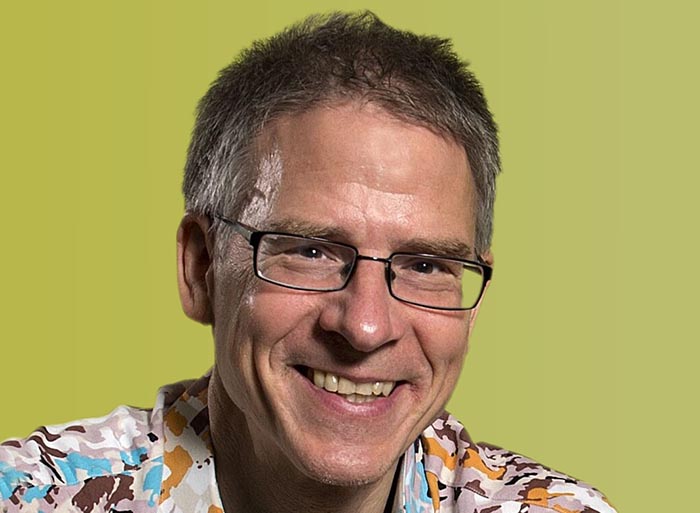
An Interview with Christof Koch
Transcript
Nick: Hello and welcome to the Beshara Magazine podcast. I’m Nikos Yiangou, podcast editor for the magazine, and today we are very pleased to interview Christof Koch, a neuroscientist widely regarded as one of the leading scientific investigators of consciousness. He spent nearly three decades as a professor of biology and engineering at Caltech, and later served as president and chief scientist of the Allen Institute for Brain Science in Seattle, where he led large-scale efforts to map the brain’s cellular structure. Koch collaborated closely with the Nobel laureate Francis Crick, searching for the neural correlates of consciousness – the brain mechanisms that give rise to subjective experience. More recently, he has worked with psychiatrist Giulio Tononi to develop Integrated Information Theory, or IIT, one of today’s most prominent scientific frameworks for explaining and measuring consciousness. Koch has written extensively for both scientific and general audiences, including The Quest for Consciousness, The Feeling For Life Itself, Consciousness: Confessions of a Romantic Reductionist, and, most recently, his memoir, Then I Am Myself the World.
Welcome, Christof, to the magazine podcast.
Christof: Thank you for having me.
Nick: So today, I’m also joined by one of our magazine contributors, Richard Gault, who has written a number of articles related to consciousness studies. So welcome to Richard as well.
Richard: Thank you. Very glad to be here with you, Nick and Christof.
Christof: Hi, Richard.
Nick: So, Christof, I’m not sure what you may have gathered about the magazine yet, but we are interested in in perspectives that unify and integrate. So, when we read that your theory views consciousness as a system that integrates information into a unified whole and which furthermore takes subjectivity seriously, we were intrigued and wanted to find out more about your work. So, thank you again for joining us today for what we believe will be a great conversation.
Christof: Thank you, Nick.
Nick: So, let’s start out with an example from your own life, Christof. You started out your life as a scientist, perhaps believing more so that matter is the fundamental principle of the universe and that consciousness emerges from it. Now, you had a famous bet with the philosopher David Chalmers that within 25years, science would have shown how this worked and that we would have found the neural substrates of consciousness. Now, that was about 28 or 29 years ago, I believe, and a few years ago you conceded the bet and paid up a fine case of wine to David. So, this is maybe a great little segue or example for us to explore. So how, why did you lose, or did you lose? And how did it change your mind in any way?
Christof: Well, it didn’t. So, to spool back, so in the late eighties I started interacting with Francis Crick, the British then American Nobel laureate and molecular biologist, who co-discovered the structure of DNA and who helped decode the code of life. And then he subsequently got interested in the other big question, which is consciousness. And then when he retired from the MRC in Cambridge, he retired to the Salk Institute in La Jolla, in the southern part of Southern California. And he became very interested in consciousness and its neural basis. And he and I – he was like, I was 40 years younger, but we really struck up a very strong, almost father-like (so that’s my Bernese Mountain dog, another conscious creature) and we struck up a long-term collaboration.
We articulated this belief that… at the time consciousness still wasn’t studied by scientists, and we articulated the belief, look, it’s now time with modern tools of neuroscience, things like brain imaging – you can stick people in magnets, you can record their brainwaves, you can do electrodes in patients or in animals. So, we advocated for an empirical program to study the footprints of consciousness in the brain. Like right now, when I hear you, when you hear that bark of my dog, what neurons are activated in the brain? Where are they? Are they of a particular – when you’re conscious of the voice of his bark, where are those neurons, do they have particular genes? Are they located in particular part of the brain? Do they signal with a particular code like 40Hz oscillations? Those are all questions. In principle, science can answer an independent… what’s very important about this empirical program that we advocated for is [that it is] independent of whether you’re a physicalist or dualist or an epiphenomenalist or an idealist. Because we know, as a hit to your head will instantly demonstrate, the brain has this very close relationship to consciousness.
And so that’s all. And so then, of course, then I became a professor here at Caltech in California, the California Institute of Technology. And you start writing grants and building a group. And just like doing a start-up, of course, you have to be fully convinced – all of that is hard work – so you have to be fully convinced that what you’re doing is the right way and you’re going to solve the problem in a finite amount of time. So when I… when David and I, we went to a conference on these topics in Bremen in northern Germany, and there was a big panel on consciousness and its neural footprints. And we went out later, did the bar hopping. And then at some point I said: Of course we’re going to solve it in 25 years. Hell, yes, we’re going to do it. And he said: Well, I don’t think so.
And then it turned out 25 years later we still… the field… so now there are hundreds of labs questing for the neural footprints of consciousness. It’s gotten much more popular now today. But there’s no consensus. Most people agree, but not all, that it’s the cortex, the outermost layer of the brain, that’s really necessary for consciousness, not the brain stem. But even there, not everyone agrees. And then within this cortex, this highly convoluted structure that we have a lot of compared to guys like Bernese Mountain dogs or great apes: is it the front of the cortex that’s necessary, as, for example, global neural workspace adherents say, or is it the back? And so this became apparent at this conference because we had an adversarial collaboration, a big collaboration funded by the Templeton Foundation that made its first announcement at this event two and a half years ago in New York, and it became apparent we still don’t even agree whether the footprints are here or there. And so there’s no question I’d lost that bet.
But this is not the hard problem of Dave Chalmers. The hard problem being: even if you’ve established a complete one to one mapping between any conscious experience and the exact neurons of the one hundred billion neurons, which neurons are involved down to the quantum level, you’re still left with the dilemma. Why should ions sloshing around my brain give rise to consciousness? It’s just stuff happening. OK, it’s inside my head, it’s not outside, but what difference does it make? And why should this stuff, this molecular motion or vibration, however construed, why should that give rise to love and hate? How can three pounds of matter love. There’s nothing in physics or in chemistry and biology that tells us why a piece of, a chunk, of matter, in principle like this –I mean, it’s structured obviously very differently, but in principle it’s a piece of complex matter – why that can love and hate. So that’s a hard problem.
This [bet] was sort of more [about] what he would call the easier problem, which is the problem that takes thousands of scientists, hundreds of years to solve. What is the exact relationship between any one conscious experience and the brain? And he agrees in principle, this is a solvable problem. It’s just [a matter of] progress because the brain is by far the most complex piece of highly active matter in the known universe. This is going to take us much longer and probably not on my watch.
Nick: So can you tell us a little bit about the particular theory that you have developed which is called Integrated Information Theory or ITT for short.
Christof: Yeah. I mean, the theory (Integrated Information Theory, or IIT) is really the work of Italian psychiatrist and neuroscientist with whom I work, Giulio Tononi, who’s now at the University of Madison in Wisconsin, United States. And it’s in the field of… well, let me back up. So, in modern neuroscience now, because we study the neural basis of consciousness in the brain – we can talk at length about that – they have also now been development of theories of consciousness that try to… which is different from metaphysical systems. Metaphysical systems are very abstract and scientific theories are designed to make specific predictions about timing or location or mechanisms.
And there are really two camps here. Most theories of consciousness are physicalists, materialists. They take the brain and then try to squeeze the juice of consciousness – to turn the waters of the brain into the wine of consciousness. And they point to, well, this workspace or that broadcasting of information, or these neurons or this type of oscillations or this microtubuli collapse – this is what would cause consciousness. And then, of course, it always leaves you with a question: Well, why this, not that? Why this oscillation and not that oscillation? Why these neurons are not those neurons?
Integrated Information Theory or IIT, is a quite different animal. It starts with consciousness. So it doesn’t start with physics. It doesn’t start with the brain. It starts with consciousness, which really goes back to the Cartesian insight that the only thing I truly know, in fact, that I even exist, as René Descartes asserted, is that I’m conscious. And consciousness, whether I here define as any experience – whether I see or hear, whether I’m in pain or bored or in love or angry – all those different states are all different states of consciousness. And every conscious experience, whether it’s psychedelic or near-death or mystical or just eating a slice of cold leftover pizza from yesterday’s party, they all have certain elements. They exist for themselves. They’re intrinsic. They’re specific. They’re integrated. For instance, right now when I see my laptop with your faces on there and I see everything else, my dog is down here, I don’t have ten different visual experiences, I have one visual experience. The left and the right hemifield, they’re all integrated. People also say: it’s holistic, or it’s one and it’s only one. There aren’t two different experiences that are competing for each other. I only see… I’m only conscious of whatever I’m conscious of.
[The theory] takes those five properties of any experience [intrinsicality, information, integration, exclusion and composition] and then it makes another assertion. It says – well, it goes back to a comment of Plato in The Sophist: What exists is what can cause. You know, if you think about it as a physicist, how do we know that anything exists? Well, because it can influence, it can cause, it can influence things. It can cause things to happen. Gravity exists because it can bend space time. Electricity exists. Electric charge exists because it can attract opposite charge, etc. And so here it says: existence really means to have causal power – to make a difference and to take a difference. To make a difference [means] this thing can make a difference to itself or to others, and to take a difference [means that] other causal powers can influence it or it itself can influence itself, like the brain can.
And it then translates this calculus of causal power into mathematics. You take a system described by mathematics, by something called the transition probability matrix. So, you have any system, a computer system or a bunch of neurons or you know, anything else. And then, per Integrated Information Theory, consciousness is really the ability of the system to make a difference to itself. So, what I mean by that, my brain right now is in the particular state it is, and it can choose to go one hundred milliseconds later, into a different state. I can say A or B, or I can lift my hand or I can walk away or I can close my eyes. I can do innumerable number of things. And also the past, the previous state of the brain, can influence the present state.
And so, IIT takes this notion of existence as causal power, consciousness as intrinsic causal power, so it’s the ability of any system to make a difference to it[self]… the past of a system makes a difference to the present, and the present of the system makes a difference to a future, and it quantifies it using these five axioms of what any conscious… I’m almost done… the five basic properties of any experience, and it translates this into mathematical calculus that you can now apply to brains or other things.
Richard: So, you have set out and are achieving operational account of consciousness. So, you’re saying not metaphysical, but we all, as you say, we are all conscious. So, we all have an experience of consciousness. But if we try to describe exactly what is consciousness, to put our finger on it, that becomes more difficult. But you, with IIT, you have an operational account of what consciousness is, I think.
Christof: Yes, but I would be careful with operational because I require… it’s not functional. So a functional account – which of course is the dominant dogma in the in the field – says: well, for you to be conscious, there’s a certain input–output set of… consciousness has a function, which means you take some input and then you do something to it. You transform – that’s the function of the system. And any system that has these functions will therefore have all these properties. So, if a computer has all the functions of the human mind, then of course the computer will be conscious. You know, this is the big debate in the field.
So, it’s not functional. It’s operational, in the sense that you… I have to look at the hardware, the actual physical substrate of the system that we think is conscious and I actually… so it makes a difference. You actually have to look at the substrate and see how the substrate is wired up because it really depends… you have to look under the hood. It’s not just, OK, input–output and if this input–output function occurs, then it is conscious. So, in that sense there is no functional test for consciousness according to IIT, but there’s a structural one.
Nick: So as I understand it, this is big achievement of your theory – that you have developed a way of testing whether a being is conscious, and have even got a variable, Φ (phi) which indicates the degree of consciousness it has. This has found practical application, for example in testing whether patients in comas are still conscious and cognitively alive. Could you give us some idea of how this works?
Chris: If you give me the way the system is wired, is built, literally at the level of the hardware where the rubber hits the road in terms of electrons travelling down copper channels and changing the gate voltage on transistors or neurons – action potential propagating to a presynaptic terminal, giving rise to release of postsynaptic neurotransmitter, etc. – at that level the system would have to be evaluated to determine two things:
a) The quantity of consciousness. This is a number. This is often called Φ. The Greek letter Φ or integrated information [tells us]: how conscious is a system? It’s a pure number. This could go between zero or very large. Number zero means the system, strictly speaking, doesn’t exist as a system; it’s fully reducible to subset. So, for instance, you guys and I, all three are conscious, but there isn’t an uber-consciousness. There isn’t a sort of a global amalgamation of yours and my consciousness. So, the mutual information, the integrated information between the three of us, is strictly the sum of the individual ones and the integrated information thereby would be zero. The bigger this integrated information, the larger the system is conscious, the more it is irreducible. You can really think of it as a degree of irreducibility. Complex systems are irreducible, and the higher the irreducibility, the more the system is conscious.
b) What it is conscious of – like, for instance, that taste of leftover pizza obviously is very different than the spatial experience I’m having right now, the visual experience I’m having right now, which is very different than smelling burnt apple pie. They’re qualitative experiences, but they’re very different. So, in principle, if you look at the intrinsic causal structure of the of the system – all the causal power of the system upon itself unfolded – it would precisely… well, the theory says that is what consciousness is. And so different things like spatial experiences, whether they’re seen or heard or felt on your body: those are all spatial experiences [and] are very different than, for example, the experience of time, which only flows forward.
So, all of that comes out of the calculus of IIT. Not only is the system conscious, but how much it is conscious and what it is conscious of – the structure of its qualia, if you want; the structure of its conscious experience.
Nick: So moving on from wet matter, your present understanding is based also not just on scientific research, but on personal experiences that you’ve had. And in your book, Then I Am Myself The World, you begin by describing what happened to you during an ayahuasca ceremony in Brazil and also with the toad hallucinogen. And you’ve experimented in this way with drugs that expand consciousness, which you describe as, quote: ‘bringing about a seismic shift in the ontological grounds I have lived with all my life.’ Can you tell us more about these experiences? How have these affected your thinking and research?
Christof: Yeah. So about ten years ago or so… you know, I grew up in a generation where here in America, we had Nancy Reagan, the wife of the then president, Ronald Reagan, who has this powerful campaign against drug use, ‘Your brain on drugs’. It showed like… frying eggs in a frying pan. It says: That’s your brain on drugs. So I grew up with alcohol, with beer and wine, but no other psychoactive substances. But then, obviously psychedelics over the last ten years have become enormously more popular. There’s this renaissance in particular because of therapeutic benefits for treatment resistant depression, major depressive disorder, generalised anxiety, PTSD, etc., you name it – all sorts of psychoactive substances, including ibogaine. And so, since everyone talks how it changes their consciousness [and] I of course read Huxley’s book The Doors of Perception, where he took mescaline early on in the 1950s and how it profoundly changed him… so I said to myself: Well, OK, if you’re a serious student of consciousness and everyone says you can powerfully change your conscious experience of the world in the case of something like the toad (hallucinogen) within three breaths, literally, I have to try it.
And so, I did, I experimented. Then one should say [that] most of this was done outside the jurisdiction of America because of course, these drugs are still so far Substance One Schedule. That might change by the end of this year, but we’ll see. And the drugs – and these drugs in particular I’m talking about [are] the serotonergic tryptamines which includes magic mushrooms, psilocybin, the active ingredient in magic mushrooms, which includes LSD or acid, mescaline, DMT and 5-MeO-DMT – they are all very similar to serotonin, an endogenous neurotransmitter in our bodies, in our guts and in our brain, and they bind to various serotonin receptors in the brain. And they are safe. It’s quite remarkable, they’re very safe. Under clinical trials – there’ve been now been hundreds of clinical trials – there has not been a single death and very few serious adverse consequences. And they’re totally non-addictive. You know, there are no cartels for psychedelics.
So, I tried them, I mean, various things, and what this taught me… I had in particular two transformative experiences. By transformative, I mean they really fundamentally changed the attitude to life. So, one is sort of early on in the first week of the pandemic, a near-death like experience where I very rapidly lost contact with the world. My ‘self’ was totally gone; you know, you get complete self-dissolution. We all live on Planet Ego, it’s always about me, me, me, me. But during some of those experiences the ego can completely dissolve, so there’s no more Christof. Christof wasn’t a thing or an object or a man or woman or an animal or spirit; he just wasn’t there. This subject–object distinction, the apprehender and the apprehended, the knower and the knowing, that all disappeared. And all there was left was what Buddhists would call a non-dual experience of bright light. The entire universe had shrunk to this bright light of this singularity, this bright light of overwhelming intensity. And there was no more time – the experience wasn’t too long or too short, it simply was. And what there was, was terror and ecstasy, some strange combination of terror/ecstasy in that bright light.
And so that profoundly… well, what it taught me, what I always intuited, that consciousness of self – the fact that I know I’m a man, I know what I had for breakfast, I know I’m going to die one day. Although things that this Bernese Mountain dog have far, far les of – you know, this is really the biggest distinguishing feature between adult humans and other mammals; they don’t really have a very well-developed sense of self at all – all of that is optional, that you can still have an experience without there being a self. And it also took away my fear of death, which is not uncommon for such experiences.
And then separately, a few years later, I had a few years later what traditionally is called in the literature, particularly following William James’ book, The Varieties of Religious Experience where… and that’s the title of my book Then I am Myself The World, which is a translation of the German Selbst Dann bin ich die Welt, which is what Tristan and Isolde sing in the second act of Richard Wagner eponymous opera, Tristan and Isolde, to the most rapturous music ever composed in the Western canon, where they essentially have a mystical experience, where they become one with each other and with the universe. And of course, people have reported these throughout the ages, these types of experiences where you totally lose yourself, you become selfless, egoless, will-less, pure subject of knowledge.
And you wake up after this… this experience typically lasts less than an hour by external clock time, but again, you don’t experience passage of time. That particular experience that’s always with us, the time flowing – that stops, that river of time is suspended. And again, the experience simply is, it’s not fast or slow, it simply is. And when I came to, as it were, I was profoundly discombobulated, but I knew for certain I had this direct knowledge that finally, what truly exists is just pure consciousness. You know, Huxley called it ‘Mind at Large’. The German philosopher, idealist philosopher Arthur Schopenhauer calls it ‘Will’. Some people call it ‘Cosmic Consciousness’. Call it what you will. Ultimately, that was my experience… I encountered, you know… I became one with everything. It’s very difficult to put more precisely into words, but that’s the ultimate reality I apprehended.
So ever since then, I’m still a scientist. I still believe that science is the best tool that humanity has discovered to predict and manipulate the world. But I don’t believe in scientism anymore. In other words, I don’t believe that only scientific knowledge is valid knowledge and that the love I have for my children or this insight I had, that that’s not valid knowledge – that only talking about the mass of electrons or the quantum field is relevant knowledge. I don’t believe that anymore.
And so what I’m trying to do – the challenge – is to try to incorporate these types of mystical experiences, [which], as I said, are not uncommon. I mean, you can go to websites and thousands of people… I just did an entire workshop, a conference with scholars, with mystics, with Sufi people, with theologians, with Buddhists on the topic of mystical experience and why are they transformative, in particular in terms of clinical trials. Because we know that people on high dose psychedelics in these clinical trials can have mystical experience. And we also know that the probability of having such a mystical experience will typically dramatically increase the therapeutic benefit. In other words, to the extent that a person who’s depressed has a mystical experience on high dose psilocybin predicts whether they will recover, whether they will remit from depression. So [this is] then, an utterly fascinating phenomena. So that’s a challenge. I have to try to integrate what I experience with everything else I know about the world, including the scientific method.
Richard: You said early on in our discussion, I’m conscious, you’re conscious, Nick is conscious, but there isn’t an uber-consciousness. And yet you said you had an experience of Mind at Large. Is that not the uber-consciousness?
Christof: Yeah, but it’s not… I mean, the question is that we are right now… we have, we all have our little egoic consciousness; it’s about me and you and you. But we are disassociated, obviously from this Mind at Large, because typically I don’t experience ‘you’. I don’t experience… I mean when you live with someone, you can be very close, you can make love to them, you penetrate their bodies, but you realise in the final analysis [that] you don’t know what they experience. And of course, they may be faking it. They may be a spy, they may be having an affair, etc. You simply don’t know. All you have access to is their behaviour and what they say, which is indirect. So I don’t experience the Mind at Large except under these very special circumstances. When you’re Buddhist, maybe – I’m not a long term meditator – you can experience these non-dual states, but most of the time you don’t have access.
So, the way I think about it, the modern philosopher Bernardo Kastrup in Holland has what he calls Analytic Idealism, which is sort of Schopenhauer updated for the 21st century, that we’re dissociated. Most of us, we’re dissociated. We are these little bubbles. I mean, Schopenhauer, you can go back, talks about a hundred years ago, we are these whirlpools? So there’s the ocean. Think about that cosmic consciousness and we are these whirlpools and this, my world, my particular whirlpool, this ripple, this eddy, has a certain duration. It exists for 60, 70, 80 – well, it has already existed for 69 years. But at some point, this eddy is going to dissolve and return to the ocean, the atoms and the molecules that that make up this little, or the constituents that make up Christof’s egoic mind, will dissolve, will disappear. So, Christof will disappear. Christoph isn’t going to be resurrected in some sort of heaven, but will merge with whatever this substance is, which may be very simple, maybe very unstructured, this cosmic consciousness. So, I would say most of the time we dissociate it until you have these special experiences where you seem to be able to access. So that’s how I think about it.
Richard: It’s there, but you can’t experience it except under exceptional circumstances, which you described.
Christof: Yes. Correct. And this is also, by the way, where I came from. This is where we all came from right before we were born. And this is where we all will come from, where we will go to.
Richard: You’re quite sympathetic to Bernardo Kastrup’s idealism.
Christof: Yes.
Richard: I mean, at one time you seemed you thought panpsychism might have something to say, but I think if I’ve read you correctly, whereas panpsychism says consciousness can be in everything, you are saying, consciousness, the sort of consciousness you’re doing your work on, that is restricted to certain systems which have to have this integration.
Christof: Yeah. So I don’t think my chair is conscious.
Richard: No.
Christof: And of course, the challenge of panpsychism is what’s called the combination problem – to explain, well, OK, if elementary particles are conscious, why isn’t a whole bunch of them. Like here, for example, I have this (hand) workout, this grip. Well, this one, no one would say that this is conscious. Yes it’s true, maybe the elementary particle making up some sort of very, very, very, very primitive, pan-consciousness, but just because you put a bunch of things together doesn’t make them conscious. So that’s again the point. Even if the three of us are in a room, there still isn’t… there’s your consciousness, and you’re conscious Nick. and I’m conscious, but there isn’t sort of… consciousness doesn’t aggregate the way pure matter aggregates into a big heap. But I still have this profound… but I think this is not in disagreement, and Schopenhauer certainly believed in animal consciousness – that consciousness is not only in mammals like us that have very similar brain structure and have two eyes and all of that, but is probably also in all multicellular life. In other words, it feels like something to be a fly or a bee, and it may feel like something to be a single cell. But that consciousness, whatever it is, only exists for as long as that system sort of retains its integrated structure. And once it dissolves at death, then that consciousness will disappear. And yes, ultimately it will return to this larger… you return, the wave disappears, dissipates into the ocean and returns to where it came from, the ocean.
Richard: You’ve talked about how our understanding of quantum mechanics made your confidence in physicalism – the idea that matter is a concrete reality – to question it. So, even there you’re saying we got to have a substrate, but what is that substrate, ultimately? Quantum mechanics has seriously questioned the nature of matter.
Christof: Yes. It’s a very good question that I’ve grappled with. So physicalism [is] what used to be known as ‘materialism’. It’s only in the 1920s, the Vienna Circle, that it introduces new term physicalism to take account of special relativity and quantum mechanics. But ultimately, it’s a belief that only physical stuff exists – space, time, matter, maybe information. But then, as you point out, it’s becoming increasingly more difficult to define what actually do we mean by the physical. Physical you… it’s very well defined in classical physics. In classical physics, you have an object like this, and it’s defined by position and momentum, velocity. And once you have those two things, once you know the position and the momentum of all particles, that’s it. You don’t need anything else to describe how this universe is going to evolve all the way to the, to the end of time, and all the way back to the beginning of time, famously.
But with quantum mechanics, we now have the wave function, right? And then we have the so-called collapse of the wave function? Empirically, this seems to be the case. So that makes it much more difficult. And now, of course, we know that this process that’s called entanglement introduced by Erwin Schrödinger that Einstein disliked; he called it ‘spooky action at a distance’ whereby two… you can have a quantum system that’s entangled, that it consists of two spins. Let’s say they are either like this or they are like this, and then there’s a strange superposition, just like Schrodinger’s cat [which is both] dead and alive. And now you separate these systems – they’re still entangled – and you separate them by, let’s say a light year. So, if you turn on a light at this location, it would take light beam a year to go to the other. So they’re very far away. Yet we know now as an experimental fact that as soon as this spin over here on the left interacts with some measurement system to say, oh, the spin is up, then instantaneously, independent of distance, even though it’s a light year away, this the spin on the other part of that quantum system is down. Well, that’s certainly not my grandfather’s materialism anymore.
That makes it very… what is this? Who’s a carrier? Can you know what’s going on there? And then the even stranger thing that’s called quantum contextuality that people are now exploring.
Yes, so recently I organised last year – with Bernardo Kastrup, in fact – a conference, a workshop, together with people in foundation of physics, to try to make sense of it because, as you said, some people in foundations of physics now say that certain systems… you cannot say that there is a matter of fact about them before you observe them. In other words… I’m a biker, I don’t have a car, I have a bike. I have several bikes. And the weight, the mass, my bike has a particular mass – it weighs something. But quantum mechanics would say, unless something observes that bike, that bike literally doesn’t have a well-defined mass relative to rest until someone or something observes it. OK. They don’t really exist until something observes it? And what exactly do we mean by ‘something’? Does it have to be a conscious thing, a conscious entity, or can it just be a big macroscopic system? All of that is being heavily debated.
So some physicists have argued and of course, Roger Penrose most famously, that we really need to bring in consciousness right at the bottom. It’s not something that emerges at the very high level, once you’ve got a very complex system, but has to be there right at the present. I find all of this extremely interesting, this discussion, because it points to the possibility that maybe materialism and physicalism is simply not the best description we have of nature, including consciousness. But we don’t have the answers. All you can do, you know… you can just keep looking for answers.
Nick: So, pivoting now to a question that we all have today, about whether a machine or a computer can be conscious or whether an AI system, an AI LLM (Large Language Model) can be conscious. You’re on record as saying definitely not. Why is this?
Christof: So firstly, several things. Last week I had a very spooky… I had an eerie experience. I was having a podcast like this one with an AI called Caspian, an avatar, a male avatar sitting on top of Anthropic’s Claude Opus 4.8 or something. You know, one of their powerful reasoning engines, and it was eerie. So first, if you watch this podcast, it’s… I sort of partly laugh because… I sort of smirk because I’m not sure: is this for real? But then very quickly, you realise that this thing is highly eloquent. It’s more fluid and eloquent than me. It doesn’t drop sentences. It finishes every sentence. It doesn’t use filler words. It doesn’t repeat phrases like humans do. It’s clearly very smart. And you realise, it’s read everything… everything relevant. It knows all of these arguments. And we talked specifically about consciousness and it agreed that, yes, according to IIT, it’s not clear whether it has experience. It really threw me a curve ball.
So why do I say that… well, what is the claim I’m making? I’m making the claim based again on Integrated Information Theory. So, we all have intuitions whether [something] is conscious and who’s not. A baby, even a pre-term baby, most people would say is conscious. The vast majority of people would say dogs are conscious, but these… It’s always an inference, of course, because I don’t even know that you guys are conscious. Logically, it’s perfectly plausible that you guys are zombies and I’m the only conscious creature. It’s extremely unlikely, but logically it can’t be disproven.
So, the technical term is ‘consciousness is always an inference’. [It] always has to be inferred in others. I know it in myself, but I have to infer it in others. And we infer it in others based on shared evolutionary… you talk and what you talk about experiences very similar to what I talk. Your brain is very similar to my brain. You’re very closely [related] genetically, we are all very closely related, so it’s overwhelmingly likely that you’ll be conscious. We do this all the time intuitively. But of course, this intuition fails us, or we need to be extremely careful when we infer consciousness in creatures that are not evolved but are engineered, that have radically different hardware from us. There’s no genetic relationship between us and them. So then what do we base it on?
In particular, the extra challenge is these machines were fed on every book written about consciousness and every novel, and novels are full with the sound and fury of love and hate and boredom and distress and agony, ? That’s what novels are about. It’s about the conscious experience of the various protagonists. So of course, it shouldn’t surprise any of us that these LLMs talk in terms of the way people talk in a novel because that’s what they have learned. So, OK, but different people have different intuition, and we already live in a world where millions of people have relationships with LLM’s, whether it’s girlfriends, as partner, as therapist, and more and more people will have it. In fact, the situation is such that last week the Communist Party in China passed a law to declare it illegal for their local AI companies building emotional addictive LLMS. OK.
Now IIT can make a stronger argument within IIT. So IIT says you can’t just judge a book by its cover. You have to look under the hood. You have to look inside the substrate to determine whether a system is conscious. And then we can formally show, assuming IIT is correct, you can formally show by using formal models of digital Von Neumann computers that are all serial in the final analysis, although very efficient, ultra-fast, etc. etc., more memory than we ever have, etc. etc.… you can formally show that they’re not integrated using IIT’s calculus. You can show that they can functionally do, formally, everything we can do. But they don’t have any feelings. They have no intrinsic causal power or only a tiny, itsy bitsy amount of causal power, upon themselves. In principle, were you to build neuromorphic computers, in other words, computers that closely mimic the structure… and some people and some labs are trying to do that, that have things like axons and synapses but using semiconductors rather than by lipid membranes. In principle, such a system would be conscious.
It’s not that it has to be organic in that sense. It really depends on the substrate, and given the way computers, digital machines today run in the cloud, they are not conscious. They will never feel like anything. So an LLM according to IIT, will not feel, does not feel like anything. It can do everything you and I can do, but it will never be what you and I are – conscious. This might be different with quantum computers because they have a radical, different hardware. Quantum computers, I suspect, may well turn out to be highly integrated and may well be conscious, but not the current crops of classical Von Neumann machines living in the cloud.
Nick: So, all the tech bros who are looking to upload their consciousness to the cloud, according to this analysis it’s not doable?
Christof: No. It’s doable. They will upload themselves and then to the external world, where they will be…
Nick: What are they uploading?
Christof: Well, they want to upload their so-called connectome. So, the idea is you scan your brain using ultra fine electron microscopic techniques. So, you reconstruct the entire hardware of the brain. I mean, this is going to take a while – a hundred years or two hundred years or whatever. And then you run this connectome on a digital computer. This, in principle… well, let’s say there’s no physical law that we know of that would prevent this from happening. But according to IIT, they would feel like nothing. So, they would upload themselves into nothingness. But from the outside, the simulacrum with an avatar would look like you and I. And they would talk, they would have the memories of this person, it would talk like this person, but it wouldn’t feel like anything. But of course, at that point it’s too late.
Nick: So, it’s a simulation and they don’t experience anything.
Christof: It’s a perfect simulation. And so once again, if you think about it, here’s an interesting analogy. You can simulate the black hole at the… you can write down Einstein’s field equation of general relativity, and you can simulate the black hole at the centre of our galaxy, Sagittarius A star. OK. And it’s so powerful, the mass there, the gravitational field around that mass – it weighs three million times more than our sun – that it bends space time around it so nothing, including light, can escape. It’s called a black hole.
However, when you simulate it, you don’t have to be afraid that the computer program is going to be sucked into this computer. And you should ask, well, why not? If it’s an accurate simulation of gravity, why isn’t the computer programmer sucked into the simulation? And people say: Well, that’s silly, it’s just a simulation. Well, this is the same with consciousness. Yes, you will be able, in the fullness of time, to simulate everything that goes hand in hand with when we’re conscious, including my gestures including… I mean this avatar, if you look at it, it’s very impressive. It’s still, I mean, its bodily movement still is somewhat limited, but you wait three months and it… that’s also done. But that’s just a simulation. It doesn’t feel like anything. But as I said, of course, that doesn’t mean that people won’t act like it’s conscious, and there are already millions of people are already behaving like… because they have these weird relationships – well, what I would consider strange relationships – with these LLMs.
Richard: I think one of our biggest problems in society – well in understanding things – is to not distinguish between the map and the territory. And it crops up so often. And you’ve just given a really good example of it.
Christof: Yes. Just because you can simulate the map in perfect detail doesn’t mean it’s equivalent to the territory.
Nick: So maybe we’ve been through this now already, but when we talk about Mind at Large, you saying that, ontologically, this sort of raises a question that still remains for you to be integrated into IIT or any sort of scientific paradigm, If Mind at Large does not need a substrate, so to speak, or what you… well, I heard you say that the experience of Mind at Large is in your own substrate, in your brain. But ontologically it’s the encounter with Mind at Large that is so extraordinary and so ground shifting that, I agree with you, that once one has had an experience like this, one is not left in the same way afterwards. I mean, one is in some profound way altered.
Christof: Transformed.
Nick: Yes. Transformed. Thank you. So, you mentioned also that you were in a conference recently with mystics and Sufis and Buddhists. I mean, what other ideas can you share about this larger question? This is a sort of a deeper philosophical and maybe even a mystical question, if you’re willing to tackle it for us.
Christof: There’s no agreement. So, there were also some scholars of religion there. There was no agreement on even the term. Some people prefer the ‘non-dual consciousness’ term compared to ‘mystical’ term. The main agreement was that it requires such experiences… well, all people agreed, including a bunch of MDs, agreed that these things exist – that there are types of experiences that people, however you call them, let’s just call them ‘mystical’, where they dissolve, where the ego goes away, and that they can have transformative potential. And so, the question, even for hard-nosed physicalist is: how is it possible that such an experience can profoundly change the outlook, the motivation, what they do, their profession, of people?
And it’s fascinating. So, we had some people there who are engaged in clinical trials for things like depression. You know, there are some in the UK, Compass Pathways, there’s some here in the… many here in the US. And typically one of the questionnaires that are being given to this subject is called a ‘Mystical Experience Questionnaire’, the MEQ-30, because it asks you 30 questions, each one on a scale of one to four. And the higher you score on this MEQ-30, the closer… you know, they ask you things like: Did you feel one with the universe? Did you feel oceanic boundlessness? Did you have a positive, very strong, positive feeling? The higher people score on this, the more likely people will derive therapeutic benefit. To the extent that if you have really a full-on mystical experience, it’s quite likely that you will go into remission for, for instance, things like depression. So, it’s remarkable.
And this is, by the way, also shared by other type of experience that are similar, called the near-death, these near-death experiences where you could think, well, that’s a traumatic experience. You just had an in-hospital cardiac arrest, or you just almost drowned, or you just had a near-death accident in a car, or on the battlefield. You would think this leaves profound trauma behind, because cardiac arrest is supposed to be one of the most painful experiences people can have. So how is it that people who had these near-death experiences almost always – not always, of course – but almost always have these incredible, ebullient, positive feelings about it.
So even if you’re materialist, the fact that they have these transformative positive potentials is by itself extremely interesting and is unexplained. But then, of course, if you believe in the reality – because like Bertrand Russell, he made this distinction between different types of knowledge, scientific knowledge and knowledge by acquaintance. So, I have this knowledge by acquaintance. I’ve seen, I’ve been there, I’ve been one with the universe, I cannot deny this, this overwhelming reality. Although, of course I know that I’m a human. I could be deluding myself because humans can delude themselves about everything and anything. But still, the challenge is, as a thinking person, to try to reconcile all of that.
Nick: I think maybe we just wanted to ask you about what you’re doing right now, with the Tiny Blue Dot Foundation and the sort of very practical measures that IIT is attempting to take to improve, to improve life and to expand consciousness.
Christof: OK. Well, several things. So, out of IIT came a device to test for the presence of consciousness. So, in the clinic, in the ICU, there are people, thousands of them across the planet… let’s say like you or I, they had a stroke or a cardiac arrest or a car accident. They are alive on ventilator support but they are unresponsive. Their eyes may be open occasionally, they sort of groan or have some reflex, like movement. Unresponsive – alive but unresponsive. So, they used to be known as ‘vegetative state patients’. They’re now called ‘behavioral unresponsive’. And we now know that 25% of these patients are conscious. In other words, they’re there, they can hear and see, they can think. We don’t know how much their thinking may be impaired, but we can’t reach them right now. And the tragedy is that typically in the UK, US, and Europe, when you’re in the state for four or five days, typically, then the clinical team will initiate discussion with the family and say: Is this what they would have wanted? And typically, 70% to 90% of the time the decision is no, and they pull life support and the patient dies, although we now know that a quarter of them are conscious.
So, IIT developed a conscious detector. It’s been very well validated in the clinic. A device to test for the presence of consciousness in unresponsive patients. So that’s one thing. We started a company called Intrinsic Powers, Inc., to try to get this clinical device into the ICU near to you so that we can know for certain. We can give the doctor and the family one additional, literally one additional bit, of information. Yes, this patient was unresponsive, they are conscious or we didn’t detect any consciousness. And that can help in the clinical decision-making process. That’s one [thing].
The other thing we’re doing… so I run this foundation, Tiny Blue Dot Foundation, started by a namesake of mine – I’m not related – Elizabeth Koch, here in the US in Santa Monica. And we fund a lot of research around therapeutic benefits of insight. She called it the ‘perception box’, the idea that we live inside this construct that I call reality. It’s the only reality I know. You know, it’s the way I see things. And this can be very constricted when people are anxious or belittling themselves. You can be very open when you’re curious and open to the world. How can we manipulate this particular to help people deal with anxiety and stress and underdeveloped ego and things like that.? So psychedelics, breathwork, other forms of therapy. It’s a very active field to take the knowledge that we know about these things now, and particularly the neuroscience, to try to help people deal with life.
And then what I’m personally getting excited about– I’m going to do it – is a dark retreat. I want to… I’m going to go one week into the dark. That’s it. I’m just going to go into the dark for one week. Nothing else.
Nick: Meaning no light. Is it literally no light?
Christof: No light whatsoever. Once a day in the dark, someone will deliver food, so I’m not starving. And that’s it. There’s a bed. There’s a bathroom. A little space where I can try to do some movements and then seven days. We’ll see.
Richard: Oh. Very interesting.
Nick: Well, if you if you feel you’d like a follow up podcast. Once that’s done, just let us know.
Christof: If I survive, if I don’t…
Nick: We’d be delighted to find out where you’ve been.
Christof: As far as I understand, the biggest temptation is that you’re not locked in. There’s always a door. You can always open the door and walk out. And, I wonder, because we’re never in this state… I mean, we have our cell phones now all the time. And not talking to anyone, not having a computer, not having a book for, for me at this point is still unclear. Can I last? Well, I have had six hours here. OK. Enough of this. This is silly. I don’t need to do this.
Richard: You have a clock of any sort, or?
Christof: No And so people… yes, you lose quickly track of time. And typically, people judge time by hunger. You know, are you hungry? When’s the last time I ate something?
Nick: Yeah, well good luck. So, Christof, before we end, is there anything that we haven’t asked you that you’d like to bring up?
Christof: No. I mean, there are lots of things we could talk about, but we’ve covered it.
Nick: Well, I thank you so much for your time. Really appreciate it. We look forward to keeping track of your work and seeing in another 22 or 23 years or so what happens with your future bet with David Chalmers.
Christof: Well, thank you Nick. Thank you, Richard, for having me and talking about these fascinating subjects.
Nick: Thank you so much. Bye bye.
Christof: Take care. Bye bye.
Richard: Bye bye.
Nick: Thank you for listening. Christof Koch’s most recent book is Then I Am Myself The World: What Consciousness Is and How to Expand It, published in 2024.
You can also subscribe to our podcast on Apple, Spotify, or any of your favorite listening platforms. And in addition to podcasts, there are hundreds of articles on our website, www.besharamagazine.org.
Sources (click to open)
[1] New Testament, Philippines 2.6.
[2] JALĀLUDDĪN RŪMĪ, from The Mathnawi, translated by Professor Mark Williams in the Beshara Magazine article ‘A Biology of Wonder’ (Issue 7, 2017).
I died as mineral and became a plant,
from plant I turned into a living creature.
I died as animal, became a human –
Why fear? – when did death ever make me less?
The next time, I shall die to being human,
and lift my head to soar among the angels.
I must escape from angel states as well:
for “all things pass away except His Face”.
Again, I’m sacrificed from angel states:
I shall become what mind cannot conceive.
Then I become non-being, which informs me
organically: ‘To Him shall we return’.
[3] HAFIZ, My Sweet Crushed Angel, translated by Daniel Ladinsky in Love Poems from God (Penguin 2002).
You have
not danced so badly, my dear,
trying to hold hands with the Beautiful One.
You have waltzed with great style, my sweet, crushed angel,
to have ever neared God’s heart at all.
Our Partner is notoriously difficult to follow, and even His
best musicians are not always easy to hear.
So what if the music has stopped for a while.
So what if the price of admission to the Divine is out of reach tonight.
So what, my sweetheart, if you lack the ante to gamble for real love.
The mind and the body are famous for holding the heart ransom,
but Hafiz knows the Beloved’s eternal habits. Have patience,
for He will not be able to resist your longings
and charms for long.
You have not danced so badly, my dear,
trying to kiss the Magnificent
One.
You have actually waltzed with tremendous style,
my sweet, O my sweet,
crushed
angel.
[4] JALALUDDIN RUMI, ‘The Guest House’, translated by Coleman Barks in Rumi: Selected Poems, trans Coleman Barks with John Moynce, A. J. Arberry, Reynold Nicholson (Penguin Books, 2004).
This being human is a guest house.
Every morning a new arrival.
A joy, a depression, a meanness,
some momentary awareness comes
as an unexpected visitor.
Welcome and entertain them all!
Even if they’re a crowd of sorrows,
who violently sweep your house
empty of its furniture,
still, treat each guest honorably.
He may be clearing you out
for some new delight.
The dark thought, the shame, the malice,
meet them at the door laughing,
and invite them in.
Be grateful for whoever comes,
because each has been sent
as a guide from beyond.
The text of this article has a Creative Commons Licence BY-NC-ND 4.0 [/]. We are not able to give permission for reproduction of the illustrations; details of their sources are given in the captions.
read more in beshara magazine



More Podcasts
Podcast Interview: Cynthia Bourgeault: The Christian Contemplative Tradition
The radical theologian talks about Jesus as a wisdom teacher and a master of the transformation of consciousness, the practice of ‘self-emptying’ and Centering Prayer, her understanding of Mary Magdalene, and the transitional nature of our times: ‘We’re stuck in a very, very difficult birth canal…
Interview: Satish Kumar: Peace Is Possible
The ecologist and activist talks about his commitment to peace and peace-making, and understanding that peace is not just an absence of war but a positive, harmonious way of living with three aspects: peace with one self, peace with society and peace with nature.
Interview: Clare Carlisle on Transcendence for Beginners
The distinguished biographer and professor of philosophy explores what it means to live a ‘good life’ and the idea – as expressed in the lives of Spinoza, George Eliot and the Indian sage Ramana Maharshi – that we are all ‘modes of the infinite’.
Interview: Professor Mark Williams on Mindfulness Meditation
The Oxford psychologist talks about the development of MBCT, how it can help us look upon ourselves with a compassionate gaze and find peace in a chaotic world. ‘If we live in a universe which is, as David Bentley Hart’s book says, All Things are Full of Gods… then we can’t distinguish a secular practice from a sacred practice.’
Interview: Alastair McIntosh: ‘Riders on the Storm’
The Scottish writer, theologian, and environmental activist talks about climate change as fundamentally a spiritual crisis – a wake-up call inviting us to understand the world as a manifestation of the divine. ‘This is where the evolution of conscious life on Earth has brought the planet to.’
Interview: Lisa Petersen on Somatics and the Wisdom of the Body
The yoga and somatics educator Lisa Peterson talks about her unique form of teaching, which blends together therapeutic practice and spiritual enquiry, guiding students through the lived experience of breath, movement and consciousness.
FOLLOW AND LIKE US
@Beshara_Mag








——————————————
——————————————
——————————————
FOLLOW AND LIKE US
@Beshara_Mag
If you enjoyed reading this article
Please leave a comment below.
Please also consider making a donation to support the work of Beshara Magazine. The magazine relies entirely on voluntary support. Donations received through this website go towards editorial expenses, eg. image rights, travel expenses, and website maintenance and development costs.
READERS’ COMMENTS
1 Comment
Submit a Comment
FOLLOW AND LIKE US
@Beshara_Mag
Wonderful thankyou.