
Metaphysics & Spirituality _|_ Issue 30, 2025
The Image Bears Witness to Your State
Psychotherapist Sir Nick Pearson talks about his unique approach to healing based on an understanding of imagination drawn from the Sufi tradition
The Image Bears Witness to Your State
Psychotherapist Sir Nick Pearson talks about his unique approach to healing based on an understanding of imagination drawn from the Sufi tradition
Sir Nicholas Pearson is a psychotherapist whose work has been deeply influenced by the writings of Islamic mystical thinkers such as Ibn Sina (Avicenna) (d. 1035) and Muhyiddin Ibn ‘Arabi (d. 1240). In particular, he has followed their understanding of the imagination as an important faculty both for our comprehension of reality and for healing. Nick discovered his vocation late in life, at the age of 60, after an eventful life which included a spell in the army and time spent in Africa and the Far East. His interest in Sufism was fostered by the Temenos Academy – an organisation dedicated to the arts of the imagination – of which he was chairman from 1998 to 2010. He spoke to Jane Clark and Peter Huitson at his practice in London about his unique approach and the remarkable success he has had in treating not only psychological conditions but also physical illnesses.
 Jane: Can we begin by asking you to say something about the particular method you have developed in your psychotherapy? You have talked about the influence of writers from the Islamic tradition, such as the great tenth-century physician, Avicenna, and the mystical writer Muhyiddin Ibn ‘Arabi, and especially their understanding of the imagination. So unlike most psychotherapists, you work with images rather than words.
Nick: I found my vocation very late in life, around age 60, and I actually started out as a normal talking therapist. I was trained by the Psychosynthesis and Education Trust, and I took that training rather than going to the Jungian school because I thought they put greater emphasis on imagination, as I was already extremely interested in that. So I was trained as a talking therapist, and there’s nothing wrong with that. But talking is largely conducted out of the rational brain, out of the thinking mind; we can do it for very, very long periods of time but in my first five years of practice, I began to see that, although it can be initially helpful, there are limits to what I could achieve by just talking about stuff.
Jane: Can we begin by asking you to say something about the particular method you have developed in your psychotherapy? You have talked about the influence of writers from the Islamic tradition, such as the great tenth-century physician, Avicenna, and the mystical writer Muhyiddin Ibn ‘Arabi, and especially their understanding of the imagination. So unlike most psychotherapists, you work with images rather than words.
Nick: I found my vocation very late in life, around age 60, and I actually started out as a normal talking therapist. I was trained by the Psychosynthesis and Education Trust, and I took that training rather than going to the Jungian school because I thought they put greater emphasis on imagination, as I was already extremely interested in that. So I was trained as a talking therapist, and there’s nothing wrong with that. But talking is largely conducted out of the rational brain, out of the thinking mind; we can do it for very, very long periods of time but in my first five years of practice, I began to see that, although it can be initially helpful, there are limits to what I could achieve by just talking about stuff.
Also, I was already involved in the Temenos Academy [/], whose mission is to affirm the sacred dimension of life. So I was very concerned with the notion of the inner world, which the Western world has, to a large extent, forgotten. I find again and again that when I say that the important work for a client really takes place ‘inside’, in our interior plane, people look at me with complete incomprehension and say: ‘Well, how do you actually do that?’ Because they have no conception that there is an inner world that is relevant to them. There is just no understanding in our culture that the inner world conditions the outer, as I can now see it does.
So when I began to really deepen my limited knowledge of the Sufi tradition, the quintessential thing that I began to realise is the power of inner images – most particularly, the forms of people and the essential symbols in the inner world. I began to see that these were absolutely critical to a real understanding of anyone’s actual state of being. I am neither a Muslim nor a Sufi but was profoundly impressed by their enlightened psychology.
Jane: The other unusual aspect of your method is that you don’t spend time going into a patient’s past, but work with what is present in the here and now.
Nick: It probably took me another five years before I really began to see that going back in time and digging up all the old stuff was actually in some ways quite unhelpful because there is a certain element of retraumatisation when we do that. I began to observe that whatever had happened out of the client’s traumatic past was absolutely present now. So we don’t need to talk about whatever happened. We need to get at the image of what the distress looks like on the inner plane. So my ‘method’ is really from day one to go straight inside and do that.
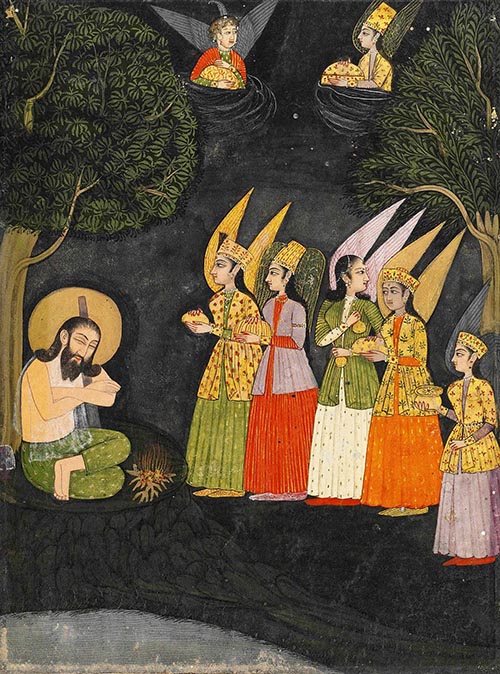
Sultan Ibrahim Ibn Adham of Balkh, considered to be a saint in the Islamic tradition, visited by angels delivering gifts. Mid-18th-century, Lucknow School. Image: Mutual Art [/]
Bearing Witness to the State
.
Peter: Do you just ask your clients – you call them ‘fellow travellers’, I believe – to come up with an image, say, from a dream, or do you have a process which helps them to discover one which embodies their state?
Nick: I guide them in. I give them, if you like, an inner template through which they can experience the appearance of an image. I begin by getting them to close their eyes and bring them out of the head into the heart. As you know, there is a very sophisticated understanding within the Sufi tradition of what the heart is and how it really is a key organ of perception. We live so much in the head in the West. It’s as if we have forgotten that we have other dimensions.
So I guide people in to allow them to experience an image in the heart and take it from there. Because most people have no previous experience of this, it makes a huge impression – they discover a new dimension of themselves and usually a very welcome one. Then we begin to work with the image they have produced.
Jane: So the idea is that the image gives information about the state that they are in?
Nick: It bears witness to the state, and that phrase is so important because, in a way, many psychotherapists work with the imagination, with dream interpretation and so on. But usually, because of their training and because of our culture, what they do with the image when they have found it is to start extracting information from it – interpreting it. So they act, if you like, as judges of the value of that image. They do this because they have been brought up to believe that their thinking faculty – their intellect – is sovereign and the only game in town.
I take a profoundly different view. I regard the image as a gift and believe that we need to regain a certain humility in the face of that magical world where images come from. In a sense, we need to bow the knee before them. This is the way it was in the medieval world. Before the Enlightenment, the world was full of these images and people had huge reverence for them and the whole culture was much richer in that way.
So whenever I get someone to produce an image, when we’re finished, I ask them to thank the image and see how it responds. And the image does respond. Now, if you’re curious, you have to be pretty interested in what is happening there. Where does that response come from? A psychiatrist might say: Well, it’s all come out of the mind. But has it? The Sufi tradition has angels dishing out the images, and I can live with that!
Jane: Before we go on to consider this question, can you give us an example of how your methods work in practice?
Nick: Well, there is something that happened recently which I am quite excited by. A guy came to see me who had just had an operation for a brain tumour. The surgeons said to him, well, we’ve taken it out, but we have a horrible feeling it may come back and we’re not sure we can operate again. So I told him: I know nothing about tumours but if he wanted a bit of an adventure, we could look at it with a visualisation of the site where the tumour had been and see what we could find. I said: ‘I want you to use your pure creative imagination. Just let your thinking head go and imagine. Don’t worry how crazy it sounds, but I want you to go into the site of that tumour and go in behind it and try to imagine where the nerves and blood vessels that had fed it, that made it into a tumour, came from. See if you can follow them from the tumour site to their root in your imagination. Just let’s do it for fun.’
There was a long silence, as he had never done this before and nor had I. But eventually he pointed to his gut, where we found, with further investigation, an almost nuclear bundle of repressed fury he did not really know was there. We both intuitively felt – and of course we cannot prove that this will be the case – that we had found the real source of the disease and if we could teach him how to release that pent up, trapped rage we would influence its future behaviour. Time will tell. The point I want to make is that the action was from him, not me. He found the source of his problem in himself and it felt to him totally relevant and in some sense true.
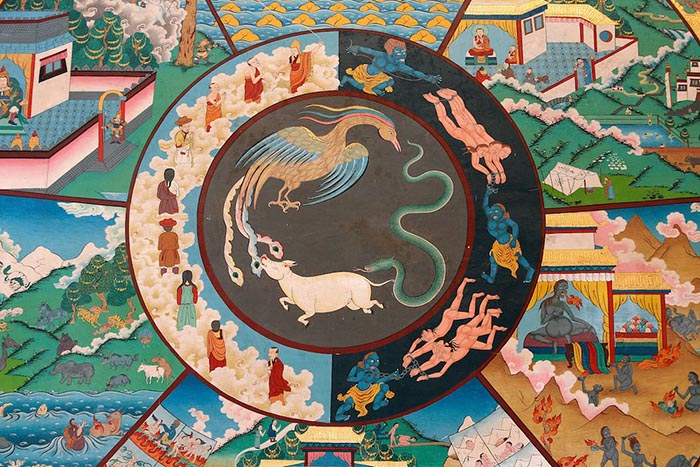
The Wheel of Samsara: a visual teaching aid depicting core Buddhist teachings showing that human nature consists of a positive and negative side. In the Kopan Monastery, Nepal. Image: Godong/ Alamy Stock Photo
Balancing the Opposites
.
Peter: So after you have the image, you identify the sources of the problem in the body, and then try to release whatever emotion you discover there?
Nick: Yes. If you don’t express your emotions harmlessly, then you are like a pressure cooker. There’s a huge chunk of unexpressed energy charging around the body, and this does not do you a lot of good. We are taught as a culture not to be rude and violent and angry, so we tend to button it all up. But if you can release the emotion, the person will feel an almost immediate relief.
Jane: How do you teach someone to release their fury?
Nick: Well, fury in the well-educated and civilised people we all are usually starts off in little tiny dollops. People will say: ‘I get quite irritable’. ‘I get quite frustrated’. I don’t really like him very much’. That sort of thing. I have come to realise over years of practice that this can often just be the top of the volcano. We can shift it harmlessly by shaking our fists, beating pillows, silently screaming. Get it out harmlessly… huge relief!
To make contact with these emotions, I start by setting my clients up with a personal balance sheet or personal map, the more positive qualities on the right-hand side and the more negative and inferior ones on the left. But then rather than endlessly talking about those qualities or forms of behaviour, we visualise them so the client can actually get an image of what that side of themselves looks like. They can then vitally begin to form a relationship to that aspect of themselves and change it slowly.
Peter: Is this model based on the Jungian idea that we all have our ‘shadow’ – the dark side of ourselves, of which we are usually unaware?
Nick: Absolutely. That essential duality in ourselves is key, and many people are ignorant of it. I think in a funny way our Christian culture has left us with a one-sided version of life – to just be good and get on with it sort of thing. But we all have two sides, at least, and we have to take our negative side into account and embrace it, integrate and change it, just as much as the positive. How else can we possibly be whole, complete, which I take to be the whole point of our life journey?
So, for example, in a recent case of Parkinson’s Disease, the visualisation of the left-hand inferior side led, through a crippled image of himself which had to be reassured and looked after, to a dramatic clearing of symptoms in a 73-year-old client. You can see his full testimonial on my web site [/]. In this case, the therapy really worked.
Peter: So would you say that one of the important aspects of your work is to get the two sides – the positive and the negative – back into balance? To reconcile opposing forces.
Nick: Oh, definitely. If on the shadow side you have a negative quality – let’s say you don’t feel good enough, which is a very common feeling – that will constellate on the other side of the personal map as a compensation which may well lean towards an extreme perfectionist tendency. I would never dream of trying to alter the perfectionism. But if I can get someone to learn how to look after the actual feeling of not being good enough through the image of what that looks like, then the perfectionism will begin to alter and balance itself without any further intervention.
Jane: Another very striking aspect of your practice is that you are working with physical disease, not just mental problems. We tend to think of physical illness and mental illness as different things, but it seems that you are working on the assumption that the body and the mind are a unity.
Nick: I find myself amazed that we’ve managed to grow a medical culture which seems absolutely ignorant of the fact that the whole body is intelligent. We are utterly brilliant at dealing with symptoms but devote less time seeking the root cause of the symptom. I have huge respect for our medical establishment and its heroic commitment to service, but if for example, you take the auto-immune field, which includes some 100 diseases, we just don’t seem to have a clue how these arise. We are yet to look at the whole energetic and emotional field which I think is the background to where they mostly come from. But that’s how I work with them.
I’ve had some interesting successes, particularly with conditions like fibromyalgia or fibroids, endometriosis and so on, where there are no pathogens involved and the problem seems to be basically a stress-related structure. But I just love to help people to get an image of their disease, whatever it is, because that really seems to help them to manage it.
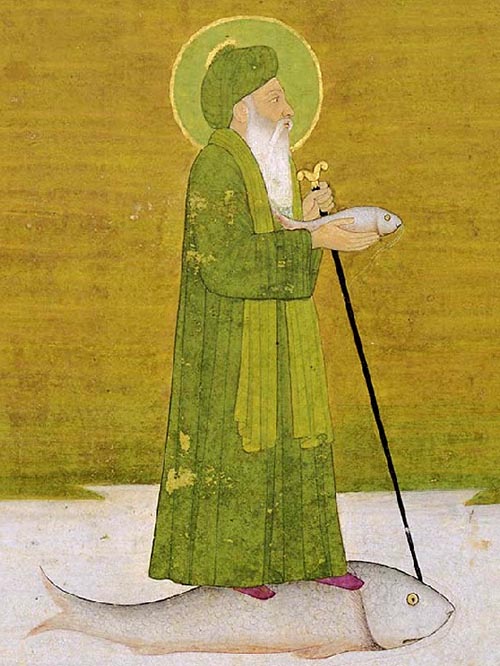
The spiritual guide, al-Khidr, who in the Islamic tradition is understood to reside in the imaginal realm. He is the guide of those who have no physical teacher. Image: c1760 in the Bibliothèque Nationale de France, Paris, via Wikimedia Commons
Encompassed by a Higher Reality
.
Jane: Going back to the question that you posed; what is going on when people start to work with these images that ‘bear witness’ to their state? It seems that there is an underlying assumption in your work that there is a greater reality at work in the healing process, and that people are brought into contact with this through the imagination.
Nick: Yes – although I try to avoid the word ‘God’ because for a lot of people in our so-called secular world, God is immediately associated with a particular religion which they have come not to trust. But you can lead a deeply spiritual life without a religion. This is a point that the Dalai Lama has made again and again. The Dalai Lama is great inspiration to me because he says: ‘Look, you can do without your religion, that’s fine. But what you cannot do without is a practice that embeds you in the spiritual reality of your own nature and in the ground of your own being’.
So I don’t expect the people I am working with to accept any kind of belief system. All I’m saying to them is: learn to pay attention to yourself and your inside world, for that influences so much who and how you are. The conditions for the therapy to work do not depend upon head knowledge; it is much more about direct awareness of what’s going on deep inside us. It works kind of inexorably once we have an image.
Though having said that, I think that most people accept that there is some kind of higher reality which encompasses us. They say: I’m not religious. I don’t go to church. But I do think that there’s something more going on in the universe, and that’s enough for me. There is such a hunger for this. The purely rational and scientific has starved us of that imaginal nourishment. Although having said that, it is also important not to completely dismiss the rational side. We need both faculties.
Jane: You yourself came up to your approach through studying the Islamic mystical tradition, where the foundational principle, particularly in the work of Ibn ‘Arabi, is unity – the unity of all things. Can you say more about the influence that Sufi ideas have had on your work?
Nick: What I found within the Sufi tradition, thanks to The Temenos Academy, was that different ideas which had interested me for a long time all came together. I think the first question I asked myself, almost prior to my interest in the imagination, was the one we have just been discussing. Do we or do we not live within a wider intelligence than our own individual consciousness? I didn’t want to name this, because I think that immediately sets up the idea of religion and all that has meant of contempt for each other, but I simply asked myself: Do we exist within a greater intelligence? Because if we do, that will very much shape how we view our lives and our passage through this world and towards our death. It’s a universal idea we could all agree on.
I think you only have to watch the Attenborough films to understand that there is a unity to all life. You don’t have to be a scholar or specialist to see it; you just have to notice the unbelievable beauty running through the whole creation. So the idea that there was an intelligence behind it, I found, in a sense, to be perfectly obvious. It seemed you only had to look properly and see. The Sufis, as you know, felt beauty denoted the presence of that wider intelligence, and I just love that idea.
Then in the writings of Ibn ‘Arabi [/], very much through the writings of his modern commentators such as Henry Corbin [/] and Tom Cheetham [/], I came across the notion that one of the principal, if not the principal, faculty of this greater intelligence is the imagination – what Ibn ‘Arabi calls ‘the sacred imagination’. That changed the status of the imagination for me. I didn’t really need much persuading – I intuitively already felt that this was the case – but it did have a huge bearing on the validity and the authenticity of using the imagination as a tool in dealing with disease and distress.
In the West, the imagination has come to be seen as not very important, as Corbin points out. It’s regarded as a rather amusing faculty that can be sometimes helpful in art and advertising and so on, but it’s not understood as a vital tool to help us go into the deeper aspects of life and reality or to discover our place between heaven and earth, as it is within Ibn ‘Arabi’s giant understanding.
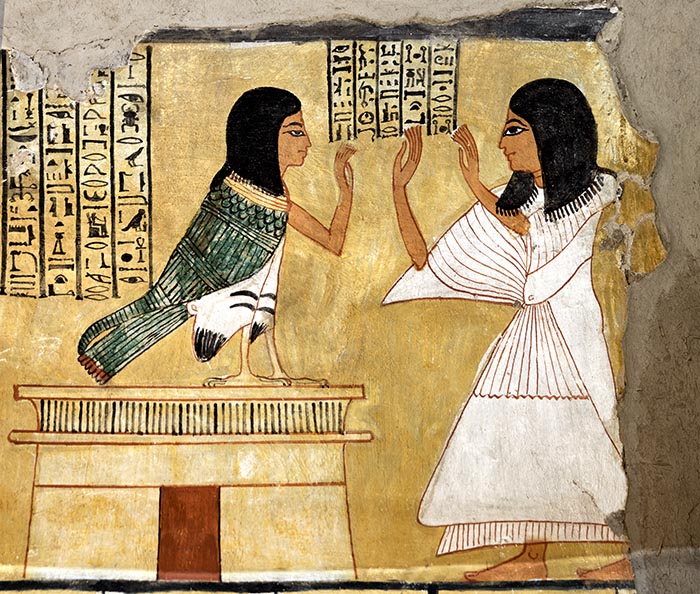
In ancient Egyptian culture, the winged Ba-bird represented a person’s soul. In this painting in his tomb at Thebes, Inherkhau, a workman living during the reigns of Ramesses III and Ramesses IV (c. 1186–1149 BCE) engages with his own Ba-bird. Image: Shutterstock
A Contemplative Approach
.
Jane: One of the things which Ibn ‘Arabi says is that the world of imagination is a real one, as real as the physical world in some ways, and it is responsive. Both responsive and compassionate. So if we have an intention towards healing, then it will deliver to us images which help us and guide us on our way.
Nick: Without question, Jane, without question. But I think I would almost go further than that and say that our intelligence and our imagination are and come from the higher intelligence; we are just part of that. I mentioned earlier my general wonder at how the images we work with respond. That is, I think, the proof of this particular pudding.
Peter: What you are saying is that Atman is Brahman.
Nick: Yes. We’ve done ourselves tremendous damage, I think, in the modern world by forgetting these things. In the Hindu tradition – look at the Upanishads – people don’t doubt for one single minute that this greater intelligence is our lives. I like the idea that what really defines people is the questions they ask themselves about life.
Ibn ‘Arabi points out that every human being has two faculties of mind. We have the rational, discursive mind which we’ve trained into a sort of insanity of specialisation, really, in our present culture, but we also have the imaginal mystical mind. This used to be satisfied by an established church. People didn’t really think about it; they just went to church. But in a way, unconsciously, they were immersing themselves in that mystical aspect or dimension of human life. This went on in various forms through thousands of years of history, in country after country, and suddenly we think that mysterious aspect of life is just not necessary because we know it all! This seems to me not only arrogance, but also a sort of insanity. Okay, so maybe we don’t have to do it in cathedrals or in churches, we can do it in another way. But what was this thing, this unknown dimension, that people were honouring for so many centuries? We don’t have to give it a name, but do we really dare to say it’s not there?
Peter: Thinking about the need for a more contemplative approach; in one of your talks, you describe a situation where you did not get an instant response after generating an image, but you had to just stay with it and wait.
Nick: This is something that has taken me long time to understand. Sometimes you get an image, but it has no great impact. What I have learned to do is to just help to keep people contemplating it, almost as if it were an icon. Our response to its mystery lies in contemplation and not endless thinking about. Then at some point the fireworks start, the image responds and the process of change begins.
I had a really interesting case of a young man of about 20 who was suffering from extreme states of anxiety, and nobody really knew why. He was working with his doctor, who said: Well, I think you should do some CBT, so he did a year of that, and it didn’t work. So the doctor sent him to me. On the first visit, before I could even get a word in, he said: ‘I’ve just got to tell you a dream. I’m standing on a lake and fishing. I’ve been fishing all night and I’ve caught nothing. Then as the dawn is breaking, a shadowy figure passes behind me and says: ‘If you want to catch something in here, you’ve got to go much deeper.’ So he looks at his rod, and it has a dial on it which says 500 fathoms or something. So he switches it to 500 and chucks his cast into the lake.’ End of dream.
So he asks me: ‘What does it mean?’ I said: ‘Well, I don’t know, but we’d better hurry back and get fishing.’ So I get him to sit down in the chair and say: ‘Okay, close your eyes, now go back onto that dream lakeside, get your rod ready, put it to 500 fathoms and chuck the bait in.’ Immediately, in his imagination – bang! – he catches a fish. I say: ‘Well, reel it in.’ So he does and walks backwards up the shore, dragging the fish up onto the sand. Then he goes incredibly sad and very silent. I ask him what is going on, and he says: ‘The fish is absolutely rotten’. I feel his disappointment in myself, but say: ‘OK, put your rod aside (in your imagination) and sit down cross-legged and contemplate that fish’. He contemplates for, I would think, a good two minutes of absolute silence. And then his head snaps back and his eyes open wide and he says: ‘My God, I’ve never, never ever had a feeling of terror like this in my life before, but it’s gone now, right out through me, out of the top of the head.’ No more anxiety.
It turned out that what that rotten fish represented was a whole chunk of terror that had occurred during a car crash three years previously in which one of his family had been killed. He had always blamed himself, but deeply repressed the feeling. But it came up in the image of a rotten fish, and the gift of the anxious energy was there to be ‘caught and released’ if we were patient enough to contemplate it and accept the gift.
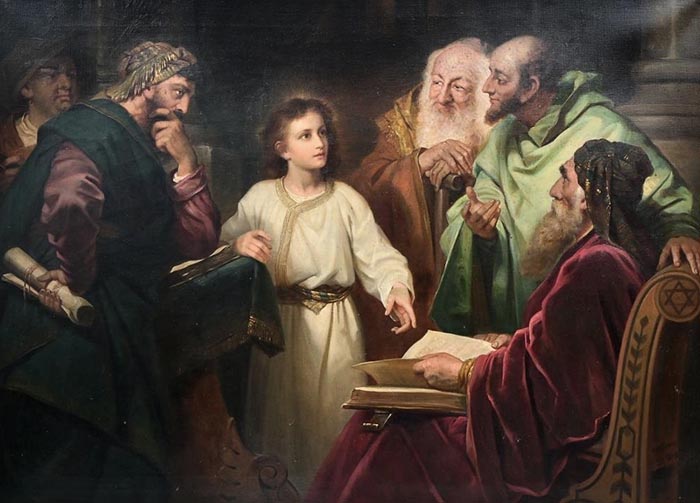
The Boy Jesus in the Temple by Heinrich Hoffman, painted 1884. Image: Wikimedia Commons
Working with the Inner Child
.
Jane: I know that although you do not see yourself as a Jungian practitioner, working with archetypal images is an important part of your work, and that you place particular emphasis on the archetype of the child. Can you say something about this concept?
Nick: I don’t particularly want to go into the concept of archetypes, because for me that is pure conceptual stuff and I’m not very good at that. But I do work with archetypes at a practical level, the key ones for me being the child, the mother and the father. They are archetypes, ancient inner forms, and images which go way beyond the personal. For example, if a father has left the house, you can feel the absence in a young man, the emptiness caused by that departure. It’s an emptiness that goes way beyond the loss of the personal father. There are real forces at work there.
For me, the child is the primordial archetype and the first step in any therapeutic relationship of the client with themselves. The child is always going to tell me what the problem is. Let me give you an example. One of my clients, a woman, was having tremendous difficulty with her daughter. The child wouldn’t go to school or do anything that she asked. I said: ‘Leave the actual child alone.’ But she couldn’t, although she knew that she was treating this real child of hers as her mother had treated her. That’s one of my golden rules: as you were treated, so you will treat yourself. Most people say: as you were treated, so you will treat others. But the real key is: as you were treated, so you treat yourself. So if you were brutalised and bossed around as a child, you will, as night follows day, be brutal and bossy with yourself and then sadly inevitably with your children.
But I find it’s no good talking about it all. You have to see what the image of your brutalised child self looks like. So my solution with her was not to worry about her outer behaviour but to go straight into a visualisation of the child archetype inside herself. Straight away we got an image inside of a really rebellious little girl who was carrying a lot of rage at the way she was being treated. So I taught her how to love and look after that child; she had to learn to be a better mother to her than her actual mother had ever been. The only road I know out of self-hate is towards self-acceptance and eventually love.
After we had gone through all that for a week, she said: ‘I simply can’t understand it; my daughter’s doing exactly what I tell her to, it’s amazing.’ So this is another important principle: if you go inside and learn how to love those unhappy bits of yourself, then the outside world will begin to change in response.
Jane: So again, the important thing in the healing process was to establish a relationship with the image.
Nick: Yes. Forming a relationship with the image is the key. In near suicidal cases, it’s common to find that the person wants to kill or hurt the child inside themselves. I had one client who wanted to put the child’s eyes out because of the absolute inner contempt and fury that she was carrying from her upbringing. She had failed to express these emotions harmlessly, so she had turned against herself. We had to work very gradually in that case. I would ask her: ‘What do you think it’s like for that poor child to be in the presence of somebody who wants to put her eyes out? What and who does that make you?’ What I tried to do was to get her into the shoes of the child, to see what it might be like to be on the receiving end of that sort of violence. Then we were on your way, because there was the beginning of a connection to genuine compassion.
These things are not only relevant within the therapeutic context. We all have our own inner child, and it is important that we stay in touch with it as a living presence. The entire Christian tradition is built on the image of a child born at the darkest time of the year, at the winter solstice, so this is an archetype which is very big stuff in our culture. So attend to the child in yourself, and perhaps you can then get away with not going to church!
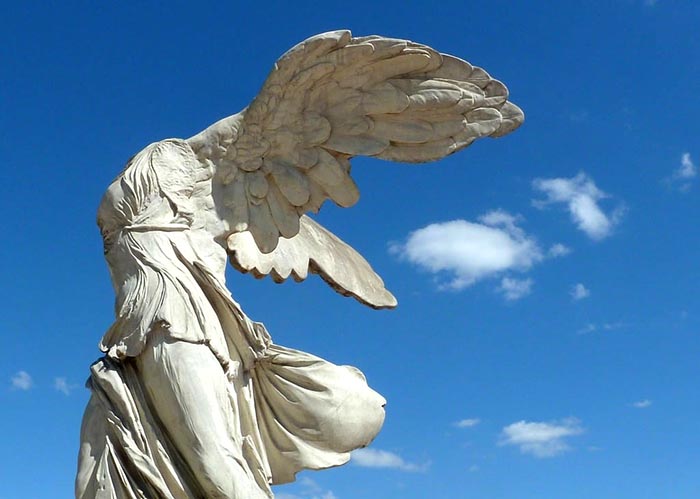
Statue of an Angel, Montpellier, France – a replica of the original Greek statue found in the Louvre in Paris, dating from around 1000 B.C. Image: Picryl [/]
Love and Compassion
.
Jane: You’ve used this word ‘compassion’ several times now. Do you find that it is important in the therapeutic process. And what about love?
Nick: Gosh, well, yes. We use these words so frequently without really quite knowing what they mean, I think. But I do think that working through the inner images and learning to, above all, accept them, brings about an increase in balance and a deeper peace in the individual. And also a sense of the mystery we are all living in, whether we choose to know it or not. It’s not about faith or a belief; it’s a sort of reality.
I think good therapy can only be about compassion and love. I cannot imagine not loving and admiring the people who come and work with me, even the irritating ones. They want so badly to feel better and we mostly want the same things for ourselves.
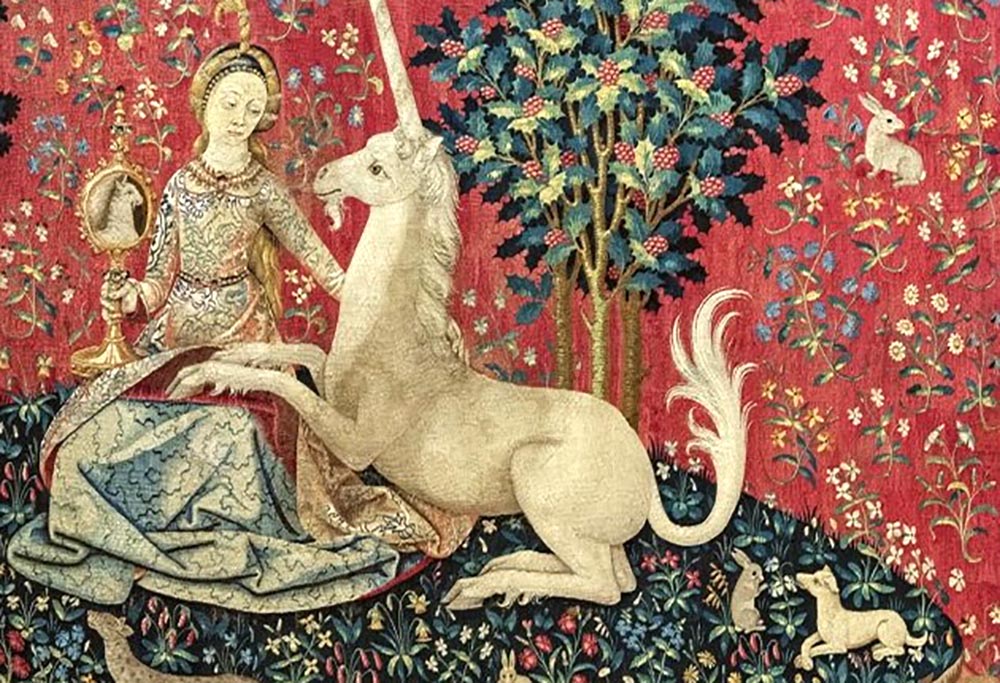
Peter: You recently introduced a talk with that beautiful poem by Rilke about the unicorn, which is all about bringing something into existence through love.
This is a creature there has never been.
They never knew it, and yet, none the less,
they loved the way it moved, its suppleness,
its neck, its very look, mild and serene.
Not there, because they loved it,
it behaved as though it were. They always left some space.
And in that clear unpeopled space they saved,
it lightly reared its head, with scarce a trace
of not being there. They fed it, not with corn,
but only with the possibility
of being. And that was able to confer
such strength, its brow put forth a horn. One horn.
Whitely it stole up to the maid – to be
within her silver mirror and in her. [1]
Nick: Yes, this is the most perfect image of what this work is all about. Something not quite there, at least not to the normal five senses, really is there but in an immaterial form, and it is significant and real. Rilke really saw that.
When you start working with the inner world, you encounter many different archetypal images, and what is remarkable is that they seem to be common across many different cultures. One which I come across often is the image of the soul as a winged being. We find this in ancient Egypt, in Plato, in the Christian tradition, and in the Islamic tradition we have a wonderful representation of it in ‘Attar’s Conference of the Birds. When my clients dream of winged creatures, I know we are looking at the state of their soul.
I believe that the imagination – the creative imagination as a human faculty – is the only vehicle which can take us into this inner world of mystery and healing. It just cannot be done through the rational faculty, through thinking and analysing. I really think it’s the only way the next generation will be able to see beyond our scientific ideas into the deeper mystery of our lives – amazing though some science clearly can be.
Jane: Nick, thank you so much for talking to us about your work and opening up this fascinating world to us.
FOLLOW-UP SEMINAR
Nick has very kindly agreed to give a follow-up seminar to this article, which will give an opportunity to explore the ideas he presents in more depth. This will take place online on Sunday 30 November at 5 pm (UK time). There is no charge, but the number of places will be limited.
Image Sources (click to open)
Banner: La Vue (Sight), from the La Dame à la Licorne (The Lady and the Unicorn) tapestry set, c1500, in Musée de Cluny, Paris. Image: Wikimedia Commons.
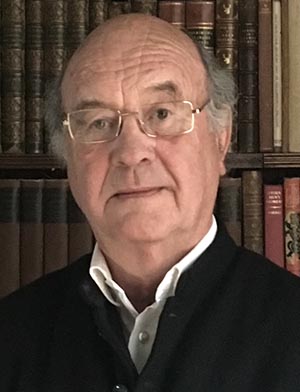
Inset: Nick Pearson, courtesy the author.
Other Sources (click to open)
[1] RAINER MARIA RILKE, Sonnets to Orpheus, Part 2: IV, translated by J.B. Leishman (The Hogarth Press, 1949).
The text of this article has a Creative Commons Licence BY-NC-ND 4.0 [/]. We are not able to give permission for reproduction of the illustrations; details of their sources are given in the captions.
FOLLOW AND LIKE US
@Beshara_Mag








——————————————
——————————————
——————————————
FOLLOW AND LIKE US
@Beshara_Mag
If you enjoyed reading this article
Please leave a comment below.
Please also consider making a donation to support the work of Beshara Magazine. The magazine relies entirely on voluntary support. Donations received through this website go towards editorial expenses, eg. image rights, travel expenses, and website maintenance and development costs.
READ MORE IN BESHARA MAGAZINE
Mindfulness Meditation – Alleviation of Suffering for Neurological Conditions
Niels Detert, neuropsychologist at the John Radcliffe Hospital in Oxford, explains how meditation can help people with long-term medical problems
Richard Holding: The Art of Acute Listening
The distinguished osteopath talks about his holistic approach to healing
Bringing Light to the World: the Vision of Ibn ‘Arabi
Dr Eric Winkel talks with Jane Clark and Richard Gault about what the wisdom of the great 13th-century philosopher / mystic can offer us in these troubled times
Rumi: The Operation of Divine Love
Alan Williams tells us about his new translation of Rumi’s great epic poem, the Masnavi
READERS’ COMMENTS
Thank you for this article. I was moved to tears reading it, to read about Sir Nick Pearson’s work and the quality of caring and genuineness that emerges in the interview. So much appreciate the work you offer.
Refreshing and heart-felt, thank you.
I agree, the idea is simple, clear, and something we actually experience in daily life.
Like a bathe in the Ocean.Thankyou so much.Jacqui on Jan.30 at 9:30 pm