
Readers’ Writings
April 2026
Gabriel Rosenstock
Don Quixote in Search of the Holy Land
A bilingual sequence of quixotic poems
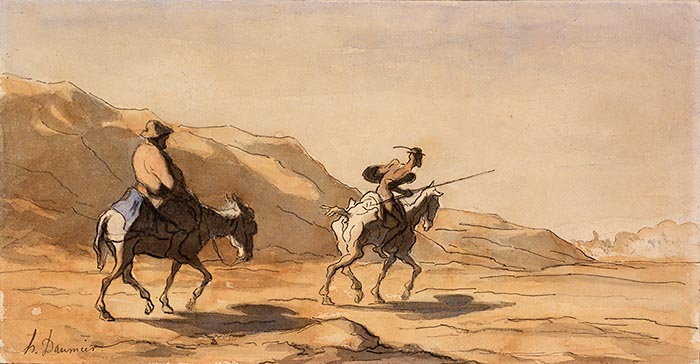
Don Quixote – or to give the work its full title The Ingenious Gentleman Don Quixote of La Mancha – is a Spanish novel by Miguel Cervantes. It was originally published in two parts in 1605 and 1615. It is often cited as the first modern novel and one of the greatest works of western literature.
Cervantes originally conceived of the book as a parody of the chivalric romances which were then in vogue. Don Quixote is a middle-aged idealist and gentleman, obsessed by these stories, who decides to become a knight-errant and set forth in search of adventure. His companions are a down to earth farm labourer Sancho Panza who serves as his squire and his aging horse Rocinante. According to Quixote, knights-errant must have a muse to inspire and love. As he does not have one, he creates in his imagination the beautiful Dulcinea del Toboso.
One of the themes of the book is the conflict between reality and illusion. And one of its mysteries is: what exactly is the object of Don Quixote’s quest? Gabriel Rosenstock, the renowned Irish poet, picks up on both of these in his bilingual sequence of quixotic poems entitled Don Quixote in Search of the Holy Land. Each poem is written as response to a painting inspired by the novel.
Foreword – Literature and illusion
.
In a village of La Mancha, the name of which I do not wish to recall,
there lived not long ago a gentleman, one of those who kept a lance in the rack,
an ancient shield, a lean horse, and a greyhound for coursing.
A stew of more beef than mutton, hash most nights, eggs and bacon on Saturdays, lentils on Fridays, and a pigeon or two extra on Sundays, consumed three-quarters of his income.
The rest went toward a fine woollen coat, velvet breeches for holidays, with matching slippers, and on weekdays he dressed in his finest homespun.
He had in his house a housekeeper past forty, a niece not yet twenty,
and a farmhand who could saddle a horse as well as wield a pruning hook.
Our gentleman was nearly fifty years old; He was of sturdy build, lean,
with a gaunt face, an early riser, and fond of hunting…
Who would not be tempted to read on?
Real literature is about losers, says Umberto Eco; and Don Quixote is a loser, is he not? The great Scottish poet, Hugh MacDiarmid, described himself as ‘a champion of forlorn causes’. Let’s focus on the word ‘champion’ here. A champion of forlorn causes is not the same as a victim or a casualty. A champion in this case sounds mock-heroic.
Don Quixote is the greatest mock-heroic figure in world literature. I can identify with him. In fact, sometimes I feel like a Don Quixote in relation to Sancho Panza; other times, a Sancho Panza in relation to the knight. My wife and children, my friends, they all know me to be quixotic. I don’t think I could be anything else. It all comes out in the washing, sooner or later!
.
Introduction – Transient as dew
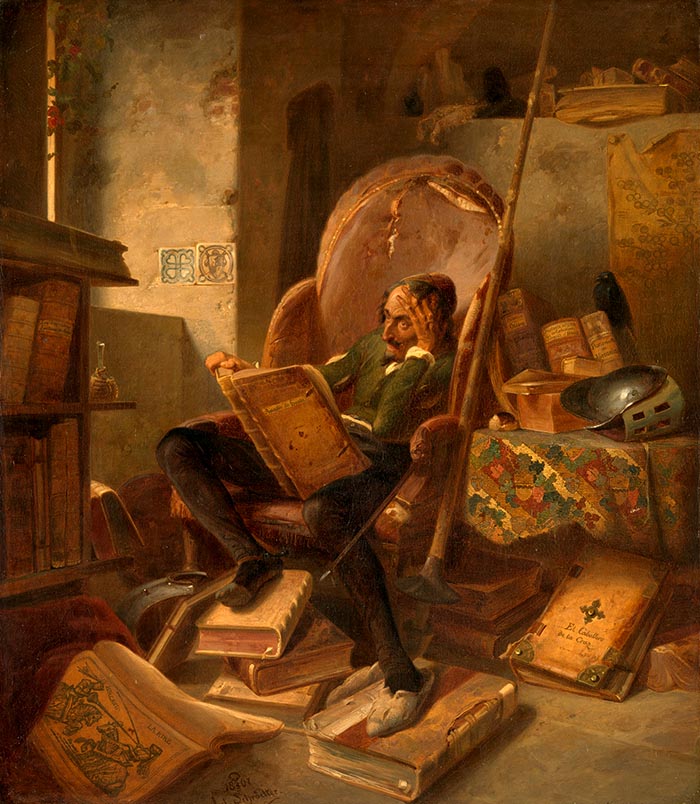
Adolph Schrödter (German, 1805–1875), Don Quixote in his study (1861) [/]
Sometimes I feel
my head is going to fall off
with the weight of all my visions!
Are not visions light and ethereal by nature
transient as dew
why then should they weigh so heavily on me?
Uaireanta braithim
go dtitfidh mo chloigeann díom
faoi mheáchan mo chuid aislingí go léir!
Is éadrom aerach a bhíonn aislingí de ghnáth
chomh gearrshaolach leis an drúcht
cén fáth mar sin a luíonn siad orm chomh trom sin?
.
1. Blessed
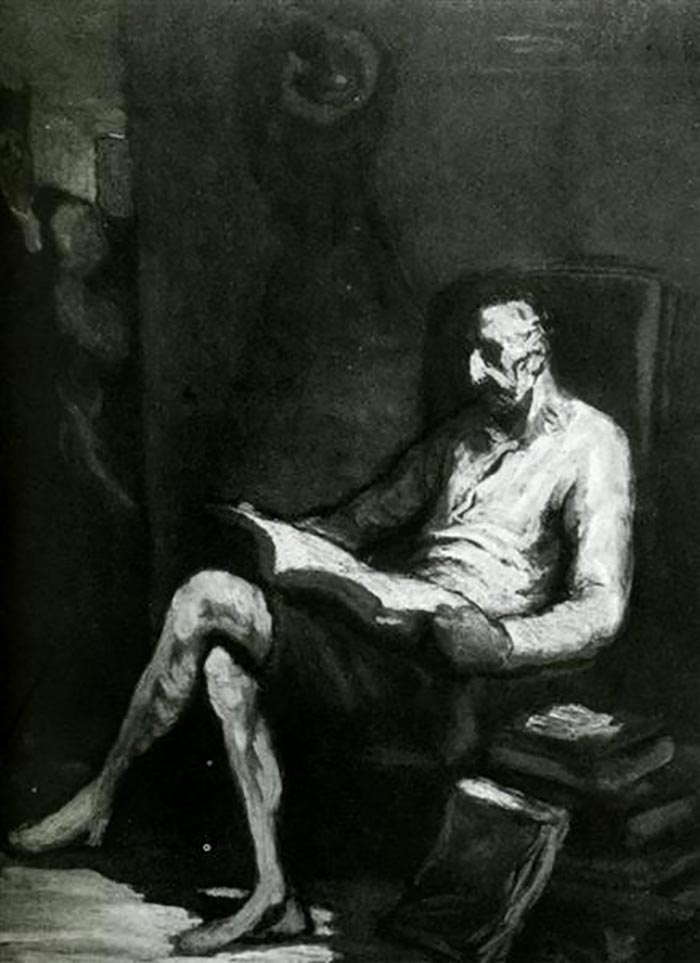
Honore Daumier (1865–1870), Don Quixote Reading (c.1865 – c.1870), WikiArt [/]
How blessed am I!
My head in a book.
Most of the villagers in La Mancha
Would prefer to have their head
Stuck in a trough!
I guzzle up tales so that I may truly be
A worthy knight of the road.
———
Nach méanar dom!
Mo cheann sáite i leabhar agam.
B’fhearr le formhór mhuintir La Mancha
A gceann a bheith sáite
I dtrach!
Alpaimse scéalta siar chun go mb’fhiú dom
Bheith im’ ridire bóthair go smior.
.
2. Left
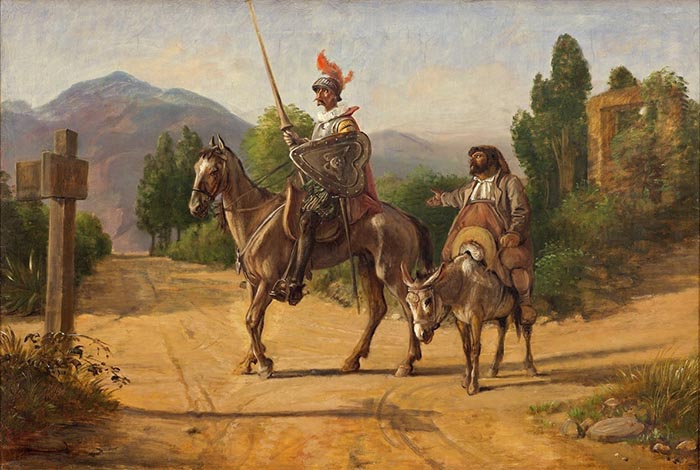
Wilhelm Marstrand (Danish, 1810–1873), Don Quixote and Sancho Panza at a Crossroad [/]
Left or right?
Nothing but mountains to the right.
But maybe they contain gold?
I can see nothing to the left,
A wilderness.
What say you, Sancho Panza?
——To the right, I say.
——But let the horse and donkey decide!
Gracias! Knights-errant invariably drift to the right.
So, left it is!
———
Ar chlé nó ar dheis?
Níl ar dheis ach sléibhte.
Cá bhfios, áfach, ná go mbeadh ór iontu?
Ní fheicimse faic ar chlé.
Fiántas.
Cad déarfása, a Sancho Panza?
——Ar dheis a déarfainnse.
——Ach ligimis don chapall is don asal cinneadh a dhéanamh!
Gracias! Bíonn claonadh ar dheis i gcónaí sna ridirí fáin.
Ar chlé mar sin!
.
3. Madness
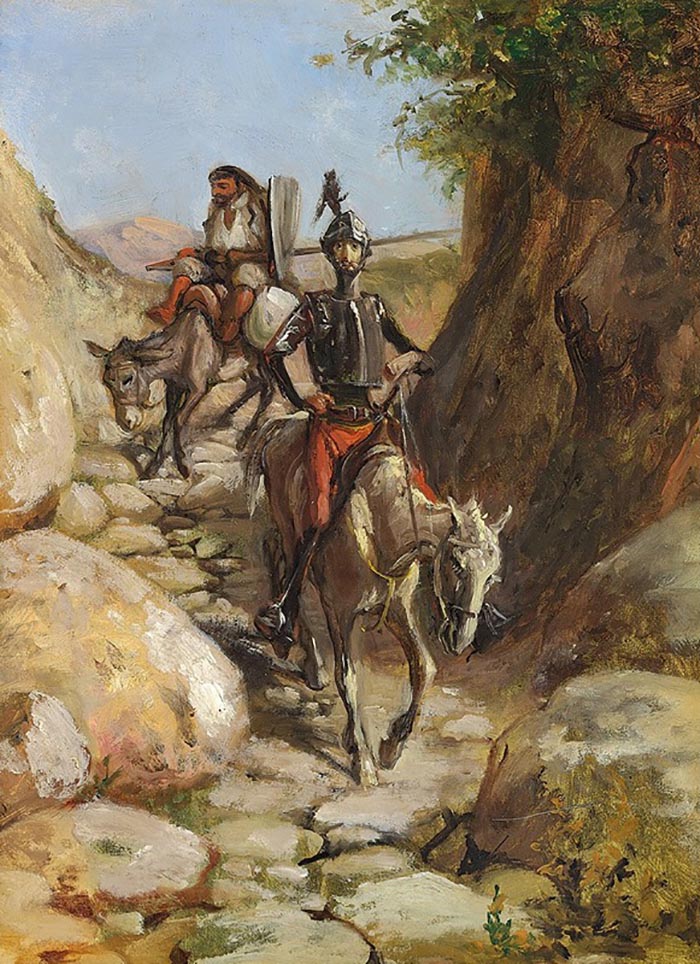
Wilhelm Marstrand (Danish, 1810–1873), Don Quixote and Sancho Panza come down from the mountains [/]
Master,
There’s nothing here!
This is madness.
Fear not!
Madness is close
to godliness
———
A Mháistir,
Níl faic anseo!
Níl anseo ach gealtacht.
Ná bíodh eagla ort!
Is den ghlóir
an ghealtacht
.
4. Night watch
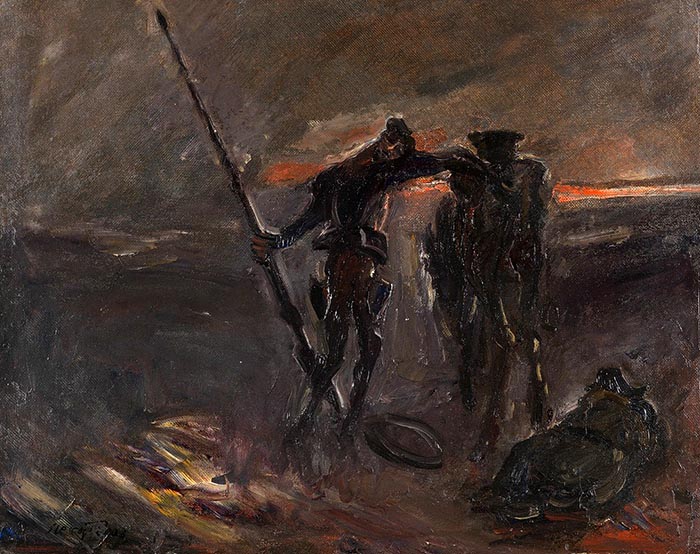
Max Slevogt (German, 1868–1932), Nightwatch [/]
What does it mean?
Night watch?
It simply means watching the night.
But… why do we have to watch the night, Master?
Someone might steal it!
———
Cad is brí leis?
Tráth faire na hoíche?
Faire na hoíce is ea faire na hoíche.
Sea… ach cén fáth, a Mháistir?
Ar eagla go sciobfadh duine éigin í!
.
5. Disappearing
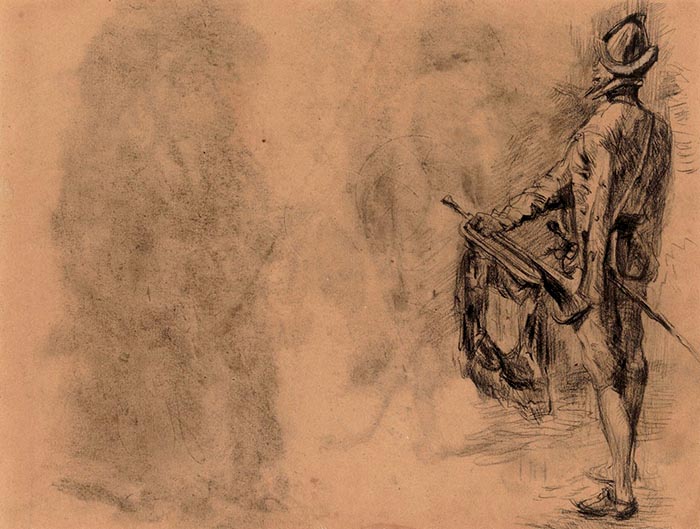
James Ensor (Belgian 1860, 1949), Don Quixote (1880) [/]
The world?
I’m not an expert.
Don’t quote me,
but I would say
that the world
as we know it
is disappearing.
There was always
something fictitious about it anyway
a tale of romance
sensational
full of high jinks
war
espionage
crime and punishment
You can’t go on writing the same story forever
———
An domhan?
Ní saineolaí mise.
Ná habair gur mise a dúirt
ach déarfainnse go bhfuil an domhan
mar is eol dúinne é
ag dul as.
Bhí rud éigin ficseanúil
ag baint leis riamh
scéal rómánsach
dochreidte
lán de rancás
cogadh
spiaireacht
coiriúlacht is pionós
Ní féidir an scéal céanna a scríobh arís is arís eile
.
6. Difficult
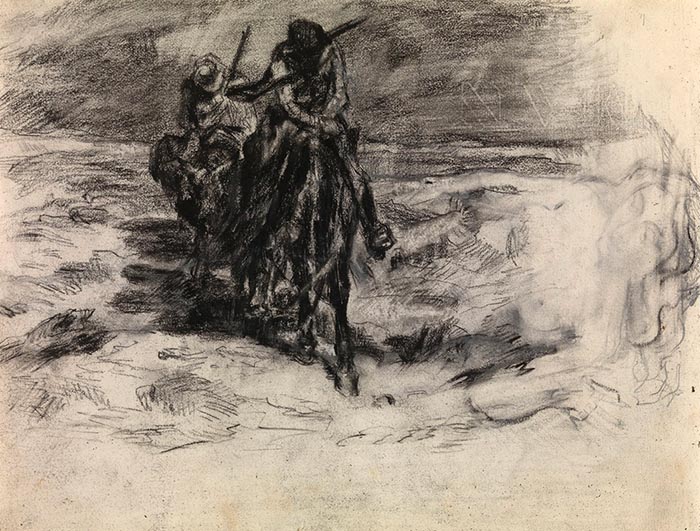
James Ensor (Belgian 1860–1949), Don Quixote [/]
I never said it would be easy.
———
Ní dúrtsa riamh go mbeadh sé éasca.
.
7. Terra sancta
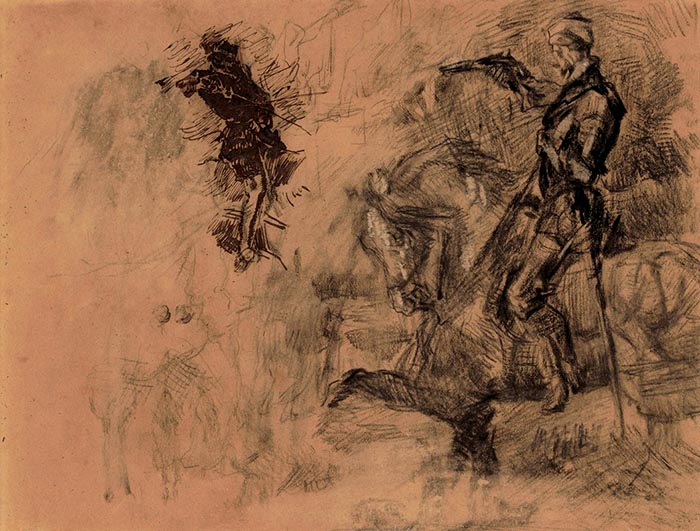
James Ensor (Belgian, 1860–1949), Don Quixote (1880) [/]
Would I describe myself as a violent man?
There are many forms of violence
and probably as many types of violence
as there are of non-violence.
No, I am not a violent man.
Not at heart.
But I am not all heart.
That is to say, there are other parts of me.
Parts other than my heart.
Nor is my horse, Rocinante, violent.
Sancho Panza’s donkey?
Violent?
Nonsense!
Would I react violently
to violence?
There can be no place for violence in Terra Sancta!
———
An gcuirfinn síos orm féin mar dhuine foréigneach?
Is iomaí saghas foréigin atá ann.
Is dócha go bhfuil an oiread céanna cineál foréigin ann
Is atá cineálacha neamhfhoréigin.
Ní hea, ní duine foréigneach mé.
Ní i mo chroí istigh.
Ach is mó ná mo chroí mé.
Is é sin le rá, tá codanna eile dhíom ann.
Codanna eile seachas an croí.
Níl mo chapallsa Rósínanté foréigneach ach oiread.
Asal Sancho Panza?
Foréigneach?
Preit!
An mbeinnse foréigneach
le duine a d’imreodh foréigean orm?
Níl áit ann don fhoréigean in Terra Sancta!
.
8. Dead mule
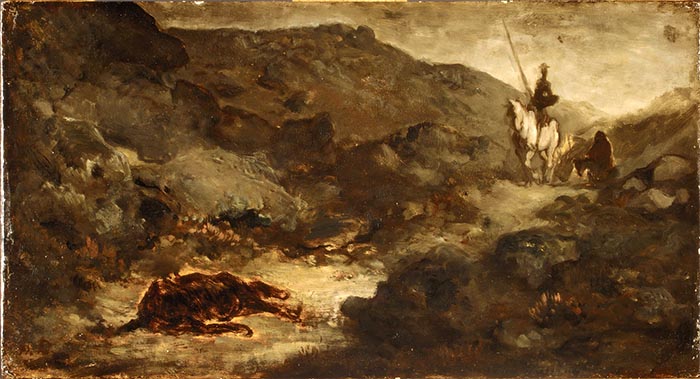
Honoré Daumier (French, 1808–1879), Don Quixote and the Dead Mule [/]
I want to go back to La Mancha
I want to go back to–
Say something, Sancho?
Who, me? No.
Must have been the dead mule.
Huh!
You don’t believe me?
You, I believe…
But the dead mule?
———
Is mian liom dul ar ais go La Mancha
Is mian liom dul ar ais go–
An ndúirt tú rud éigin, Sancho?
Cé? Mise? Faic.
An mhiúil mharbh a labhair, ní foláir.
Huth!
Ní chreideann tú mé?
Creidim thusa…
Ach an mhiúil bhocht?
.
9. Awake
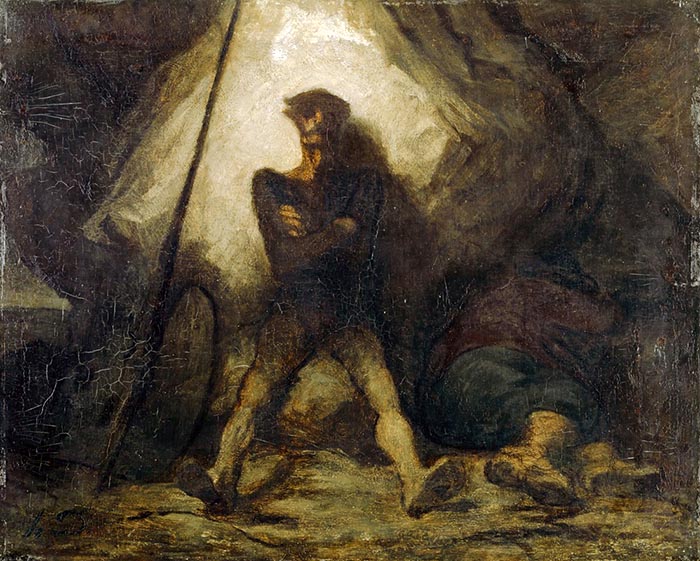
Honoré Daumier (French, 1808–1879), Don Quixote’s Vigil [/]
I have been awake
I am awake
I shall stay awake
I will be awake
I will be truly awake
when all the world is asleep
I shall be the chanticleer
and cry
AWAKE!
Did you say something, Sancho?
In the name of all that’s good and holy, go to sleep!
———
I mo dhúiseacht a bhíos
i mo dhúiseacht atáim
fanfaidh mé i mo dhúiseacht
fanfaidh mé i m’fhíordhúiseacht
nuair a bheidh an domhan mór i dtoirchim suain
scairtfidh mise im’ choileach dom
DÚISÍG’!
An ndúirt tú rud éigin, Sancho?
Téir a chodladh in ainm dílis Dé!
.
10. Mountain air
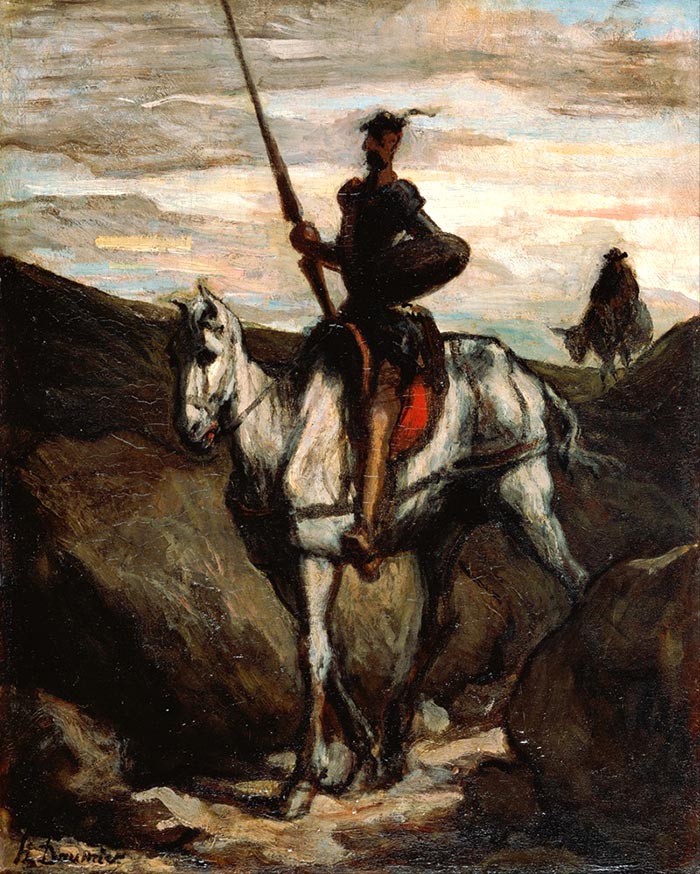
Honoré Daumier (French, 1808-1879), Don Quixote in the Mountains [/]
It clears the head, you know, Sancho
mountain air:
unknown to myself
this is what I’ve been missing all my life!
I sense that we are approaching the Holy Land
at last!
———
Glanann sé an inchinn tá a fhios agat, Sancho
aer sléibhe:
gan fhios dom féin
is é seo a bhí uaim ar feadh mo shaoil!
Braithim gur ag druidim leis an Talamh Naofa atáimid
fá dheoidh!
.
11. Dulcinea del Toboso
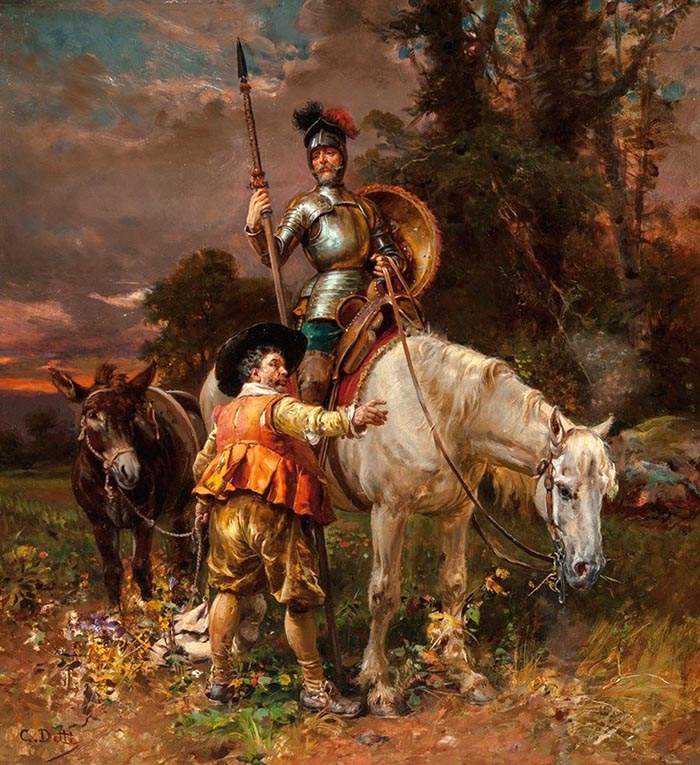
Cesare Augusto Detti (Italian, 1847–1914), Don Quixote and Sancho Panza [/]
Did you see her, Sancho?
Dulcinea del Toboso?
Yes, Sir, a little bit west down the road.
Are you sure it was herself?
Her hair is pure gold
Her forehead the Elysian fields.
Her eyebrows, rainbows
Her eyes, suns
Her cheeks, roses
Her lips? Coral!
Her teeth, pearls,
Her neck, alabaster,
Her bosom, marble,
Her hands, ivory
Her fairness, snow…
That’s the lady, Sir, she’s all of that and more.
If she’s a woman at all, that is.
But what if she’s nothing more than a vision, Sir,
A vision of the Holy Land?
———
An bhfaca tú í, Sancho?
Dulcinea del Toboso?
Chonac, a dhuine uasail, tamaillín siar an bóthar.
Tá tú cinnte gurbh í a bhí ann?
D’ór glan a folt
Páirceanna Éilísiam a clár éadain.
Boghanna ceatha iad a braoithe
Grianta iad na súile aici
A leicne is rósanna iad
A beola? Coiréal!
A cuid fiacla ina bpéarlaí
Is alabastar é a muineál
Is marmar é a hucht
Eabhar is ea a lámha
Is gile í ná an sneachta…
Sin í, go deimhin í, agus a thuilleadh fós dá n-abrainn é!
Is é sin, más bean in aon chor í.
Ach abair nach raibh inti ach aisling, a dhuine uasail,
Fís den Talamh Naofa?
.
12. Questions
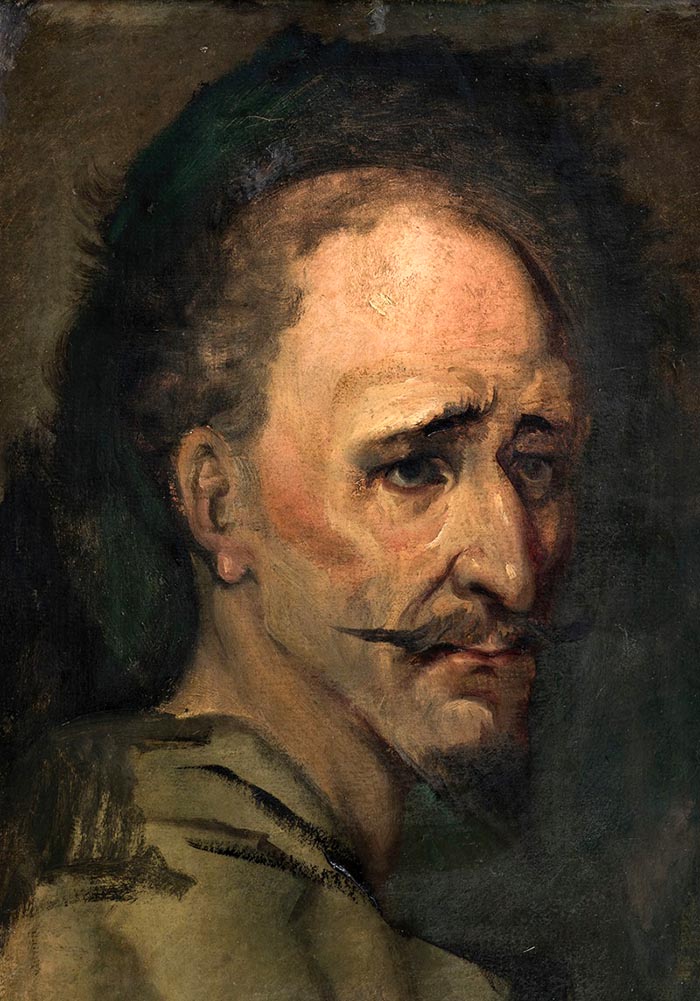
Wilhelm Marstrand (Danish, 18101873), Don Quixote [/]
Should one land only
Deserve to be called the Holy Land?
What land is not holy?
What land is not cursed?
What is this world?
A holy world
Or a world cursed for all time?
These questions keep me up at night
How loudly Sancho Panza snores!
———
Aon tír amháin a thuilleann an t-ainm
An Talamh Naofa, an é sin é?
Cén tír nach bhfuil naofa?
Cén tír nach bhfuil mallaithe?
Cad is ea an domhan seo?
Domhan naofa
Nó domhan atá mallaithe go brách na breithe?
Coinníonn na ceisteanna sin i mo dhúiseacht mé istoíche
Sancho Panza ag srannadh go glórach!
.
13. Water
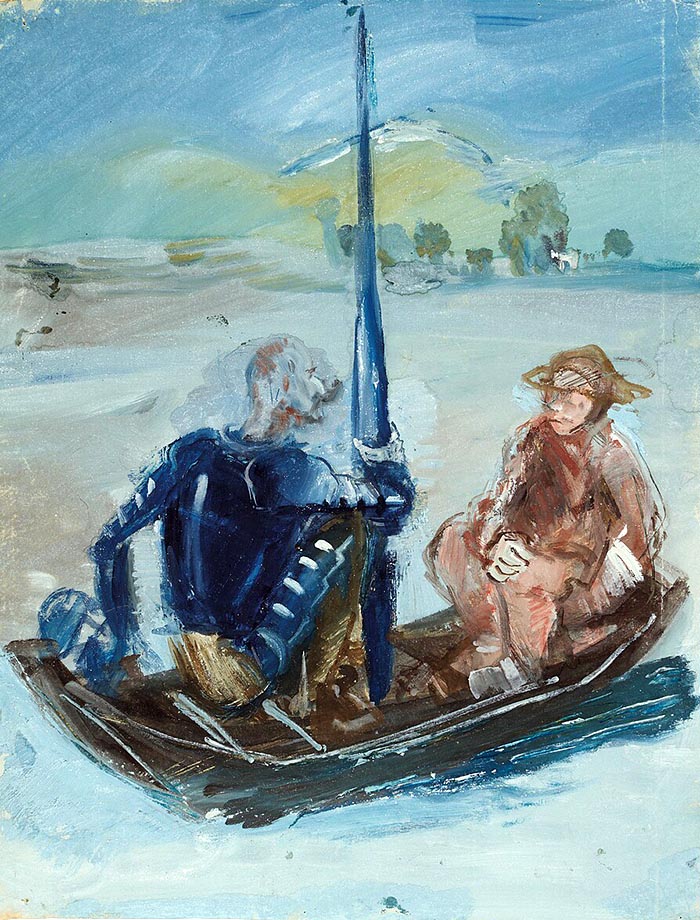
Vera Ermolaeva (1893 – 1937), Don Quixote and Sancho Panza on a boat [/]
My dear Sancho,
Listen carefully
to the lapping water.
More soothing than the clip-clop of hooves.
I met a Moor once
who claimed we are mostly water.
Moors surround themselves with water,
canals and fountains.
Yes, my dear Sancho,
You are mostly water
I, too, am mostly water.
What? You will drink me if you get thirsty?
———
A Sancho dhil.
Éist go han-ghéar
le lapadaíl an uisce.
Is suaimhní é ná trup na gcrúb.
Casadh Múrach orm uair amháin
a mhaígh go mba uisce sinn den chuid is mó.
Bíonn siad timpeallaithe ag uisce, na Múraigh,
canálacha is scairdeáin.
Sea, a Sancho dhil,
is uisce thú den chuid is mó
is uisce mise, leis, den chuid is mó.
Hath? Abair? Ólfaidh tú mé má thagann tart ort?
.
14. The Promised Land
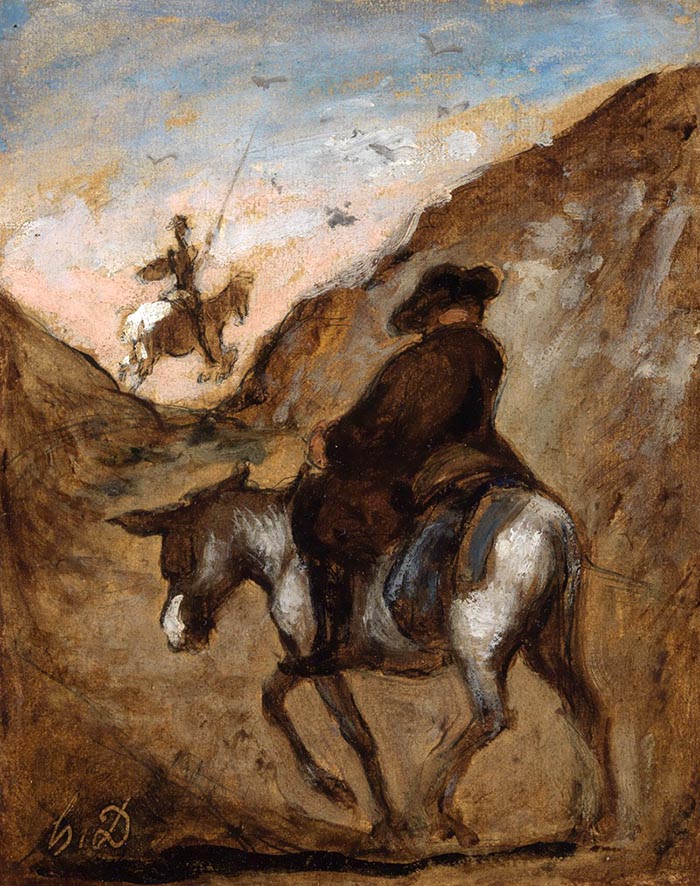
Honoré Daumier (French, 1808–1879), Don Quixote and Sancho Panza [/]
This looks more like it…
I think we may have arrived
Yes!
From descriptions given to me by pilgrims
This looks very much like the Promised Land!
Sancho?
Are you snoring?
In the middle of the day?
———
Tá cuma níos fearr air seo…
Measaim go bhfuilimid tagtha
Tá!
Ón gcur síos atá faighte agam ó oilithrigh
Féachann sé seo an-chosúil le Tír Tairngire!
Sancho?
An ag srannadh atá tú?
I lár an lae ghléigil?
.
15. Rocinante
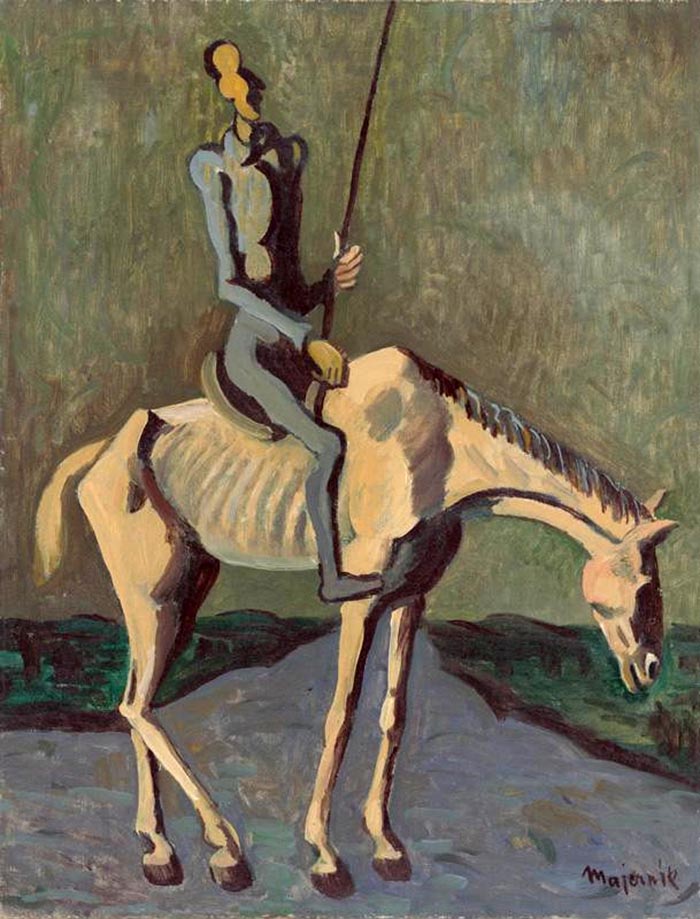
Cyprián Majerník, Don Quixote [/]
Rocinante
Be not concerned
God will provide you with food
Grass, apples and carrots.
We’re in the Promised Land!
Let’s get our bearings…
How did the Lord
describe the borders to Moses?
“Command the Israelites and say to them:
‘When you enter Canaan,
the land that will be allotted to you as an inheritance
is to have these boundaries:
“Your southern side will include
some of the Desert of Zin
along the border of Edom.
Your southern boundary will start in the east
from the southern end of the Dead Sea,
cross south of Scorpion Pass,
continue on to Zin and go south of Kadesh Barnea.
Then it will go to Hazar Addar
and over to Azmon, where it will turn,
join the Wadi of Egypt
and end at the Mediterranean Sea.
“Your western boundary will be the coast
of the Mediterranean Sea.
This will be your boundary on the west.
“For your northern boundary, run a line
from the Mediterranean Sea to Mount Hor
and from Mount Hor to Lebo Hamath.
Then the boundary will go to Zedad,
continue to Ziphron and end at Hazar Enan.
This will be your boundary on the north.
“For your eastern boundary,
run a line from Hazar Enan to Shepham.
The boundary will go down from Shepham
to Riblah on the east side of Ain
and continue along the slopes east of the Sea of Galilee.
Then the boundary will go down along the Jordan
and end at the Dead Sea.
“This will be your land, with its boundaries on every side.”
Hmm… Seems clear enough to me.
What say you, Rocinante, my trusty steed?
———
A Rósínanté
Ná bí buartha
cuirfidh Dia beatha ar fáil duit.
Féar, úlla is cairéid.
I dTír Tairngire atáimid!
Anois, an aithneoimid soir thar siar anseo?
Conas a chuir an Tiarna síos
ar na teorainneacha do Mhaois?
“Agus do labhair an Tiarna le Maois
agus duairt sé:’Tabhair ordú do chlaínn Israél
agus abair leó: Nuair a bheidh sibh tar éis dul isteach
i dtalamh Chanaain, agus a bheidh sé titithe
chun úr sealbha le crannchur,
sid iad na teoranna a bheidh air:
Tosnóidh an taobh theas ó fhiantas Shin
atá in aice le hEdom:
agus beidh an fharraige róghuirt aige
mar fhíorimeall soir:
agus raghaidh an teora san mórthimpeall
ar an dtaobh theas fan éirithe an Scorpioin,
agus mar sin isteach i Senna,
agus ag sroisint ó dheas chomh fada le Cadesbarne,
agus raghaidh an teora as san go dtí an baile
ar a dtugtar Adar,
agus sroisfidh sí chomh fada le Asemona.
Agus tabharfaidh an teora léi tímpeall ó Asemona
go dtí sruth na hÉigipte
agus stadfaidh sí ag bruach na farraige móire.
Agus tosnóidh an taobh thiar ag an bhfarraige móir,
agus ag an bhfarraige a bheidh a críoch.
Ach i dtreo an taoibh thuaidh tosnóidh na críocha
ón bhfarraige móir, ag sroisint comh fada
leis an gcnuc an-ard agus tiocfaid siad as san
go hEmat, chomh fada le himeallaibh Shedada,
agus raghaid na teoranna chomh fada le Sephrona
agus le baile beag Enain.
Sin iad na teoranna a bheidh ar an dtaobh thuaidh.
As san gearrfar amach an teora
i dtreo an taoibh thoir ón mbaile mbeag san Enan,
go dtí Sephana.
Agus ó Shephana raghaidh an teora síos
go dtí Rebla ar aghaidh tobair Daphnis,
agus as san tiocfaidh sí soir go dtí muir Ceneret,
agus sroisfidh sí go dtí an Iórdan
agus fé dheireadh dúnfar isteach í ag an muir nguirt.
Sin é an talamh a bheidh agaibh agus a theoranna mórthimpeall.”
Hmm… Soiléir a dhóthain, measaim.
Cad a deir m’each caol, Rósínanté?
.
16. Tell me more
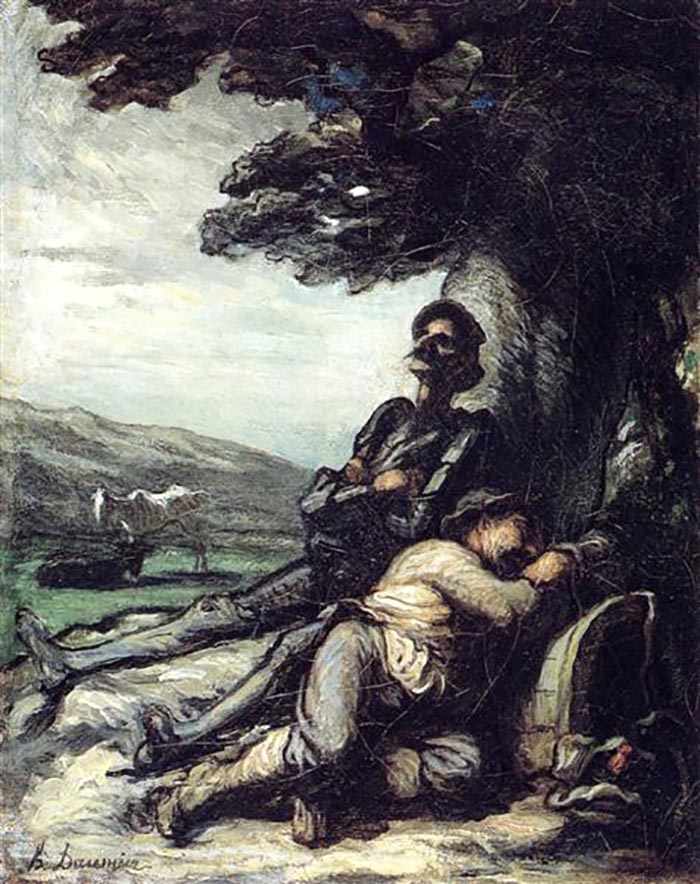
Honoré Daumier (French, 1808–1879), Don Quixote and Sancho Panza having a Rest under a Tree [/]
Describe her again, Sancho!
Eyes like gold, yes
Hair like the Elysian fields,
Her brows, suns
Cheeks, rainbows, was it?
Lips, pearls,
Teeth, roses,
Neck, snow,
Bosom ivory,
Hands…
Tell me more.
Sancho, are you asleep?
———
Déan cur síos arís uirthi, Sancho!
Súile mar ór, sea
Folt mar Pháirceanna Éilísiam,
A braoithe ina ngrianta
Leicne ina mboghanna ceatha, an ea?
A beola ina bpéarlaí,
Déad rósanna,
Muineál sneachta
Ucht eabhair
A lámha…
Abair leat!
Sancho, ní i do chodladh atá tú!
.
17. Stay awake!
Honoré Daumier (French, 1808–1879), Don Quixote and Sancho Panza [/]
Be careful, Sancho!
Keep your eyes peeled.
This may be the Promised Land
but it has lions
vipers
scorpions
bears
crocodiles
wolves
and assorted demons.
Stay awake!
———
Bí cúramach, a Sancho!
Aire dhuit!
Bíodh gur sa Tír Tairngire atáimid
tá an leon ann
an nathair nimhe
an scairp
an béar
an crogall
an mac tíre
agus deamhain de gach sórt.
Mar sin, fan id’ dhúiseacht!
.
18. Beaming like the morning sun
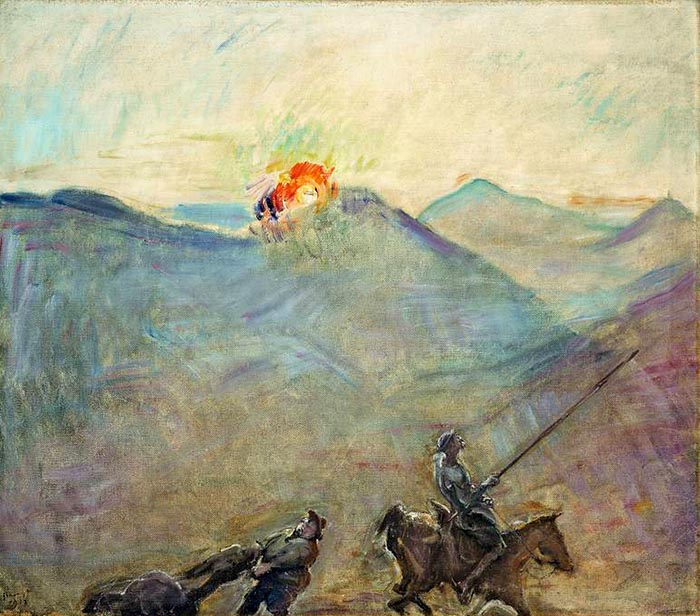
Max Slevogt (German, 1868–1932), Don Quixote and Sancho Panza [/]
Something tells me, Sancho
That a miracle occurred up there.
What might that have been?
The Transfiguration of Christ, perhaps?
You know what transpired on that day, don’t you?
Something tells me
you’re going to tell me, Master!
Jesus’ face began to shine
like the sun
and his clothes became
miraculously white!
Sometimes, Sancho, I ask myself
why something like that can’t happen to you, or me.
I would love to see your true face, Sancho,
Shining, beaming like the morning sun!
———
Tá rud éigin ag rá liom, a Sancho
Gur tharla míorúilt mhór éigin thuas ansin.
Cén rud é féin n’fheadar?
Claochlú an Tiarna, seans?
Tá a fhios agat cad a tharla an lá úd, nach bhfuil?
Tá rud éigin ag rá liom
go bhfuil tú chun é a rá liom, a Mháistir!
Tháinig taithneamh ’na ghnúis
ar nós na gréine,
agus d’iompaigh a chuid éadaigh
chomh geal le sneachta!
Fiafraím díom féin ó am go ham
cén fáth nach dtarlódh a leithéid sin duitse, nó domsa.
Go dtiocfadh taitneamh i do ghnúis maidin éigin
ar nós na gréine!
.
19. Stare and wonder
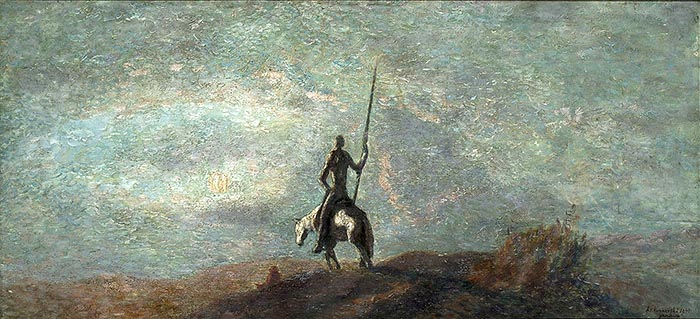
Felicjan Szczęsny Kowarski (Polish, 1890–1948), Don Quixote [/]
A beatific vision!
Rocinante, raise your head
stare, and wonder.
It was for this you were born.
I raised you from your equine nature
to be part of me
and part of what I see.
See through me
Rocinante, raise your head
stare, and wonder
———
fís bheannaitheach!
A Rocinante, ardaigh do cheann,
stán, agus déan iontas.
Is chuige seo a rugadh thú.
D’ardaíos thú ód’ nádúr ainmhíoch
le bheith mar chuid díom
is cuid dá bhfeicimse.
Féach tríomsa
A Rocinante, ardaigh do cheann,
stán, agus déan iontas
.
20. Books
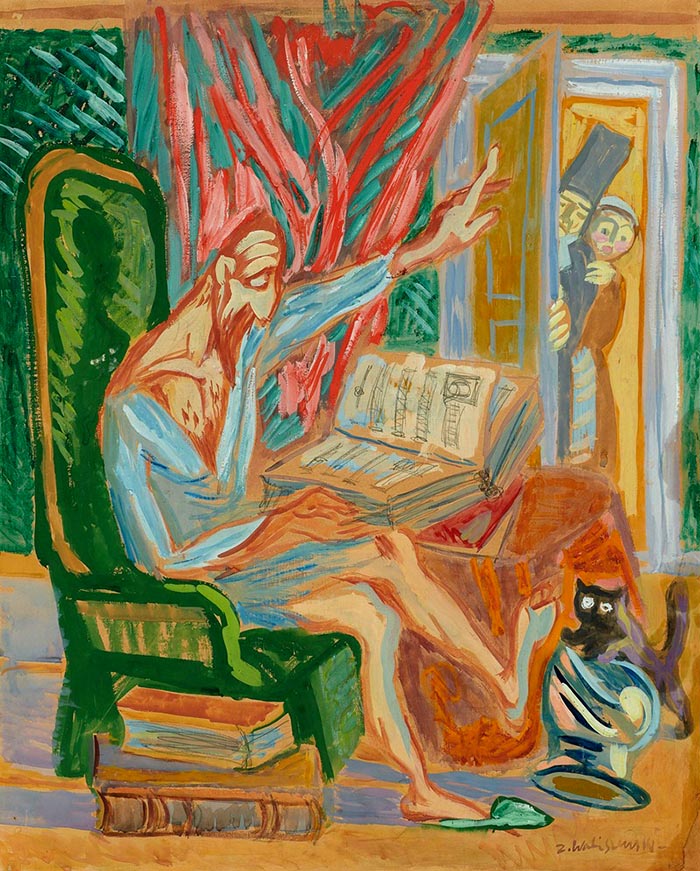
Zygmunt Waliszewski (Polish, 1897–1936), Don Quixote in an armchair [/]
books! they pile up
is one lifetime long enough
to go through them all?
books!
———
leabhair! carnaid ar a chéile
an leor saol amháin
chun gabháil tríothu go léir?
leabhair!
.
21. Master of Solitude
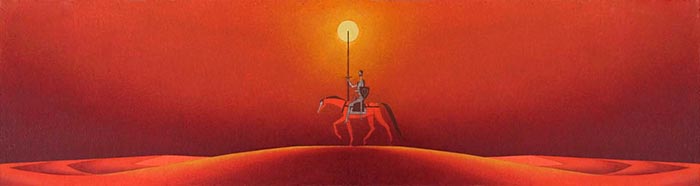
Jiří Binko, Don Quixote [/]
master of solitude am I
mile after mile
until she answers from the depths
of my own soul
Dulcinea del Toboso!
———
máistir an uaignis mé
míle i ndiaidh míle
go dtí go bhfreagróidh sí mé as duibheagán
m’anama féin
Dulcinea del Toboso
.
22. Bruised and battered
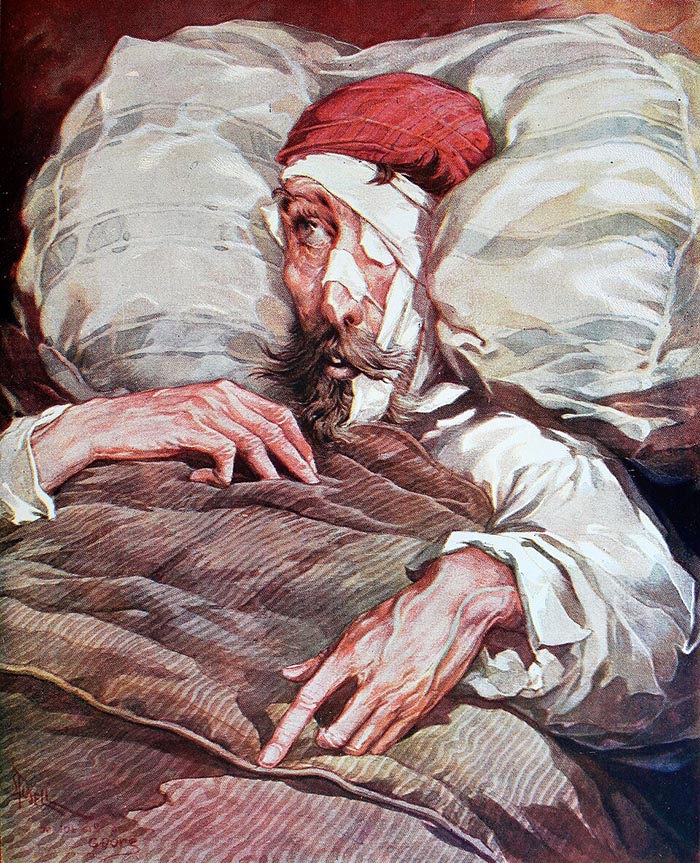
Luis Tasso, ‘Besides, Don Quixote was morose and melancholy…’ [/] (Chapter XLIV Don Quixote, Part 2)
Sancho?
Just one more time, please.
Describe her again.
Dulcinea del Toboso!
Was there ever a sweeter name!
Her eyes, Sancho?
Her mouth?
Her forehead?
Her hair?
I am bruised and battered, Sancho.
Shattered.
Chivalry has not saved me from the world’s woes.
———
Sancho?
Uair amháin eile, led’ thoil.
Déan cur síos uirthi.
Dulcinea del Toboso!
Ar chuala tú riamh ainm níos binne ná é!
Na súile, Sancho?
An béal?
An clár éadain?
An folt?
Táim brúite briste, a Sancho.
Basctha.
Níor thug an ridireacht slán mé ó anachain an tsaoil.
.
Afterword
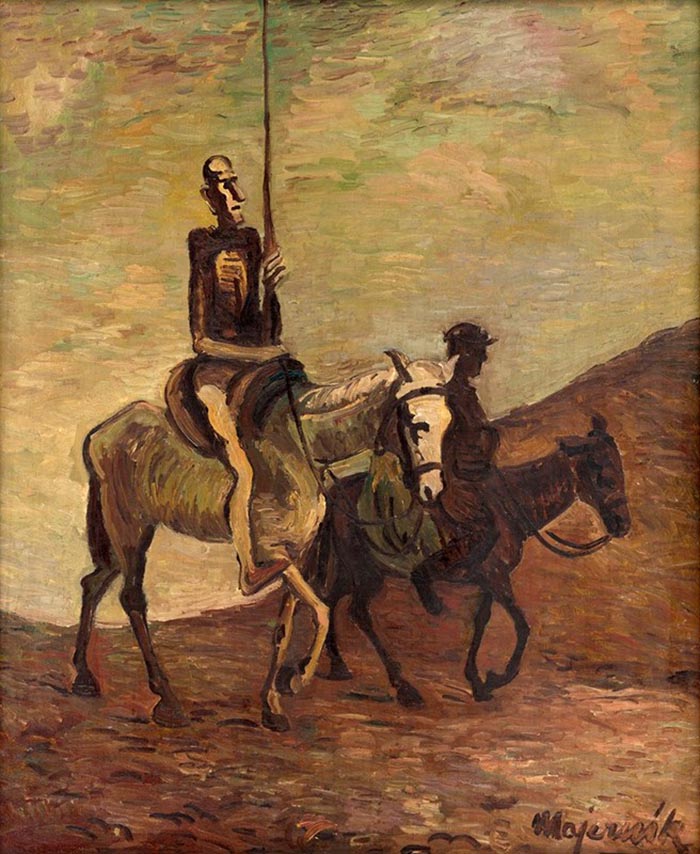
Cyprián Majerník, Don Quixote and Sancho Panza [/]
When life itself seems lunatic, who knows where madness lies? Perhaps to be too practical is madness. To surrender dreams—this may be madness. Too much sanity may be madness—and maddest of all: to see life as it is, and not as it should be!
Miguel de Cervantes, Don Quixote
Gabriel Rosenstock [/] lives in Dublin and writes chiefly in Irish Gaelic. He is a poet, essayist, tankaist and haikuist. He is also a widely published children’s writer and translator. He blogs at roghaghabriel.blogspot.com
FOLLOW AND LIKE US
@Beshara_Mag








——————————————
——————————————
——————————————
FOLLOW AND LIKE US
@Beshara_Mag
If you enjoyed reading this article
Please leave a comment below.
Please also consider making a donation to support the work of Beshara Magazine. The magazine relies entirely on voluntary support. Donations received through this website go towards editorial expenses, eg. image rights, travel expenses, and website maintenance and development costs.
READERS’ COMMENTS
Very enjoyable – lovely verse and images – thank you John
Losers rejoice!