
Podcasts
Somatics and the Wisdom of the Body
The yoga and somatics educator Lisa Peterson talks about her unique form of teaching, which blends together therapeutic practice and spiritual enquiry, guiding students not only towards healing, but also integration and wholeness through the lived experience of breath, movement and consciousness
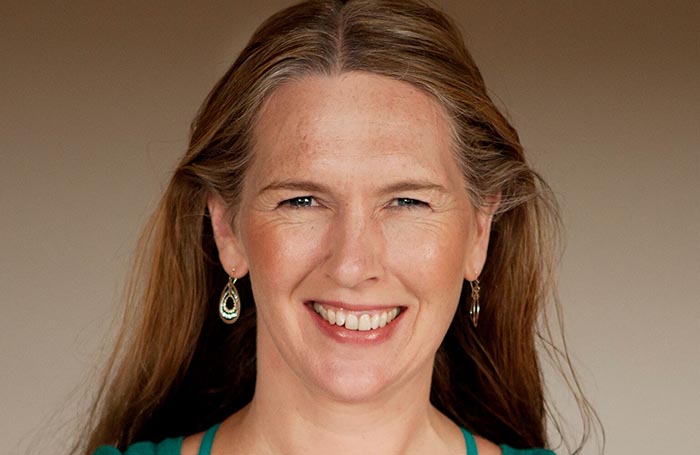
An Interview with Lisa Petersen
Transcript
Welcome to the Beshara Magazine Podcast, a forum for leading-edge thinkers who look at the contemporary world from a perspective of unity. On the Beshara Magazine website, you will find almost 200 articles by scientists, economists, artists, ecologists and followers of spiritual traditions who are focused on oneness and integration. I’m Nikos Yiangou, podcast editor for the magazine, speaking to you from California, and I’m joined by Beshara Trust past chairperson, yoga student and teacher, Elizabeth Roberts, who is based in Scotland.
Nick: Hello, Elizabeth.
Elizabeth: Hello, Nick.
Nick: Today, we welcome Lisa Peterson. Lisa is a yoga and somatics educator whose work blends embodied anatomy, therapeutic practice, and spiritual inquiry. Through her organization, Living Yoga, she leads trainings and retreats worldwide, guiding students towards integration, healing, and wholeness through mindful, somatic exploration and the lived experience of breath, movement and consciousness.
Welcome, Lisa.
Lisa: So nice to be here.
Elizabeth: So nice to have you. So, Lisa, you are a yoga teacher who has brought somatics into your practice, and into your teaching. We’d love to hear how you came to embrace somatics, and how it has changed your yoga teaching, but maybe we could start off by asking you to define the word somatics.
Lisa: You know, in the old days, when I would say the word somatics, people would say, oh, semantics! I know exactly what that is. And that, thankfully, is changing. So, somatics is a way of tapping into the wisdom of the body, and this deep, embodied intelligence of the soma.
And so, soma… well, a soma is the Greek word for body, and back in 1976, Thomas Hanna was looking for a word. He was a movement educator and a philosopher, and he was looking for a word to encapsulate this body-mind connection. So, he happened upon the word soma, and then he repurposed it, and made it into a noun, the word somatic. And then Tom’s definition was the living body in all its wholeness, or a body as experienced from within. And I have come to think of my soma as a living, breathing, thinking, vibrantly alive, conscious body. And that’s come to me through my own practice, but also come to me through just years and years and years of co-inquiry with my students.
And I think it might be nice to kind of situate modern somatics where we’re at with it, because it is a word that people get confused by. It’s the best word that we have to describe this body-mind process that we are. But it still has many branches. It’s like an oak tree, with very deep roots, but lots and lots of branches.
The dancer, Martha Eddy, wrote quite a seminal history of somatics, and she said, well, we’ve got three main streams: we have somatic psychology, we have somatic bodywork, and we have somatic movement. So, somatic psychology might be the work of Peter Levine, or Gabor Mate, Bessel van der Kolk, Family systems therapy, that kind of body of work. Somatic bodywork, then, is kind of… perhaps Rolfing, lomi-lomi, biodynamic craniosacral therapy, so bodywork systems where the person is being really engaged in their own process, rather than someone who is having something done to them. And then somatic movement, in that pot we can place things like… Feldenkrais, Hanna Somatics, which was the body of work Hanna developed himself. We could place Tai Chi, Qi Qong, and we could place some yoga schools – but I would argue not all – at this point. So, lots of branches, one word, which is currently being used to describe all those different paradigms and methods.
And as we continue to evolve somatics, I think it will become… the language will become clearer.
Elizabeth: So how did you encounter it, from your initial interest in yoga? How did you meet it?
Lisa: I came to it through suffering. I have no compunctions in sharing that. I was early in my yoga career, I had developed a sacroiliac injury, and yoga was not budging it, despite, you know, my teacher Donna Farhi and people like Judith Lassiter looking at my practice and saying, there’s nothing you’re doing in your practice, this is a really sacroiliac safe, clever practice. So, not only could yoga not touch it, but, osteopathy, acupuncture, therapy. I went round the mill, as we tend to do, with these things. And eventually, I literally fell into somatics. There was a teacher who was arriving from India. He was in town for a week, and he was doing his first training, and we did that training with three other people in his mum’s front living room on the docks of Dublin. And, it was the beginning of a whole new path for me.
Elizabeth: Because you’d also studied yoga therapy, hadn’t you? And yet, you say that Hanna Somatics was effective in a way that yoga therapy sometimes wasn’t.
Lisa: In my case, it was, and we can talk about this a little bit later, but it’s very clear to me now, looking back, that I had wired and fired some things into my yoga practice, and it is partially the fact that somatics was so new. There were no pictures in the book. There was nothing to emulate. There was no Yoga Journal. There was none of the striving that a younger practitioner can so easily have. There was just a body of work, and I was coming fresh and new to this body of work.
Elizabeth: And so, how has that changed you as a yoga teacher, then? A big question…
Lisa: That’s a big question. I think it has given me a much bigger picture perspective. It’s made me far more creative in my yoga sequencing, far more able to think outside the box when a client comes with backache or knee-ache, or cancer, or IBS, or anorexia, whatever they’re arriving with.
It’s made me much more playful. And it’s brought a lot of joy. Now, I have a lot of curiosity in my nature anyway, so curiosity and non-judgment tend to go together, and I found curiosity and joy also go together. But it just brought alive the many ways in which we move, particularly in different ranges of motion. And some forms of yoga can be quite sagittal. They can be quite backwards, forwards, backwards, forwards. We’re on a square mat, and we’re practicing in this square line, and that can… there’s sometimes some square thinking that goes along with that. But somatics just opened up this multi-dimensional perspective for me. And then I started seeing the students’ response, and that was really fulfilling to experience them and their experience of somatics.
Nick: So, somatics explores this boundary with mind and body. So, let’s take something that I think you have said, that some people think of the body as a taxi for the brain, and don’t realize the extent to which the mind is in the body, and the body in the mind. You’ve also said, when we practice yoga from an interior perspective, the body becomes mindful, and the mind becomes embodied. So, let us ask you, how does the body speak its mind, and how do we learn to listen to it?
Lisa: I just love these questions, they’re great. So, first of all, if we say that the body speaks its mind, we are presupposing that a body has a language. So perhaps the first thing to clarify, well then, is what is the language of the body? And the language of the body is breath, movement, touch and sensation. And of those four, movement is the first to arise. And I just find this so fascinating. The first nerves to myelinate in the womb, as you probably know, are these vestibular nerves, which track movement. So, movement… moving comes before sensing. Moving comes really before anything else, and as a mover, of course, I have a bias towards moving, but I really enjoy that idea.
So, if the body speaks, then, in breath, movement, touch and sensation, what kind of signals is it giving us? And, the whole day long, the body is telling us that we’re hungry, or thirsty. It’s sending us signals that we have a full bladder or an empty bladder. It is letting us know if we’re tired. It’s telling us to take off a jumper if we’re too warm, or to put on a jumper if we’re cold. And if we three sit here for long enough, and our butts start to get numb, that’s the fascia starting to knit a little bit, and become less fluid, and that’s a sign, you know, that numbness or that little bit of butt ache is a sign for the body to get up and move.
So, it has these very, kind of, overt signals that we take for granted. And then it has more subtle signals, and these subtle signals are interoceptive signals, and I’ll unpack that word for you in a moment, but they are body-wide states of… spaciousness, or expansiveness… body-wide states of relaxation or tension… body-wide states of anxiety and calm. And out of these body-wide states, currently in neuroscience, we say that emotions arise. So, we have this sensory signature in these body-wide states, and out of that, the mind then extrapolates that a particular emotion is present.
So, learning to read the more overt sensations and the more subtle sensations are both two really key somatic tools. And I would say, in the more overt, in the hungry, thirsty, tired, sleepy, horny, etc. it’s actually about, in part, not overriding those sensations. Everywhere I go these days where I teach, people say to me, my culture is burning me out, that we’re just getting an epidemic of people ignoring their sensations, ignoring their tiredness, ignoring their desire for food, or their desire for rest, in favour of this accelerated culture that… it’s just so prevalent, and so replete, so around us, and we really have to consciously extricate ourself out of that. And the senses are one way where we can tap into what is actually going on, these somatic senses.
And if I could, just to unpack that word, interoception… So, we have the five traditional senses, so we have sight, and sound, and taste, and touch, and smell. And they’re the senses we think of traditionally arriving on the screen of manas. But in somatics, we work a lot with this sixth sense, and with the seventh sense. So, the sixth sense is proprioception, knowing where we are in space. And then the seventh sense is interoception, which is our inner sensing superpower. And I did actually, just so I don’t misquote it, I really like this definition of interoception, it’s from Chen et al, and they describe it ’as the processes through which an organism senses, interprets, integrates, and regulates signals coming from within itself.’ So… senses, interprets, integrates, and regulates these physiological signals. And my favourite neuroscientist, Lisa Feldman-Barrett, says it’s the brain’s modelling of the state of the body.
Elizabeth: So, it sounds as though we need some education in some of this, in the sense you were saying that, you know, a lot of people lead a very fast-paced life where they think stress is normal, and they don’t feel happy if they’re not doing something. I mean, we interpret that as the body telling us we ought to be doing more. And yet, one knows that it’s not so good for the body. So, it sounds as though there’s some re-education that has to go on here.
Lisa: Yeah, I mean, I sometimes define myself as a somatic educator rather than a teacher, or as a yoga educator, and my question is always, how do I create a container for this kind of learning to happen, because we’re going against the grain. Western thought says, I think, therefore I am, even though we’re way beyond Descartes, and we talk a good talk about being beyond Descartes, but actually learning to accurately map, track, sense, feel what’s going on, and then respect it enough and trust it enough is the second stage, and then the third stage is knowing what to do with these sensations that we have in the body.
So, it’s tricky. It’s also not as obvious, because we have a body, it’s not so obvious that we can sense and feel our body accurately. And some of that is the processes of the mind that come on top of the body, and boss the body around, for lack of a better word… the brain taxi idea.
Elizabeth: So does the practice of somatics or somatic yoga, does it help people to change their minds about how they think about, or how they feel, or how they interpret their bodies? Does it help to do that? And, is it easy for it to translate, then, into off the mat? Because obviously all practice, the benefit of nearly any practice, is how it changes your life and benefits your life when you’re not doing the practice. You know, that you’re doing the practice to live, not the other way around.
Lisa: Yeah, we definitely are doing the practice to live, and I would say if we’re not taking it off the mat, it’s not practice that’s worth its salt, from that perspective. I think we have a really exquisite body intelligence. And I think we all came to being these walking, talking, capable, upright, adult human beings through that body intelligence.
So, when I come to teach, or when I meet a body of students, I’m never trying to dumb down the intelligence that’s there. A little bit like yoga, I’m trying to uncover, or, like, wipe the windscreen clean so that people can actually see reality, which is the amount of embodied intelligence that is present. That said, I think it’s really useful for a certain sort of practice, to be present to teach these skills. And for me, that practice, through experience, is a slower, gentler, simpler, more deliberately focused practice, where we’re giving students and ourselves less to think of. Sometimes I say, like, imagine you’re driving down a superhighway, New York, or, I don’t know, wherever, somewhere they have superhighways. And there’s just so much information to track when you’re driving down a really busy network like that. Whereas, if you’re driving down a single Irish country road, and there’s a bit of grass growing down the middle of the road, and perhaps a sheep wandering around, the information that is there to process is much less.
And I think current neuroscience says we process 70,000 thoughts a day. And that’s just with the cognitive mind. So, we just have so much arriving onto the screen of manas. And if we can simplify what’s arriving, then we can do more with the information that is there. So, I think part of people’s ability to take it off the mat is the skill in education that the kind of conditions what they’re invited into, where they can learn something really clarifying about themselves, and then leave the class knowing more than they came with, but leave with something tangible, something that they own in their own felt sense. Does that answer your question?
Elizabeth: Yes, it does, especially the last part, that to learn something in that visceral way is very different from memorizing it, you know? And you’re much more likely to be able to return to it, because you know what it feels like in your body. Somehow your body remembers it, rather than the thought that your brain might forget.
Lisa: Yeah, and sometimes I talk, if we’re, you know, if we’re repatterning, or we’re changing habits, or we’re trying to do something new that hasn’t been done before, I’d say it’s like walking through a forest, and if the forest is really overgrown the first time you walk that path, you know, you’re gonna have quite a lot of clearing to do. And the second time you walk that path, and you lay down that neural pathway in your brain, it’s a little clearer. And the third time you walk the path, and the fourth, and the fifth, until that path is now your new path. And you don’t go back to the old path, because the body says, this is easier, this is calmer, this is clearer, this is stronger, this is more stable, this is less painful, or less difficult. And the body will always choose the most functional way to do something. It’s often the mind that comes on with its ideas about what a movement should look like, what the neighbour is doing in the movement, like a little sneaky peek in the side mat, or all of these judgments that we have around what a practice should look like and feel like, rather than getting in on the inside and going I have a first-person privilege of being in my soma. What is it like to move, breathe, be in my body, and what do I need? Which might not be what the teacher is inviting at all.
Nick: So, this brings us a little bit to this concept of sensory motor amnesia. What you’re talking about is how we forget, or we don’t listen to, this process of interoception. Somehow, this feedback loop between the sensory-motor aspect of our beings has broken down. And so, what I’m hearing from you, Lisa, is that it’s not just physical rehabilitation we’re talking about, it’s also more of a, one could even say, spiritual awakening of embodied consciousness. Reconnecting the individual to wholeness, presence and self-agency. These were some ideas that came up when I was doing my research, and so this retraining of the nervous system, it’s a very deliberate and holistic process of bringing the body-mind into alignment, and making the unconscious conscious. Would you agree with that?
Lisa: I would. I would. And I, I absolutely adore Richard Rosen, the Iyengar teacher. He has a description of SMA (Sensory-Motor Amnesia), and he calls it physical avidia. And I just… I love him expanding, I love how he expanded that out. So SMA in Tom’s original, so that’s a term coined by Thomas Hanna, and it originally meant the loss of control of muscles. So, let’s say we have a tight shoulder, and the shoulder is habitually tight. If we had control over that shoulder, we could simply say shoulder relax, and the shoulder would be perpetually relaxed. It would never go back into its state of tension. But because we have communication between the brain and the muscles, and the brain is trying to keep us alive, I mean, that is our brains and our nervous systems, if we talk about that part of the nervous system, that’s its primary function. It wants to keep us alive, so it does its very best with coping strategies, patterns, habits… I mean, I have such compassion for the part of my nervous system that is acting like a bodyguard, or a well-trained guard dog, as my meditation teacher would say.
And trying to do its best to, yeah, keep me alive. So, what we can do, where there is either a physical SMA in the body or another form of SMA, is we can go in and we can start to turn the lights on in different places. And, for me, where physical SMA shows up is really clear. The movement is a bit jumpy, jerky – Elizabeth’s heard me say this before – jumpy, jerky, shaky, might be a bit of snap, crackle, pop. It’s jittery. So, we can do a movement, and we can say a really, really simple movement, and I can say to someone, can you feel your muscles gliding short and gliding long? And usually the answer, if there’s tension there, the answer is no, I can’t feel it.
I’m like, okay, can we use touch? Can we use partner work? Can we use… what can we use to help this part of the body that has been exiled, or kind of shut out, how can we bring it back into the fold again, and reconnect the sensory-motor loop?
So, a really practical thing to do when we do any movement is to look out for those jumpy, jerky, jittery places, and smooth them out. Make them more seamless. Make them more… glidey. And when we do that, what we’re doing is we’re re-patterning the nervous system in the moment. So, it doesn’t matter if it’s the plumber down the road, or the little old lady with pelvic floor issues, or the top-class athlete, or the working mama, or whoever. We all have human nervous systems. And we all have human nervous system compensations. And we can all go in and say, where do I have some jumpy, jerky, shaky in my body, and can I smooth that out? And this is the beauty of these somatic bottom-up processes, because they’re from the felt sense. We can use the mind to observe and to witness what’s happening, but when we do it in conjunction with the body, now we’re bringing them into being dance partners, particularly when we have the breath in between the body and the mind.
And, if I may, what might be useful to frame is the idea that we learn as humans, we have top-down learning, and we have bottom-up learning, and top-down learning, as you probably know, is where we – I’m reading a scientific paper at the moment, and they’re using terms like performance setting, and goals, and staying the course and steadfastness – so, quite actually top-down terms in terms of the body, but top-down is definitely where we process and plan and strategize and keep our attention focused on an area of the body long enough so that we can notice what we notice.
And in mindfulness, for example, you might hover over the thoughts as if they were clouds in a blue sky. Similarly, when we’re using top-down awareness, we’re shining the light of the awareness into a particular place in the body that’s, let’s say, jumpy, jerky, shaky. And then… we are setting some intentions around moving more smoothly, more slowly, more gently, with more relaxation. So, the top-down awareness comes from, kind of, the neocortex, the new part of the brain.
And then the bottom-up awareness, which is where this felt sense of the body comes from – touch, sensation, breath, movement – they’re all from the limbic brain, the mammalian brain, these older brain structures that are much more to do with survival and regulating temperature, etc. The bottom up is where we learn to speak this wordless language of the body.
And in reality, we’re toggling all the time between top-down, bottom-up, top-down, bottom-up We wouldn’t be somas if we didn’t have this integrated way of learning, and I think that speaks to how we can take it off the mat. It speaks to the felt sense experience being real and not needing to, I mean, we don’t want to make the mind wrong, either. We want to tame the monkey mind, but we don’t want to throw the mind out in the same way that traditionally we have thrown the body out in many, many ways. We want to say, what’s the conversation? And can it be a more democratic conversation? And can we learn to use top-down when we need it? You know, don’t reach for the cookie jar, don’t do that movement pattern that you know hurts your back, we know this, like, refrain. And then listen to what’s actually happening from the body, because it changes. Elizabeth, you know this as a practitioner, it changes every day, every month.
Elizabeth: I was just wondering, Lisa, whether you could take us through an example of this sensory motor amnesia, this SMA, that we might experience, and the people listening to the podcast could maybe do as well.
Lisa: Very, very simple, and this… I was doing this with a client yesterday. She was on her back. You can try this at home, whenever you’re listening to this. She was on her back with her knees bent, and she has back pain. Lumbar back… lumbar spine pain, like most people, and some tightness in the lumbar spine. So, one thing we can all do is if we now place our hands on our lumbar spines. We can sense the tone of the muscles; the tone is just readiness to respond. Are the muscles hard, or are they soft? Are they spongy, and nice and palpable and flexible, or is there a little bit more tone in them? And sometimes one muscle will be larger than the other, or more apparent than the other.
So, first of all, the ability to be able to sense that is one… what’s the tone of the muscles? If we can’t sense that through the hands, that’s already a sign that there’s something going on. There’s a little bit of this physical avidia present.
Elizabeth: avidia, meaning…
Lisa: Well, ignorance, physical ignorance, in this case, if I’m using Richard’s term. And then, if we lay down on our backs with our knees bent, and we slowly arch the back, so we slowly roll so that the back extends. Tailbone points down towards the floor, and then we slowly roll the other way so that the back flattens towards the floor exactly. You can also do it in sitting. If… my client, I asked her the other day, can you, can you feel your lower back contracting? Can you feel it sliding shorter? And can you feel it gliding longer? And she said, no, I can’t. Great! We’ve got some… we’ve got somewhere to start. And that experience is… just… I cannot explain how many places in the body we simply do not feel. It is absolutely mind-blowing when we start to shine the light of awareness, somatic awareness, on all these individual places.
And in general, if you want to do your own detective work, I would say that anywhere there is tension in the body, whether that’s the jaw, or the shoulders, or the back, or wherever, the hip, there is some SMA. That’s a general, I’m not one for rules, but a general principle, I would say.
Elizabeth: And is that lack of awareness, that ignorance of what the muscles are doing, is that what can cause pain?
Lisa: It is, yeah, I mean, there are many things that cause tension. We know that the mind can cause tension in the body. We know that emotions can cause tension in the body. We know that the mind can stop movement. So, we’re sitting here in front of the computer, and we have a deadline, and we really want to get up, but the mind says, no, we have to complete the deadline. So, the mind is then overruling in a very authoritarian way, what the body wants to do, so it’s using willpower. So, the mind will very often stop movement.
Or it will say, a movement needs to look like this, feel like this, the teacher says it should be this way and again and again, when we trust these external authorities over our own wisdom, we’re giving over our agency, kind of, we’re giving over our power. Not that we don’t need teachers and guides who’ve been down the path, but if we consistently give over our power, our felt sense, our own agency to others, then we’re not honouring what’s inside.
Elizabeth: So how do these unconscious tensions, this Sensory-Motor Amnesia, I mean, what sort of things cause it? How does it happen?
Lisa: Yup. It can be… so, first of all, they start… it starts very early. It can start, if you’re mapping into, kind of, mental-emotional trauma work, it can start as early as the womb, that we start to, what is called, armour muscularly. We start to create defence mechanisms, or strategies, or coping behaviours in the body in order to meet life. And I’ll give you a very humbling example. I am a shoulder holder, and I have decades of somatics yoga under my belt. I am still shoulder holder. No problem saying that. And I have not yet got back to the part of my nervous system which feels safe enough to say, you know, it’s okay to relax your shoulders. And that, in me, is because that pattern tracks back to just after conception, actually. It’s quite old in me. So, we have these patterns that start very, very early, and they are coping mechanisms. As I said, they’re there because the human nervous system is wired for survival.
So that’s one possibility. Trauma, capital T Trauma or small t trauma, is another possibility. There’s the idea that every time you fell off your bike, it’s somewhere, as a six-year-old, somewhere in your system. So, every experience that we have is encoded in the body’s tissues.
And then there’s things like sitting with your right leg always crossed over your left, or always carrying your bag on one shoulder, or even wearing glasses, as I also do. There can be different vision in the eyes, and vision can… that vision can cause the head to tilt and rotate.
So, it’s a combination of small t trauma, big T Trauma, functional movement patterns, coping behaviours, strategies, And then, obviously, things like sitting at desks for too long, heavy lifting, manual labourer, you know, I have lots of friends who are gardeners, who are like, oh god, my bloody back, I spent 10 hours in the garden yesterday, and give me some somatics, please. So, all of these things that we do.
And I think it’s really helpful in that question of what causes tension and pain, to have a very broad and compassionate lens on the story behind the pain in the knowledge that if we can make it less about story, we’ll actually save ourselves quite a lot of time, and simply use these practices in order to help ourselves in the moment, because that’s the only moment we can make change, is… is now, is this moment. And that’s really potent if we’re present. So here we have yoga as a moving meditation, somatics as a moving meditation, when we’re really
present in what we’re doing, then there’s huge possibility for change and rewiring in the moment.
Nick: That’s great. Another way of thinking about this that’s occurring to me as you’re speaking, Lisa, is this idea of the Vedantic idea of koshas. And so, I’d love to hear more about this. I think you’ve said that any kosha… and kosha, let’s get a definition of it first, but I think it’s something to do with the levels of the subtle body, but you can elaborate on this, please, but you’ve said that any kosha can act as a doorway to wholeness and transformation, because each reverberates on all levels and affects all others. So… as a model for healing, it sounds right, and from what you were just saying, this way of bringing your body into alignment with the mind in a complete soma sounds like a process that does work, and so how, how does it work, and what can we learn about our own nature by becoming fluent in this type of language of the body.
This is a deep question. I’m trying to peel away the onion skins here, let’s see where we can go with this.
Lisa: Yeah. Well, interesting that you came in with onion skins, because koshas are sheaths, or layers. I think originally the conversation was about swords and scabbards, that kind of sheath-ness. I tend to think of them as interpenetrating frequencies, so in the way that if you sit in your car in the morning and you drive to work there might be 10 radio stations playing, but you’re only choosing to tune in to a particular radio station, let’s say your physical frequency, or your emotional frequency, but it doesn’t mean that all the other radio stations and frequencies aren’t playing.
So, the kosha model is just this very beautiful model for encapsulating and explaining the human experience, I think, and all of the levels of human experience. And it is… I don’t want to get in trouble with the yoga police, but it is possible that it’s just different layers of consciousness expressed in different ways. So, we have the physical layer anamaya kosha, breathful layer pranamaya kosha, we have the mental-emotional layer manomaya kosha, we have the wisdom discerning sheath which is vijanamaya kosha, and then we have the blissful layer which is anandamaya kosha.
And I came to the koshas a little bit bass-ackwards, because my students were having these multi-faceted experiences, so they would do somatic work, and they were not only finding change in their physical body or their breathing body, that change was rippling through into their work lives and their home lives and their relationships, and how they were interfacing with the world. And they came looking for context, looking for a model that could hold their experience and explain their experience. At the time, I came across a dear friend of mine who had been using the kosha model quite a lot, and she explained it to me, and it was so apparent so fast that it was just really practical to present it to people so that they would also set their own expectations about what happens when we do a movement in yoga, or a movement in somatics, and why movement is never just movement, how it cannot ever be just movement.
So that was really useful, and…
Elizabeth: I can see where you’re going with this, Lisa. The idea of the koshas comes from the Upanishads. It comes from one of the Upanishads. And, going back to yoga and somatics being taught as part of yoga, or maybe the ongoing development of yoga in the West, there’s one text that nearly all people learning to be yoga teachers have to read, and that’s the Yoga Sutras of Patanjali, which is essentially a sort of non-sectarian spiritual practice, so it fits quite well for today, because it’s not linked to any particular form of religion or idea of divinity. I mean, you can believe in God, or you don’t have to believe in God, you know, it’s very open. But it does have a worldview or a philosophical background that informs its aim. In other words, it does have an aim, and its aim is to realize a unitative state. So… I just wonder, is there a philosophical context for yoga and somatics that you’d like to speak about? I mean, I think you’ve already spoken about it a bit, but I just wondered if you’d like to… if you have anything else that you would like to say.
Lisa: Working above my philosophical pay grade now with two philosophers! I think what’s really empowering… I can speak personally to that… it’s really apparent to me as a practitioner and a seeker and a path-walker how challenging it is to be in the human experience if we don’t have a sense of… if we don’t have a witness. And if we don’t have the idea that witnessing is also with-nessing, as a friend of mine likes to say, and I think… that when I use my own witness in a non-judgmental clear way, I get to experience what is going on at all the levels of my koshas without all the story, without all the layering, without as much, even if I am, in memory, fantasy, projection, storytelling, and in the physiological body-responses to being in memory. If I have my witness present, I can still see that. I can see there is memory. I can see that there is this very, like, a cascade of hormonal body response, but that it’s not real, because actually, I’m in the moment. I’m not in that memory or in that future fantasy. And I think that’s what’s so tricky about the human experience, is that we spend so much time in memory, or in the past, or in the future.
Memory projections from the past, and those fantasy projections from the future all have a physiological effect in the body. You know, grief, love, having the heart broken, joy, every spectrum of human experience. So, it feels to the body that it’s true, because there is a physiological process going on, but when I look with my witness, I can see I am not there. I am not… in that memory. It might be informing my moment, but it is not the moment. So, I think that’s one thing about witnessing that I find really useful. I don’t think the process of yoga or somatics in this top-down, bottom-up way can happen without the presence of a witness.
And then I think the other thing that I personally have found really useful, and this is a bridge, is to cultivate a really compassionate, kind witness. And sometimes I’ll even use an avatar like Thich Nhat Han, so I’ve studied in the Plum Village tradition also. But I will use someone… like that, and I will imagine Thich’s gaze, and the level of his compassion and the level of his kindness when I’m in blame, or shame, or any of these human emotions that aren’t necessarily productive.
Elizabeth: I mean, one thing that you said, looking at it from a different point of view, which I think is also, you know, philosophical, is that you’ve said… you’re talking about gathering all your parts into an integrated whole. And in a way, that’s what the koshas does. It shows that we exist, you know, on all of these levels all the time, and something that happens on one level can have an effect on another level. And I think that as things are brought together in a more holistic way, that is moving towards a more unitative view, isn’t it?
Lisa: It is, absolutely. Because there’s no exiling. The problem is we tend to exile parts of us. That’s part of the SMA. The SMA is an exiling of the physical structure, but we also exile emotions, and we exile memories, and we exile fragments of us that we have not yet learned to love, in a way, and to integrate, and that…
Elizabeth: In the same way that we exile other people.
Lisa: And of course, what, yes, what we do to self, we do to others, of course. So yes, we do. There’s somewhere I could go with that, but I’m gonna pause myself.
Nick: In a way, you spoke to a question that we had around this sense of, this contrast between, being fully embodied and yet not identifying with the body. What you said about the witness being there, and knowing that you’re not that memory, or you’re not necessarily that fleeting emotion, that seemed to address, in a way, this question of, you know, we’re talking about becoming fully embodied, and understanding and integrating the wisdom and the consciousness of the body with the mind, not seeing them as separate. But these teachings talk about not identifying with the body, that the body contains this immortal thing, and so I think you addressed that.
Lisa: It’s so easy to say, I am not this body, I am not this mind, I am not this emotion. And then the process of embodying that, as we all know, is really a path, part of the path of yoga. My experience, however, is that my body is a process, and my body is a process that is living and dying in this moment, as is yours, Elizabeth, and yours, Nick. We have cells that are being born in this moment, we have cells that are dying, cells that are being recycled. So, the continual reforming of life is happening in this moment in my body.
So, for me, when I connect with that, whether that’s through movement, or breath, or fantasy, or imagination, or some other intelligence, the body is then my doorway to the divine, particularly if I don’t get the mind too involved in concepts about the body, if I really get into an embodied state, and I don’t think we’re ever fully embodied, I just think that’s a…that is always going to be a question mark for all of us.
But… it seems like this living, dying process that is my body Is the doorway, then, to perhaps what we might call the subatomic realm. And the subatomic realm is the doorway to the divine. So, if I don’t get the mind too involved, I can skip jump, and I can also… I have had really clear experiences of knowing myself as a part of existence, as part of the fabric of the universe in the same way that you are, and the plants, and the trees, and the more-than-human animals, and the fungi, and the oceans, and the rivers, and the… everything.
And that interpenetrating, interdependent nature of my body, with everything and everyone leads me, somehow, even though one could say that that’s an identification, but it, to me, it seems to lead me to the divine, and to the bigger picture perspective, that this body is living and dying in this moment, and will become compost for the Earth, and will reform, perhaps, in another form, or not. Who knows?
Elizabeth: So, what you’re describing there, Lisa, I mean, that is you’re not reifying your body, you know? By having this sense that it is being, as it were, reformed in every instance, it never
hangs around long enough to become a thing, you know, so it sounds very alive and, very in the moment.
Lisa: That’s a question that I definitely sit in, and the somatic processes have taken me there without engaging in my body at the subtle level, which we all can. I don’t think I would have perceived my body as a kind of… this form. And we know with, you know, advanced meditators, they have experiences of the body dissolving, and the body not being formed, and I’ve had some of those experiences, too, and yet it… here it is, sitting here with you, so it magically managed to reform itself and then dissolve again on other occasions.
But I think, for me, as long as I don’t get attached to that, and also if I don’t get attached to my body of yesterday, I can get less attached to wrinkles arising, and belly fat, and all of this process of aging. It’s the… as yoga says, it’s the attachment, the craving, the desire, the aversion that causes the suffering, and the identification.
Nick: Wonderful.
Elizabeth: Wonderful, yes, wonderful. So, I’m seeing that time’s moving on now, so maybe just to, to sort of round up, I hadn’t really heard much about somatics until I met you, Lisa, but, you know, you’ve made me aware, and I’ve now started to hear it, and it is a bit of a buzzword, and, not just within yoga circles, but within various other forms of therapy, Buddhist practice, and so on. And at the same time, we’re living in an increasingly disembodied virtual, digital world, where we talk to each other through the screen. We don’t get together in physical form and sit down next to one another. So, do you think that it’s not surprising, it’s somehow fitting, that this area of research is starting to burgeon now, so that we don’t end up like Mr. Duffy in James Joyce’s The Dubliners, who, he said, lived his life a short distance from his body!
Lisa: I think. I think somatics really started to have its heyday during the pandemic. There were these big global conferences, there was so much trauma being processed, and continues to be processed, I think, from that time. And somatics somehow found a foothold in that. So that’s one piece.
I think the bodyful arts, the somatic arts, the yogic arts, are going to be absolutely indispensable part of our future as the human species, particularly as we move more onto screens and into AI, I think any practice that is done in body time, which is real time, whether it’s with real people, which I adore, as you know, or in this facilitated format, which can also be really growthful.
But any practice where we are in real time, in body time, present moment time, with each other, where we can create this sustained, focused attention in a light way, is going to be so necessary because of the pace of what’s out there, and I think we need many more somatic educators and people working in this way to act as a counterbalance to what a friend of mine recently called ’terminal capitalis’, or just the effects of how we are choosing to live, and what we are choosing to do to the Earth and to each other, to human animals, and more than human animals. So yes, I think it is absolutely necessary and valuable and needed, and that will be my encouragement moving forward, to train as many educators as I can, so that they can then get out and start to have a ripple effect within their own societies.
Nick: Gosh, well, I think that brings us to a good spot to wrap up now. Thank you, Lisa, for your time, and for your wonderful insights, I think this will be an enjoyable episode for our listeners.
So, let’s just say Lisa does offer various forms of training, both in person and online, and you can discover more about her and her teachings on her website, living-yoga.ie. You can also find Lisa on Instagram at @livingyogalisapeterson.
So, thank you all for listening, and don’t forget to visit our website, besharamagazine.org.
That’s it. Thank you so much.
Lisa: Let’s go out and make the world a more embodied place. Thank you so much, both of you. It’s been gorgeous to speak with you.
Nick: Thank you.
The text of this article has a Creative Commons Licence BY-NC-ND 4.0 [/]. We are not able to give permission for reproduction of the illustrations; details of their sources are given in the captions.
read more in beshara magazine



More Podcasts
Podcast Interview: Professor Mark Williams on Mindfulness Meditation
The Oxford psychologist talks about the development of MBCT, how it can help us look upon ourselves with a compassionate gaze and find peace in a chaotic world
Interview: Alastair McIntosh: ‘Riders on the Storm’
The Scottish writer, theologian, and environmental activist talks about climate change as fundamentally a spiritual crisis – a wake-up call inviting us to understand the world as a manifestation of the divine. ‘This is where the evolution of conscious life on Earth has brought the planet to.’
Interview: LD Deutsch on Time, Myth and Matter
The Los Angeles based writer talks about her recent book Time, Myth and Matter: Essays on the Natures and Narratives of Reality, in which she weaves myth and science into a coherent narrative and looks at the intertwining of the inner or psychic dimension with the outer world of physics
Interview: Colin Tudge on Enlightened Agriculture
The well-known scientist and author talks about the need to rethink our agriculture so that it is more sustainable and equitable, and to base our economic system on the perennial values of compassion, humility and oneness
Interview: Mark Vernon on William Blake
The philosopher, podcaster and psychoanalyist talks about his latest book Awake! William Blake and the Power of Imagination, in which he argues that Blake’s vision still has the power to transform our experience of the world, revealing it as a place of wonder and infinite possibility
FOLLOW AND LIKE US
@Beshara_Mag








——————————————
——————————————
——————————————
FOLLOW AND LIKE US
@Beshara_Mag
If you enjoyed reading this article
Please leave a comment below.
Please also consider making a donation to support the work of Beshara Magazine. The magazine relies entirely on voluntary support. Donations received through this website go towards editorial expenses, eg. image rights, travel expenses, and website maintenance and development costs.
FOLLOW AND LIKE US
@Beshara_Mag
READERS’ COMMENTS
0 Comments