
Podcasts
Satish Kumar: Peace Is Possible
The ecologist and activist talks about his commitment to peace, and his understanding that it is not just an absence of war but a positive, harmonious way of living with three aspects: peace with oneself, peace with society and peace with nature
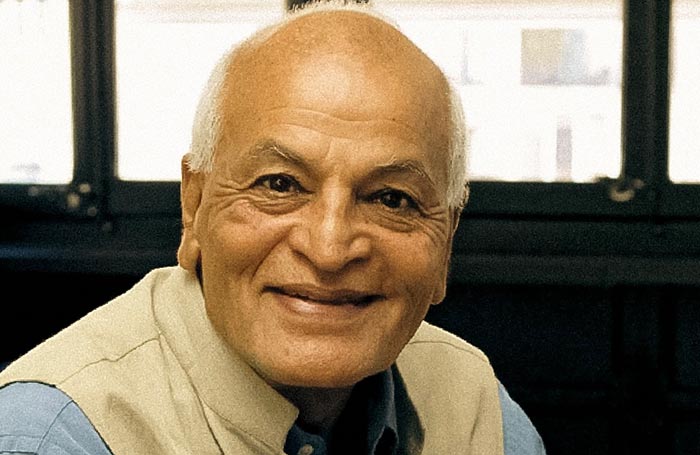
An Interview with Satish Kumar
Photograph: Carles Rodriguez Marin
Transcript
Nick Yiangou: Hello and welcome to the Beshara Magazine podcast. I’m Nikos Yiangou, podcast editor for the magazine, and I’m joined by our executive editor, Jane Clark. Hello, Jane.
Jane Clark: Hi, Nick.
Nick: Today we interview the activist and ecologist Satish Kumar. Born in Rajasthan in 1936, Satish became a Jain monk at age nine, then left at 18 inspired by Gandhi to join Vinoba Bhave’s land reform movement. In 1962, he walked over 8000 miles from India to Moscow, Paris, London and Washington delivering ‘peace tea’: to nuclear leaders as a plea for disarmament. He later settled in the UK and co-founded Schumacher College in Devon, and edited Resurgence and Ecologist magazine for over 40 years. Through his books, lectures and the philosophy of reverential ecology, he has spent his life arguing that peace, spiritual awareness and care for the natural world are inseparable. His new book, Peace Is Possible, was published in May 2026.
Satish, hello and welcome to the podcast. Jane, would you like to plunge in?
Jane: Satish, welcome, it is a great pleasure to meet you. We’ve very much enjoyed your book, and thank you for agreeing to talk to us about this crucial issue of peace and how we can cultivate it both in ourselves and in the world. We’re seemingly faced with impossible challenges on all fronts at the moment – not only wars in the Middle East and Ukraine and Africa, but also the ecological situation – and what is really lovely, I think, about your approach is that you emphasise how peacefulness and peace-making really start with ourselves and the way that we live. You talk a lot about the way your mother was during your childhood in India, and what she taught you about living harmoniously in the world. So can we begin by asking you about that?
Satish Kumar: So what I would say is that at the moment, people around the world work for war. Every country spends millions and millions, and some countries spend trillions and trillions, like the United States and China, on war preparation. And what do we spend on peace making? Nothing. No preparation. Now, if you want peace, you have to work for peace. You have to prepare for peace. You have to organise peace. You have to emphasise peace. You have to focus on peace. At the moment, everybody has army, weapons. Some countries have nuclear weapons. Everybody is preparing for war. How are you going to get peace if you prepare for war? So, I would like all countries to create a new ministry, a ministry for peace and a minister for peace and a department for peace. And every country should prepare, have a negotiating team – how we can solve our problems without going to war? I mean, just look at where we are in Gaza and Palestine. The hospitals are destroyed, the schools are destroyed, the young children are made beggars. The pregnant mothers cannot give birth easily. I mean we call ourselves a civilised world. Is this civilisation? So I would like to say that if you want peace, peace is possible. But we have to work for peace, prepare for peace, spend some money for peace, and have a ministry for peace. That is my first kind of suggestion.
And I learned that from my mother. My mother always said that majority of people in the world don’t want to fight. They don’t want to go to war. They don’t want to kill anybody. They want to live like neighbours. And even now, when America is fighting in Iran, and Israel and Hamas are fighting with each other, and Ukrainian Russians are fighting with each other, still the majority of people in the world, eight billion people – out of eight billion people, I think more than seven, seven and a half billion people are at peace and are living their life peacefully, getting on with their business. Teachers are teaching, doctors are looking after hospitals and patients, and nurses are looking after patients, and mothers are looking after children, and craftsmen are doing crafts, and artists are doing art and so on and so on. So I would say the majority of people are living in peace and we have to follow – if we are in democracy and we believe in democracy, then we have to follow the people’s lead and live in peace.
And war is not only uncivilised and foolish. You cannot win a war. America cannot win a war in Iran. America did not win a war in Vietnam, did not win a war in Korea, did not win a war in Afghanistan. After 20 years in Afghanistan, America could not win, and Taliban is still ruling. After hundreds of thousands of people killed in Vietnam, America did not win in Vietnam and the communists are still ruling. And Russia has been fighting four years in Ukraine and they cannot win. So nobody is winning the war. They are just killing thousands and thousands of people, destroying the buildings, destroying the school, destroying the hospitals. And what are they gaining? So I think we say about ourselves: we are educated. We have been to Oxford and Cambridge and Harvard and Yale and big, big universities. It’s a waste of time. They are not educated, they are not civilised. They are totally kind of foolish people going to war and not winning and killing their own people and killing other people. What is the point of it? Tell me.
Jane: So we would obviously agree with you. We should be working towards peace. But what practically would that involve? I mean, you say that we should have teams of people learning to negotiate, to bring peace between people. But I think you would also take it wider and say that living in peace means more than that. It means living in peace with nature, for instance, as well.
Satish: Yes, yes, yes. Peace is not only an absence of war. Peace is a positive, harmonious way of living. It is a positive thing rather than a negative against the war. I spoke against the war, but I am also for a harmonious living. So first of all, you have to be in peace with yourself. At the moment we are not often at peace within ourselves, so we have to be peaceful. We have to speak peaceful words. We have to speak and think peaceful thoughts and make peaceful actions and love everyone. Whatever your religion, follow your religion, but do not hate other religions. So that’s the kind of personal peace.
When I went around the world walking, I went to Muslim countries and I’m not a Muslim, but I said, you are Muslim, I love you. Then I went to a Christian country and said, I’m not a Christian, but you are Christian, I love you. I went to communist countries, and I said, you are communist, I love you, although I’m not a communist, but I love you. And I go to capitalist countries and say I’m not a capitalist, but I love you. So loving everyone without exception. That’s a personal peace. We all of us have to have personal peace.
And then in India, we always say Shanti, Shanti, Shanti – three times. The first Shanti is peace, ashanti, within yourself, in your heart, in your words, in your speech, in your thoughts, in your way of life. Do not harm anyone. You can think whatever you want to think. You can act the way you want to act. The only condition we put is to do no harm to anyone. Do no harm. That’s the nonviolence. No harm.
And then you have to make peace with all people, whatever their religion, whatever their nationality. We are part of this cosmos. The whole cosmos is our country. The whole planet is our home. Nature is our nationality. Love is our religion. And we are rooted in our community, and we look after our community, and we relate to our community. So this way, the local and the global come together, the intimate and the ultimate come together. So that’s a peace with all people.
And the third peace of Shanti, Shanti, Shanti; the third Shanti is peace with nature. At the moment the way we are treating nature is like being at war with nature. The way we put our animals in factory farms and the tens of thousands of cows and pigs and chickens that are put in factory farms. They never see the light of the day. They are day and night kept in confinement like a prison. And they are killed for meat with no compassion, no kindness. Even if you are eating meat, the animals should be free range and have fresh grass in the field and fresh air in from space and then fresh water from the river and the pond and the lake. And then in the end of their life, if they are killed with the gratitude and humility and a thanksgiving, then that’s something understandable. But the way we treat animals is like a war. And then the way we destroy our rainforest, and millions and millions of trees are being destroyed and being killed in Brazil and in many, many other countries. And we are putting chemicals and fertilisers in our soil and the way we are putting our kind of sewage and pollution in the rivers and the plastic in the ocean – is that a kind of human behaviour? Is that a kind of civilised behaviour? We are treating nature as if nature was only a resource for economy, making money. Otherwise, nature has no value.
So my peace is a very comprehensive peace. Peace within yourself, peace with everybody and peace with nature. Shanti, Shanti, Shanti.
Nick: You’ve also mentioned this in in the context of your book, Soil, Soul and Society. You’ve touched on all three of these now in what you just said, and you’ve proposed this as a new trinity for our time.
Satish: That’s right.
Nick: But these are not three separate conversations, are they? They are one conversation.
Satish: The reason I put this as a trinity is because people generally like to have three words and they understand. Like the French Revolution was based on a trinity of egalité, fraternité and liberté – liberty, equality and fraternity. And the Christians have a trinity called Father, Son and Holy Spirit. And there are many, many other traditions of trinity. So when you put three words, it encapsulates a bigger picture, a more holistic picture.
So I said soil, which is the nature, because we are soil. The word human comes from humus and the Latin for humus means soil. And so, human beings; the word human comes from humus. So, human beings are soil beings. And we are nature. We are made of soil. Our body is made of soil, the food we eat, like bread and rice and bananas and oranges and potatoes and everything, is made of soil. You put a seed in the soil, and the soil gives its body and turns that into fruit and the tree. And so soil is a very important. So making peace with soil and living in harmony with soil, and looking after soil and building soil, seeing soil as a living being and not a dead kind of object. That’s my reason that I put soil first.
And the soul is a kind of inner transformation. So soil is outer and soul is inner. So cultivating compassion, kindness, generosity and courage and the kind of love in our heart – that’s as important inside. If you have no inside compassion and kindness, then you will not make peace in the world. And so we need to cultivate our soul qualities.
And in society, as I said already, we have to see the whole of humanity as one humankind, and all the divisions should not be divisions and should not be seen as divisions. They should be seen as a diversity. It’s a wonderful to have many religions. It’s a wonderful to have many languages. It’s wonderful to have many nationalities. It’s wonderful to have diversity. Why on earth we turn our diversity into divisions and conflicts and wars? I don’t understand. So I’m saying: celebrate the diversity of humanity. And that’s a society. So let Chinese be Chinese, and Indians be Indians, and Africans be Africans, and Hindus be Hindus, and Muslims be Muslims, and Persians should be Persians, and Chinese should be Chinese. So celebrate the diversity and let Africans be Africans. Why do we want all people to become industrialised and mechanised and materialistic and so on? So this is my kind of approach to society.
So soil, soul, society; that’s the kind of trinity of peace. Peace with soil, peace with soul/yourself and peace with society. Shanti, Shanti, Shanti.
Nick: The other aspect to this is that you’re mentioning the political and the personal transformation aspect of activism in this way. So, you famously walked 8000 miles without money, depending entirely on the kindness of strangers. Right through Pakistan, Afghanistan, the Soviet Union, Cold War Europe and the USA, to protest against nuclear weapons. You heard that the famous philosopher Bertrand Russell had been arrested for protesting, and you were inspired to undertake the walk to meet him. So that sounds both like a political act and a spiritual practice. Were you trying to change the minds of the world leaders, or were you trying to change something in yourself? And do you think you can do one without the other?
Satish: No, I think I wanted to change the minds of leaders as well as minds of ordinary people. If I wanted only to change the minds of the leaders, I would have gone by aeroplane to Moscow and Paris and London and Washington and talked to political leaders. But I thought that unless the ground swell is there, unless the majority of people understand and the majority of people demand for peace, the leaders are not going to make peace. So, I wanted to meet ordinary people in the villages, in the rural areas, in the mountains, in the deserts, in the forests, in the kind of rural areas where they have no voice. I wanted to hear them. I wanted to listen to them. I wanted to speak with them. Ordinary people.
When you have money, you go and stay in a hotel. You stay in a bed and breakfast. You eat in a restaurant, or you buy your clothes. You don’t meet ordinary people. But when you have no money, you are forced and you are compelled to meet ordinary people and depend on them and receive their hospitality. And when they give you food, then you talk to them over the food. Then you talk to them. So I wanted to meet ordinary people and talk about peace. But also, I wanted to meet leaders. So I went to the Kremlin. I was received in the Kremlin, and I was received in the White House, and I was received in the Houses of Parliament.
And so I think we need to work on both levels. Change is not going to come from the White House. Change is not going to come from the Kremlin. Change is going to come when people at the grassroots level demand it. And therefore, we have to prepare a people’s movement. So, my aim was to create a people’s movement for peace, as well as tell the politicians that what you are doing is completely uncivilised and completely foolish, and you are not going to get anywhere. We had a First World War, we had a Second World War, we had a Vietnam War, we had a Korean War. We had war, war, war. And what did we achieve? What did it achieve? What did Genghis Khan achieve? Nothing. So, follow the Buddha. Follow Jesus Christ. Follow Mahatma Gandhi, follow Martin Luther King. Follow Nelson Mandela. Follow Mother Teresa. They are the real leaders who bring about change.
So, my aim was to meet ordinary people in the rural areas. And even if I didn’t speak the language, I learned the language. I found interpreters in schools and in universities and so on. My aim was to meet ordinary people as well as leaders and politicians and media. I met Izvestia and Pravda and The New York Times and The Guardian and the BBC and all those people. So I wanted to spread the word wherever it was possible.
Jane: Well, you’ve certainly been doing this, and one of things I want to ask is: you did this walk in 1962, which is 60 years ago now. How do you think the world has changed since the 1960s?
Satish: You know, the world is changing and we have tragic wars like Iran and so on. And Ukraine. But at the same time, I’m optimistic because imperialism has come to an end. Colonialism has come to an end. Racism is much less now. When I met Martin Luther King, I was thrown out of a restaurant because I was not a white man, and now I go to America and there is much more integration and black people are everywhere. Obama was president. Martin Luther King could not have dreamt that one day a black man could be in the White House. And also, there is much more awareness about the environment, about ecological awareness, about the catastrophe of climate change and pollution. So, I would say that things have changed.
And women’s place is much better today than in the 60s and the 50s when Simone de Beauvoir wrote the book called The Second Sex. At that time, the place of women was much, much worse than now. So, I think changes have taken place. So, we should not be pessimistic. We should not think that whatever you do, nothing happens, no change happens. Mahatma Gandhi did have influence, and Martin Luther King did have influence. And Mandela did have influence. And Mother Teresa did have influence. And Simone de Beauvoir did have influence. So, I’m optimistic and this is why I’m an activist. I don’t think that we should not act thinking that nothing changes and nobody is listening and we give up. No, no, we should remain active and change can happen and did happen and will happen.
Jane: So to go back a little to the original question, one of the things I know you’ve emphasised is to address people’s feelings of hopelessness in the face of the present situation, and to say that, actually, anybody can do anything. I mean, you did an extraordinary thing in walking 8000 miles for peace. You emphasise that anybody can take an action towards a more harmonious world.
Satish: Yes, absolutely. Anybody can do it. The only thing what you need is courage and trust. Because all the great people, Mahatma Gandhi and Martin Luther King and Mother Teresa, they were people like you and me. They had two legs and two arms, and they were hungry and they ate food and they were tired. They went to sleep and they went to toilet, they went to a urinal. They did what you and I do every day. So, they were not something different. But only thing that differentiates between an ordinary person and a special person is courage. And courage is everybody’s prerogative. The word for a heart is coeur in French, coeur. And the word courage comes from coeur, from heart. Everybody has a heart. But the courage is dormant. It’s kind of not active. So, what we need is to bring that courage and be courageous. And don’t be afraid of risk and obstacles and difficulties. And don’t always find an easy answer and think somebody else will make the difference and I can just enjoy my easy life. Then it’s not going to change. Mahatma Gandhi had courage to go to jail under the British Raj for 12 years, and King had courage to go to jail 29 times. And Mandela had courage to go to jail for 27 years. So all these were great people. And Mother Teresa was excommunicated from her convent – she was thrown out of the convent, and she was alone. And she was a young nun. She had courage.
So the only thing that we need is courage. If you have courage, you can do whatever you want to do. Even Tolstoy had the courage to write great novels like War and Peace. And Shakespeare had courage to write the sonnets and plays and so on. So had all the great leaders, political leaders, poets, artists. John Lennon had the courage to sing and go out and sing and find the courage. So I think courage is the basic quality in order to become an activist and do something for change in the world. And we have seen many great examples of courageous people.
So courage is required to make peace in the world. And the people who are going to war are not courageous. They sit in the Kremlin or White House and send ordinary people to be killed. They are not courageous. So I think peace requires courage. Nonviolence requires courage. Love requires courage, and a change in the world requires courage. And all the great people – Jesus Christ had the courage too, to go out and speak what he spoke. And so all the great examples that inspire me are the people of courage.
Nick: There’s a really good example of your expression, or your understanding, of nonviolence in your book. In your latest compilation, one of the books is called The Buddha and the Terrorist, where the Buddha meets the bandit, Angulimala. He’s a terrible person, and he’s committing atrocities everywhere. But Buddha doesn’t send an army to defeat him. He sits down and listens to him and converts him. So when we talk about terrorism, about polarisation in today’s world, about people who hold views that we find abhorrent, we are told that engaging with them may be dangerous. We shouldn’t normalise their evil. What would you say to that? And what does Buddhism, the Buddhist approach of compassion towards all beings, demand of us that?
Satish: Buddha believed what I believe: that peace is possible. The only thing you need to do is to speak to the person who is committing violence, like Angulimala, and have no fear. Have no fear. Fear cannot bring about transformation. And so if Buddha was afraid – oh, I might be killed, I might get hurt, I should stay away– he cannot change anything. So he had no fear. At the moment our biggest impediment in the world today is fear. We are afraid of any difficulty. We are afraid of death. We are afraid of being hurt. We are afraid of being killed. We are afraid of having some difficulty. So what Buddha had in relation to Angulimala was the greatest thing, what I believe, is that he had no fear about anything. He had courage, but also no fear. And he believed that peace is possible. Everybody can be changed. Everybody can be converted. Everybody can be transformed. Things are not static.
A violent person can be transformed to a non-violent person. An unkind, cruel person can be transformed into kind person. Transformation is possible. Peace is possible. A change is possible. Unless you believe in something, you can’t do it. And people don’t believe in their own values. The Christians say love, but we don’t believe in love. We don’t practice love. On the Sunday we go to church and say, I love my neighbour, I love my enemy, and then Monday to Saturday, they prepare for war. They prepare for weapons. They go to military. Is that Christianity? Is that Buddhism or is that Hinduism?
So I would say that the quality of the Buddha vis-a-vis Angulimala was no fear. Practice compassion, practice love and love even Angulimala, and say to Angulimala – he did say to Angulimala: you have not stopped, but I have stopped. And so that is a kind of fearlessness. That’s the quality of the Buddha.
Nick: Perhaps we can ask you, Satish, about what you’ve been working on with respect to the Schumacher College and Resurgence magazine.
Satish: Yes
Nick: Both of which you were the founder. So let me ask you how, how do you see – what would you like to see – as their lasting legacies?
Satish: I’m the founder of Schumacher College, but I’m not a founder of Resurgence. Resurgence was founded in 1966 and I became editor in 1973, so I became later editor, although I knew people who founded it: E.F. Schumacher. John Papworth and a number of other people. But I was not the founder. But I founded Schumacher College because I think that in our modern world, education is only about jobs. When you are educated, what job are you going to get? Life is not just about jobs. Life is about work and good work and creativity and imagination and a kind of relationship and a service and all those good qualities and craftsmanship and art and music and poetry and imagination. And all these things are missing. Even our big universities like Oxford and Cambridge, they have prestige, but they have become knowledge factories. They are not really giving education. They are just training people to get a job. From the moment you enter a school, teachers are worried about what job are you going to get and then university, what job you are going to get? So they are training for jobs and I would like, I wanted to see, training for life and imagination and creativity. So I started Schumacher College in 1991, and I said: this is education of head, education of heart and education of hands. So education of the whole person. At the moment in our main universities, most universities, they only educate head and only half the head. You spend billions and billions and trillions and trillions of pounds and dollars and euros just to train half head – the left brain, which is the kind of brain of administration and management and calculation and accounting and logic and science and technology.
But the right hemisphere of the brain is more intuition, imagination, relationship, and spirituality. Our universities don’t train right hand hemisphere of the brain, only left hemisphere of the brain. We spend all this money, all this time, all these buildings, all this library, just to train half brain. Isn’t it foolish? And then courage, heart, feelings – we don’t train. In our universities there’s no room for feelings. There’s no room for heart. And our hands. Our students don’t learn anything to make, to build, to grow, to use our hands. They just use two thumbs to use the smartphone and nothing else. So I wanted to have an educational of whole head – left hemisphere and right hemisphere of the brain – but also heart. And so we meditate and we read and we communicate and we are in relationship and we are community and we are together and we work together. We learn together, we travel together, we journey together, we go out in nature together. And we cook together, we garden together. So heart and hands. So Schumacher College is an example of a holistic education of head, heart and hands.
And also ecology. We started with James Lovelock and our first course was about Gaia, the earth, the living organism. And then we had a deep ecology: Arne Naess from Norway came to teach at Schumacher College. And then we had Vandana Shiva and Fritjof Capra, teacher of physics. And then we had biomimicry from Janine Benyus, and we had Jonathon Porritt and Caroline Lucas and many, many great teachers who came – Wendell Berry – and so on. The list is long. And so the idea behind Schumacher College was that we should have education which is holistic and ecological, which is spiritual, which trains your head, heart and hands, and where people are gardening and cooking and eating together and vegetating together and working together so they create a community.
We ran Schumacher College for 35 years at Dartington. Dartington was the sponsor for our place, and they gave us the building free of charge, without any rent. But now the new trustees of Dartington say we can’t afford to give you a building and we can’t afford to have you. So now we have lost our place at Dartington Hall. Now we are independent and we are running our courses in other hired places like Sharpham House and many other places. Now we are looking for a new building, and we have found a new building, and we are going to buy it in the next two or three months. We are raising some funds for it at the moment, and we need £3,000,000. We have already raised about £2,000,000, so we are on the on the way. Our hope is that within the next two or three months, we’ll buy this new place. This new place has 80 acres of land; 80 acres in a beautiful landscape on a hill, and it has lots of trees and is by the river Dart. So our students will be able to grow food and, and cultivate the garden and plant trees, and have fruit and vegetables and herbs and flowers and so on. And so we have lovely land and we’ve got 40 beds for people to sleep. And it’s got a nice, lovely kitchen and dining room and lecture hall and so on. It’s a very lovely place. So we are working to raise funds to buy this new place.
The college is a great example of a holistic education. And we want not only one college in England, but we want one in every country. So now we already have a Schumacher College in Brazil, in Belgium, in France, in India, in China. So we already have five or six offshoots in the world. And we want to have a network of learning centres, and that doesn’t include the new one in Spain. They don’t even have to use the name, as long as they are a small community of holistic learning, educating head, heart and hands, ecology and spirituality and imagination, creativity and work rather than job – then that’s a Shumacher College. It doesn’t matter what the name it is. And we don’t want a big university or big colleges. Small is beautiful. We want a network of small colleges. Many learning centres. And so that’s our idea. So that’s the kind of idea of Schumacher College. And I started that.
Jane: So in a way, what we’re talking about, would be to have a common aim between what we’re doing and what you’re doing, in building a different kind of foundation, for education or for living, to educate people in I suppose a more holistic way of being. And we were talking recently about this question of why is it that when so many people that we know are engaged in this and as you say most people in the world like to live peacefully or are committed to peace and harmony: Why do we not have more of it? Why does this mindset of disunity and war predominate? And so Nick was reminding me of this idea of the tipping point: the idea that you build a foundation slowly, but at a certain point enough people are involved to bring about major change.
Satish: You know, in order to create this kind of strong movement to bring about major change, you need good communication. Beshara is doing good work, and Resurgence is doing good work, but we also need to be a bit more effective and impactful in our communication. At the moment, the business world is very good with communication. Coca Cola everywhere, how they advertise themselves, and the McDonald’s and all those people. But our work is very low key and we don’t have good communication, so we need to make our communication better and stronger and more impactful and more effective. That is one thing we need to get back to that. I think all of us: Beshara, Resurgence and all of us need to work together to have good communication.
And the second thing is that communication will be strong and good if it’s backed by real practice of whatever we believe in. At the moment, a lot of people talk about ecology, talk about spirituality, talk about these things, but not enough people are living it. And without practice, any movement cannot be strong. Movement was strong under Mahatma Gandhi and Martin Luther King and Mother Teresa because they practiced what they were preaching, what they were communicating. But we at the moment, I think, lack that kind of communication, because we also lack practice.
So practice and communication, these two things have to be sharpened if we want to become more impactful and effective. And the third thing is that we need to work together. Our movement is very split and very much little groups everywhere. They criticise each other, they don’t like each other, they say, oh, you are not good or you are not good, and I’m better, and you are this and you are that and I’m this. So there’s a kind of little lack of unity in the movement. We need to work together, those who believe in spiritual values, ecological values, holistic values, sustainable values, and a kind of kindness and compassion and love values. Those people have to be less critical, less complaining about each other, less criticising each other, and be working together. More unity. Unity has strength. Division has no strength. At the moment, we have communication not strong, practice not strong, and our unity is not strong. And this is what we need in our movement in order to make our movement more impactful and more effective. That’s my thought.
Nick: Well, having you on this podcast, Satish, is all part of this cross-fertilisation. And you’ve been very inspiring and we thank you so much for appearing on our show.
Satish: My pleasure to speak with you. And, I wish every good and well with Beshara Magazine and the movement and what you are doing is absolutely wonderful and I fully support you morally and practically, I support you. And please continue your good work and don’t worry about the results. Do your best. I’m doing my best. And the results are in the hands of God.
Nick: Have courage. In other words.
Satish: Yes and no fear.
Jane: Satish, before we go, thank you very much for all that you’ve said. But is there anything that we haven’t asked you that you would like us to know?
Satish: I think you have asked everything. And finally, my message is radical love. We have to love everyone. Love is the message which was taught by the Buddha, by Jesus Christ, by Muhammad, by all the great religious people. Whatever your religion, whatever your nationality, whatever your belief system, whatever they are, love unites us all. So I would say radical love, love everybody. It’s perennial message. It never gets out of date. And so if we have that, I think all would be well.
Jane: Thank you Satish. It is a great pleasure to talk to you.
Nick: Thank you so much.
Thank you for listening. Satish Kumar’s book Peace Is Possible is a compilation of selected works published by Bloomsbury Publishing in May 2026. You can also subscribe to our podcast on Apple, Spotify, or on any of your favourite listening platforms. And in addition to podcasts, there are hundreds of articles on our website, www.besharamagazine.org.
The text of this article has a Creative Commons Licence BY-NC-ND 4.0 [/]. We are not able to give permission for reproduction of the illustrations; details of their sources are given in the captions.
More Podcasts
Podcast Interview: Christof Koch: The Neuroscience of Consciousness
The eminent physicist talks about his research in the nature of consciousness, its therapeutic applications and his own experience of non-dual states whilst taking psychedelic drugs. ‘I have to try to integrate what I experience with everything else I know about the world, including the scientific method.’
Podcast Interview: Cynthia Bourgeault: The Christian Contemplative Tradition
The radical theologian talks about Jesus as a wisdom teacher and a master of the transformation of consciousness, the practice of ‘self-emptying’ and Centering Prayer, her understanding of Mary Magdalene, and the transitional nature of our times: ‘We’re stuck in a very, very difficult birth canal…
Interview: Clare Carlisle on Transcendence for Beginners
The distinguished biographer and professor of philosophy explores what it means to live a ‘good life’ and the idea – as expressed in the lives of Spinoza, George Eliot and the Indian sage Ramana Maharshi – that we are all ‘modes of the infinite’.
Interview: Professor Mark Williams on Mindfulness Meditation
The Oxford psychologist talks about the development of MBCT, how it can help us look upon ourselves with a compassionate gaze and find peace in a chaotic world. ‘If we live in a universe which is, as David Bentley Hart’s book says, All Things are Full of Gods… then we can’t distinguish a secular practice from a sacred practice.’
Interview: Alastair McIntosh: ‘Riders on the Storm’
The Scottish writer, theologian, and environmental activist talks about climate change as fundamentally a spiritual crisis – a wake-up call inviting us to understand the world as a manifestation of the divine. ‘This is where the evolution of conscious life on Earth has brought the planet to.’
Interview: Lisa Petersen on Somatics and the Wisdom of the Body
The yoga and somatics educator Lisa Peterson talks about her unique form of teaching, which blends together therapeutic practice and spiritual enquiry, guiding students through the lived experience of breath, movement and consciousness.
FOLLOW AND LIKE US
@Beshara_Mag








——————————————
——————————————
——————————————
FOLLOW AND LIKE US
@Beshara_Mag
If you enjoyed reading this article
Please leave a comment below.
Please also consider making a donation to support the work of Beshara Magazine. The magazine relies entirely on voluntary support. Donations received through this website go towards editorial expenses, eg. image rights, travel expenses, and website maintenance and development costs.
READERS’ COMMENTS
2 Comments
Submit a Comment
FOLLOW AND LIKE US
@Beshara_Mag
I spent 3 weeks at Schumacher College in May 1997 . . We were 25 International scholars af all ages at Schumacher College , in close proximity with Satish Kumar who would come to meet us and talk about Methids of Peace and how to live Bature and how to contribute back to Nature what we derive so much from it from our everyday living . What I cherish most of this stay at Schumacher Collwge was my cooking Indian meals over the weekend to serve to the other ainternational residents . Satish was great in cooking big amounts of food which was awesome and I probably was his sous chef , giving in some inputs cv of the cooking from my state in zindia : Tamil nadu . A once in a life time experience !
Astounding ans amazing initiative!!keep it up and bless for success further..