
Podcasts
Clare Carlisle –Transcendence for Beginners
The distinguished biographer and professor of philosophy explores what it means to live a ‘good life’ and the idea – as expressed in the lives of Spinoza, George Eliot and the Indian sage Ramana Maharshi – that we are all ‘modes of the infinite’
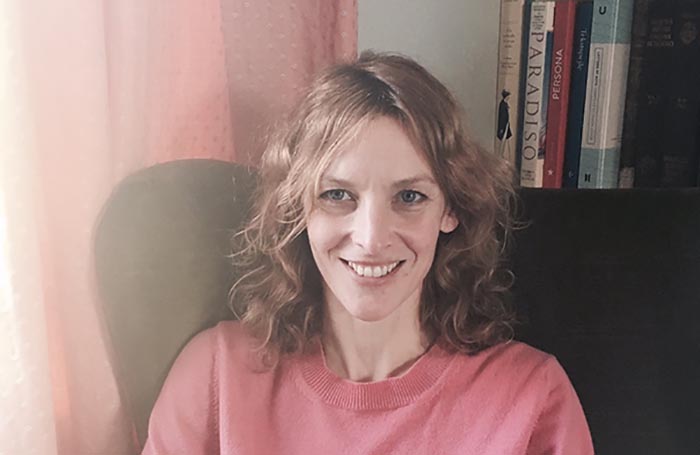
An Interview with Clare Carlisle
Transcript
Nick Yiangou: Hello and welcome to the Beshara Magazine Podcast! I’m Nikos Yiangou, podcast editor for the Magazine, and I’m joined by our executive editor Jane Clark. Hello Jane.
Jane Clark: Hello Nick
Nick: Today we interview Clare Carlisle, Professor of philosophy at King’s College London, and author of the recently published book Transcendence for Beginners. For Clare, philosophy is not just an academic discipline, but about the way we choose to live our lives and conduct ourselves in the world. She is especially interested in the way that human beings can embody wisdom and goodness, and how our lives, in the way they unfold and the shape they make, reflect the whole of the cosmos. She sees the literary genre of biography as a useful way of exploring these themes, and amongst her eight published books are acclaimed lives of Spinoza, Kierkegaard and George Eliot– the last being described by John Carey as ‘the best book I’ve read on Eliot’.
She is currently President of the British Society for Philosophy of Religion, and in 2024 she was invited to give the prestigious Gifford Lectures at the University of St Andrews. These lectures became the source for Transcendence for Beginners, and we are very pleased to have an opportunity talk to her about it.
Welcome Clare, and let’s start with an opening question from Jane.
Jane: So, Clare, welcome. It’s very nice to meet you in person. So can we begin by asking you a fairly general question? You say in your book that your overall purpose is ‘to explore how genuine wisdom and goodness is transmitted by human lives outside of religious structures as well as within them.’ So you see this as being the real purpose of philosophy – to help us all to live what you would call perhaps ‘good lives’. Can you say something about this?
Clare: Well, I wouldn’t say that that’s the only purpose of philosophy, and in a way, I don’t think you need to be a philosopher to be thinking about living a good life. In a way I think we all probably want that or care about it deep down. But then the question is, well, what is a good life? And that’s maybe where philosophy steps in and has to ask some questions and think about what human beings are, who we are at the deepest level – you know, whether we’re just bodies moving around with brains or whether we have some sort of mind that’s not material or whether we even have a soul. Those kinds of questions are pretty unavoidable once you start thinking deeply about what a good human life is. You have to think first what a human life is in the first place, I guess. And then, yes, think about what a good one is like.
Nick: This seems to return us to this notion that you bring up so well in your book. This Greek idea of To kalon variously translated as nobility, fineness, beauty, virtue, or radiance as it can be exemplified in people. So can you say more about this idea of how a life can be lived according to beauty? Because perhaps this is the way in, isn’t it?
Clare: I think so, yes. Because I think sometimes we can maybe stumble on that idea of goodness, because it might sound to our ears like it’s an exclusively moral kind of category, like you’re a good person if you don’t tell lies and don’t steal and be kind to people. Whereas in ancient Greece, they had this more expansive concept of goodness which encompassed ethical or even moral goodness, but also a more kind of aesthetic quality, a kind of beauty. But not just physical beauty; the idea of the beauty of the soul or nobility of soul; the idea of a life that’s fine – it’s something that’s good to look at. It’s good. It makes a pleasing sort of shape in the world. And so yes, I was really drawn to that idea, the concept of To kalon that Plato and Aristotle and other Greek thinkers used really prominently in their thinking about the good life and the good human life also.
I think beauty is really important to me personally. I’ve found that I’m very drawn to beauty and motivated by beauty and conversely, troubled by ugliness. And again, I’m not just talking about physical ugliness, but ugliness of spirit or soul. Often, public life and political life in particular can exhibit a kind of ugliness and brutality that’s quite painful, I think, for everyone to have to behold when we see those deeds in the world. So it cuts both ways. It’s not all about beauty unfortunately, it’s also that humans are sensitive to, yes, a kind of the opposite of beauty. And pained and troubled by it, I think.
Nick: You also bring this out in George Eliot’s understanding of this principle. That it’s not only in the lives of important people, great men, that we see this, but it’s more perfectly expressed in small lives and in everyday acts of selflessness and kindness, and even in people who may be seen as flawed in some way. So I was also taken by this other Greek phrase that you mentioned of anthropos epiphanius, which is really interesting because it refers to the hero, but it translates as a radiant or manifested human being.
Clare: Yes.
Nick: And so there’s this interesting interplay between this ideal of the hero as a manifestation of To Kalon, but also in the lives of everyday people, flawed everyday people.
Clare: Yes. Yes, exactly. So again, it goes back to that idea of life as a kind of aesthetic spectacle – that lives are public things. That other people are… you know, we watch each other, we see each other, and we’re often performing in public in some way, even if it’s just walking down the street and choosing to look a certain way or whatever. So, yes, human life does have this, I guess, performative visible quality. And then of course, there are particular people who are especially visible – celebrities, public figures – in traditional terms, great men, you know, statesmen or great poets or great scientists, people who become famous and celebrated for their position in the world. So their lives are especially visible and often held up as exemplary lives for others to admire.
What I found really interesting about George Eliot was the way she… I mean, I think she was very attuned to this idea of life as an aesthetic thing. The idea of the beauty of life, the beauty of the soul. But she wasn’t just interested in great historical figures. And in fact, I think she was deliberately subverting that – the patriarchal idea of these great men who made history – and wanted to think that what she called ‘hidden lives’ were also manifestations of goodness. And there’s something paradoxical about that, that it’s hidden but it’s also making goodness manifest in a way. But it might be manifest in ways that only a few people might see, only visible to a few people who might themselves be obscure. So these aren’t lives that are documented in history books or people who have a Wikipedia page or whatever, but they’re still lives that make a difference in the world and can be beautiful and can be radiant. This is something she makes really explicit at the end of Middlemarch when she talks about Dorothea, the heroine, and she talks about her hidden, buried life that had still contributed some goodness to the world, even though we can’t really tell what shape that takes.
Jane: You’ve also talked about the idea that most of us through our lives are actually influenced by encounters with people who hold this quality for us. You know, that they can change the direction of our lives. You talk about a couple of people that you yourself met in your book.
Clare: Yes. That’s right. So the book started life as a series of lectures that I was invited to give up in Scotland at St Andrews University. They invited me to go and I had to give six lectures. And as I wrote the lectures, I was thinking about what it is give a lecture or what it is to teach other people. And you know, when you’re lecturing, you’re standing on a stage and you’re visible and other people are looking at you and listening to you and hoping you’ll say something worthwhile and interesting and so on. So I guess it made me think about, well, who are the teachers who have influenced me and why were those teachers special? What in particular did they teach me? And it wouldn’t just be, oh, they gave me lots of knowledge of this philosopher or that novelist. It was much more, I think, the teachers who are really important exhibit themselves to us. They exemplify a certain way to be a person. And we see them and we, yes, we take inspiration from that.
So I talked about an academic, a philosopher called Jonathan Lear, who, sadly passed away a few months ago. He was a very eminent philosopher who taught at Chicago for many years. He was also a psychoanalyst, and he and I both shared an interest in Kierkegaard, but he was also an expert in Greek philosophy. Anyway, I describe in the book how when I was quite young, in my twenties, I went to a lecture that he gave and it really inspired me in a really deep way. Not just that it was an interesting lecture, but it made me think, oh, maybe I could have this kind of life, maybe I could be a teacher and I could do philosophy. I already had a PhD in philosophy by this point, but I didn’t have such a deep sense that this was a career path that would be right for me and meaningful for me. Whereas Jonathan Lear embodied a certain way of being a philosopher that I connected with.
Then another example I gave was a yoga teacher who I started going to her classes in Manchester, again when I was in my twenties. And something about the way she held herself and talked and just the way she was quite deeply, again, influential, in ways that would be quite difficult to just describe or summarise. But over many years, actually, I went to her classes and so she was a really formative influence. And I think we all have these people. I mean, for some of us, our parents are those people or it’s a teacher at school or it could be…yes, it takes different forms. But again, I suppose because human lives, because we’re visible to one another and we connect with each other and we see these other lives in the world and that shapes our own thinking about who we might become ourselves. So each one of our lives takes shape through these encounters and in particular through these very significant encounters that will be formative for us.
This is something we’re all familiar with, but it’s maybe not talked about that much – certainly in philosophy, it’s not sort of something that’s necessarily been explored.
Jane: This line of thought obviously feeds into your work as a biographer. But before we approach that, could we kind of take a plunge into philosophy and say that you’ve clearly been very highly influenced by the Portuguese philosopher Spinoza. And you describe how Spinoza was a contemporary of Descartes, who of course, had such a profound effect upon Western culture. But whereas Descartes kind of fragmented reality and saw each of us as sort of a separate individual substance – like you say, like a separate individual substance looking at other individual substances or living our lives – Spinoza thought there was actually only one substance and that we are each modes of it. I believe the exact phrase is ‘we are modes of the infinite’. So you describe this as being like waves on an ocean, or a metaphor that I particularly liked, like a smile on a face. Can you say more about what this kind of viewpoint means– would mean – in terms of understanding our own lives?
Clare: Yes. Both Descartes and Spinoza are doing metaphysics, so they’re talking about that metaphysical level of reality. Descartes thought that a human being was a kind of combination of a mental substance, a mind, and a physical substance, a body. And these are two fundamentally different kinds of substance and they somehow fit together, and it’s the mind, the thinking part of us, that’s immortal. Descartes thought that our individual minds were each distinct substances, whereas, yes, Spinoza says there’s just one substance and we’re these modes.
So a substance is something that is independent – that exists in itself; it’s self-sufficient. That’s really what the concept of substance means in metaphysics. And so to say that we’re not substances, but we’re modes of substance, is to emphasise that we are fundamentally dependent and interdependent beings. That’s to say we’re not self-sufficient. We can’t exist without what Spinoza calls ‘God or nature’, which is the one substance, which is the ground of everything that exists. And we’re all expressions in different ways of that one substance. But also – and this is where the metaphor of the waves on the ocean is helpful – it’s not just that each wave is dependent on the whole ocean because it’s a certain shape that that ocean takes, but it’s also interconnected with the other waves. The movement of another wave is going to affect the ones around it. So, yes, so it’s just a different vision of what the human situation is really that emphasises interconnectedness and interdependence.
Spinoza famously denied that we have free will. So it gives him a different way of thinking about agency, about human agency. But yes, most fundamentally, it’s this idea that every finite thing is a kind of expression or incarnation of the whole, which he called God or nature.
It’s a way of thinking that I’ve just always found quite helpful, ever since I first studied Spinoza when I was a student at university. Of course you study different philosophers and for some reason his way of thinking about things made sense to me. I mean, it’s also hard to make sense of as well, but I don’t know, it just kind of resonated with me. So I’ve been thinking with Spinoza and sort of thinking within that metaphysical framework for many years now. It’s not that I agree with everything Spinoza says, but it’s just, yes, a way of thinking about who we are that, as I say, makes sense.
Jane: So one of the implications that I picked up from the book about each of us being a mode is that although there are distinct features of our own sort of mode-ship, because there’s only one substance, each part actually contains or expresses the whole in some way. So you talk about this concept of the ‘cosmogram’ – of everything in the world actually having a cosmic dimension to it.
Clare: Yes. And that’s also an idea that comes from Leibniz, who was another 17th century philosopher, and he was influenced by Spinoza. He, like Descartes, thought that each mind was its own individual substance, but he also said that each individual substance mirrors the whole universe in its own way. So it’s that idea, yes, that each individual being expresses the whole cosmos. So, yes, both Spinoza and Leibniz have some version of this idea.
And then this concept of a cosmogram is one that my husband who’s also a writer and intellectual is writing a book about cosmograms, which is the idea of some kind of finite object that represents the cosmos in a way. It could be anything but I was interested in the idea that yes, human lives express what the world is like. They express the world they live in just as a plant that’s growing in a certain place, in a certain climate, is going to sort of express… it expresses its own nature, the nature of its seed or whatever, but it’s also expressing its surroundings. Like at the moment outside my window, there’s a tree that’s in blossom and it’s expressing this certain fact that the temperature is at a certain temperature and everything, and we’re in a certain season.
As you say, I’ve written a couple of biographies and so thinking as a biographer about, well, what is a human life and how do you make sense of a human life, one thing that’s really important, I think, is to think about how a life expresses its world. So writing about George Eliot, she’s a person for whom the shape of her life expressed, of course, the culture she lived in, a whole confluence of different things that were happening in the 19th century and that she’s a kind of channel for all that to show itself in a particular way. All the influences, you know – the artistic influences on her, whether it’s romanticism or Christianity or her studies of ancient religions; Judaism; her reading of Spinoza. But also her experience of just being a kind of lower middle class provincial woman. All of all of this comes together and takes shape in a singular life.
So when you’re looking at a life, it’s not just: who is this person? but what does this life express? It’s not just about itself, but about its surroundings, about the other people that it’s in relationship with – going back to Spinoza, you know, the other waves that are around it and how the movements of this life affect others. And, so I suppose, yes, thinking quite philosophically about the work of biography and what a life is and how on earth you describe something like this, which is so diffuse and which is, in a way, so difficult to kind of draw a line around it and say, well, this is the life and these are its boundaries and its parameters; this is the shape it makes. I mean, it’s really impossible to do that because lives are so amorphous and complex and diffuse. But also, that’s what you’re trying to do as a biographer – give a shape to that life.
Nick: I think you’re basically also referring to this other concept you bring up in your book about the ‘milieu’. It seems we are both shaped by our milieu and at the same time we shape it.
Clare: Yes, exactly.
Nick: Is this what you’re referring to? And is this part of the cosmogram ultimately? In terms of thinking holistically about how a life is lived and how life is expressed.
Clare: Yes. So this word ‘milieu’ is, as you know, a French word, obviously. And it became really popular in the nineteenth century, first of all, among scientists who were thinking about the environment, the idea that organisms adapt to their environment. Obviously people like Darwin and Lamarck were thinking about this, so they were studying life within a certain environment or milieu. So that’s, yes, that’s a sort of concept –you would think that the milieu of any living thing is quite kind of local … local surroundings, a particular habitat, a particular climate or whatever; a sort of an ecosystem of some kind. But then I suppose if you’re thinking, yes, more philosophically or more metaphysically, inspired by people like Spinoza and Leibniz, who weren’t just thinking about the way individual things were connected to their kind of local surroundings, their culture, their family, but to the cosmos as a whole. How does each of us connect to the whole of reality? Then you are in a more metaphysical domain. So I suppose the idea would be that the cosmos is the kind of ultimate milieu. You know, it’s the milieu that contains all the milieu, all the small worlds as one world that is the cosmos, which contains everything.
I wrote the book [Transcendence for Beginners] after writing my biography of George Eliot and I came to see as I worked on Eliot that this was what she was thinking about, particularly in her late novels. So a little bit with Middlemarch, but more so with Daniel Deronda, the milieu becomes this cosmic thing, where she’s thinking about the drama of a human life in these cosmic dimensions where you’ve got these characters, but then she talks about the planets and the gods and the stars and she sets her characters in this, in this cosmic milieu. And at the time she wrote that book, which explores Jewish themes, she was reading a lot about Jewish philosophy and the Kabbalah, which itself has this kind of cosmic [dimension] – it has a kind of cosmology whereby souls are a part of, again, part of the whole, and they have a purpose within that cosmos.
So anyway, these are ideas that I got interested in sort of exploring through reading Eliot really. But she was really influenced by Spinoza and by other philosophers, including Leibniz, to be thinking about those kinds of questions herself.
Jane: I think it’s a very lovely vision of human life to think that each of us in our small ways – or what we might think of as small ways– are actually connected to the whole of the universe, and I think you would say to everybody else. You mention in your book that one of Spinoza’s ideas is that when we, if you like, do good or when we do a good act or such like, then we do it not only for ourselves, but we do it for everybody, for the whole of humanity.
Clare: Yes, yes. And we might not know about the way our actions are having effects far beyond our own kind of immediate sphere of influence. We don’t know that. I mean, it’s this old idea that the gods are looking down and they see this – this drama – and we’re just sort of playing our part and we don’t have a sense of the whole. In a way, I think Eliot is playing with that idea with her narrator, who sees the whole. The narrator can sort of survey the whole of Middlemarch or even survey the whole cosmos in Daniel Deronda. But the people who are walking around within it don’t know what’s going on and they don’t know what the consequences of their own actions are going to be. They don’t know what the consequences of their own thoughts and wishes are going to be. So it’s this image of human beings where we’re sort of ignorant really of a lot of what’s going on. And yet we can’t help, I guess, zooming out and taking that god’s eye view on ourselves and imagining what it would be like to look down on our lives from above. I guess that’s one of the things that’s so special about humans – that on the one hand, we don’t really know what’s going on, but then we also have this imaginative power to kind of transcend that perspective and to imagine, you know: what would a god see if he or she looked down on us?
This again goes back to the sort of aesthetic idea that lives take a certain shape in the world; they make a certain pattern, and we might not be able to see that pattern ourselves, but it’s there. You know, it’s something that’s visible. It’s something that’s being made manifest.
Jane: You bring a lovely story by Karen Blixen in the book, of a man who on a – it must be a snowy night – gets up in the middle of the night to mend a fence that’s banging or something. And he goes to the fence and he goes back to the shed and he goes backwards and forwards and mends the fence. And then when he wakes up in the morning, he looks out of the window and he sees that he’s traced the perfect image of a stork on the lawn. Which is to use this idea; we don’t know what shape of life we’re making, as we go through. One of the things you bring in is an idea of a ‘whole life’ … that in order to understand a person, you have to look at the whole of their life, which is presumably one of the attractions of biography for you.
Clare: Well, yes. I mean, in a way, it was through writing biographies that I then thought about this idea of a whole life. Because if you write a biography of someone who’s died, then obviously you know … the life in a way, it’s very simple. It begins when the person’s born and it ends when they die. And so in that sense, the idea of a life as a whole is a very kind of familiar thought really. And then, when people die, you have a funeral and their life is remembered – we think of their life as a whole that’s just come to an end. So on the one hand, a whole life is something that’s quite straightforward. A person is born and then they live a certain time and then they die. But as I was saying before, because our lives are also kind of spread out – I suppose you could say sideways, so to speak, in terms of our relationships, our relationships with others, the things we do, maybe the things we make and leave behind, the places we go, all the experiences we kind of accumulate – when we think of the life as a whole, in that sense, it becomes much harder to define.
You know, you can say that someone was born in, I don’t know, Spinoza was born in 1632 and he died in 1677 and that’s really clear. But then to say, well, what was the sort of scale and shape of his life? What effects did his life have in the world? What sort of shape, what pattern, did it make? That’s maybe still ongoing, you know, it’s this vast thing. It’s really impossible to pin down. You can’t really draw an outline of it. So in a way, the biographer’s task is really an impossible task, you know, to know what the life as a whole is. None of us know ourselves as a whole, let alone other people. But that’s the task that you try to accomplish as a biographer, to give some sense of the whole life. You don’t want to leave out anything that’s really important. So it’s almost like you’re giving a kind of sketch of the whole life and it’s obviously going to be incomplete, but you hope to capture something of its shape.
Nick: The first biographies you did were of Spinoza, Kierkegaard and George Eliot, and you’ve also written about Proust, who are all very much in the Western tradition. But in your latest book, you also look at the life of the great Indian teacher, Ramana Maharshi. What took you in this direction?
Clare: Well, I came across Ramana Maharshi, who’s I mean, he’s a very famous South Indian sage, spiritual teacher who lived in … well, he was born at the end of the 19th century and then lived through the 20th century. He died in 1950. He’s very, very famous in India. You often see his photograph, in like, taxis or different places in India or shops or whatever. You know, he’s venerated by a lot of people there.
I saw a photograph of Ramana in a house in Sale in Manchester, where I lived for many years when I was in my 20s and 30s. I used to go to a meditation meeting in this house and there was a picture of Ramana on the mantelpiece in the house. The house belonged to the meditation teacher, who was an elderly man called Russell. And he often talked about Ramana – not that he’d met Ramana in person. He’d never been to India. But he’d had a sort of vision of Ramana when he was going through a kind of spiritual awakening as a young man and had this really profound sort of encounter with Ramana. I don’t understand how that happened, but it happened. Anyway, he talked about Ramana a lot and his photograph was there. And so that’s how I first heard of him.
And then I guess, yes, just through sort of doing meditation and yoga, I met other people who went to India and who had visited Ramana’s Ashram there, because the place where Ramana used to live in South India, it’s an ancient pilgrimage site. There’s a holy mountain there and a big temple. And that’s where Ramana spent almost all his life. And there’s now an ashram that’s devoted to him there. So, yes, I’d met people who’d been there and who told me about it. So it was one of those things where I sort of encountered Ramana in a few different places, you know? I kept hearing about him from a few different people independently of each other. And all these people were people who were sort of people I was interested in or people who were significant for me. So it made me curious and want to go to the ashram myself. And I did go. I’ve been there quite a few times and been to the mountain where Ramana lived in a cave for many years.
So yes, I became interested in him and his life story because his life story was quite remarkable in that when he was 16 years old he had some kind of spiritual awakening process. He left home and went to this mountain, and then he basically stayed there for the rest of his life and spent a lot of time in silence. And then he ended up… other people were kind of drawn to him, and he ended up being this very celebrated, renowned teacher. But he taught mainly in silence.
So his life was, on the one hand, extremely simple, like he was born and when he was sixteen, he travelled to Tiruvannamalai, to the mountain, which is called Arunachala. He lived there and he died. But he had this extraordinary influence through a life that was actually very still; he stayed in one place. And he had this inner stillness as well. That was his special quality and he was able to kind of share that quality with people who came to see him and sit with him. So it’s amazing that a life that has really distinguished by stillness and silence could be such a kind of large life in the world and could become so visible. Maybe it says something about human beings that they can recognise something of value in that kind of a life, which is outwardly – you know, there’s nothing to see, in a way, he’s just this person sitting there. India is a culture where that is very highly valued and people will go and spend time with people like Ramana there.
Jane: Well, we were moving on to ask you about Ramana Maharshi, who obviously, whose presence is very definitely a spiritual presence. I’ve been there. I’ve been to the ashram myself …
Clare: Yes, I know
Jane: … and it has a very great spiritual impact. So talking about what we mean by transcendence, you call your book Transcendence for Beginners. And first of all, to say that we normally think of transcendence as being a kind of escaping from ourselves or a kind of removing ourselves from restrictions. But this is, I think, not what you mean by it at all, or what Spinoza meant by it. And from what I gather in the book, Spinoza meant by transcendence a sort of moving beyond our own what he calls ‘habitually circumscribed selves’, through connecting with other people or other beings or connecting with God. But you also say that these movements are without dualism or separation, because we are all of us already ‘in God’ as modes of the infinite.
Clare: Yes. Yes. So there’s obviously quite a lot there. I mean, the word ‘transcendence’ does just mean moving beyond. So it’s quite an open-ended concept really. It has this, I suppose, religious kind of connotation, but one of the things I like about the word is its open-endedness. And so it can be understood in many different ways. Sometimes, as you say, it implies kind of leaving the world behind and going to some other reality – transcending the world, or the idea that God transcends the world like God is elsewhere, maybe, or beyond us or ungraspable or whatever – inaccessible, maybe.
So there are lots of different ways of thinking about transcendence, but yes, I think in Spinoza’s case: we talked about the idea that we’re not substances, we’re modes of substance. But Spinoza also thought that we tend to see ourselves as substances. We imagine ourselves to be these self-sufficient, separate beings that move around and make choices and have a kind of autonomy. But those ways of thinking are actually quite like false boundaries, I suppose that we’re also [stuck in] a kind of narrow sense of the self that’s maybe a kind of resistance to our connectedness to the whole and our dependence on the whole. And so I think for Spinoza, the work of philosophy is to do with transcending those limitations, transcending those habitual ways of thinking about ourselves and starting to understand more and more the connections between things and the causes that make each thing the way it is –and this whole ultimately infinite chain of causes and connections that constitutes reality, constitutes nature.
And so yes, I suggest for Spinoza, that kind of movement is possible – the movement beyond the small self is possible – precisely because we’re not separate. We’re not islands, you know, because we are connected, we can sort of spread out in a way and expand and understand those connections more and more. So that’s Spinoza’s model of transcendence.
I mean, Spinoza’s way of thinking about God is quite distinctive because, as I’ve mentioned, he uses this phrase ‘God or nature’. And that raises questions about, well, what does God mean for Spinoza, if it can mean the same thing as nature? Spinoza, you know, was resistant to the idea that God is a person, that God is a personal God. So he really rejected a kind of traditional Judeo-Christian view of God as a person with plans and projects and opinions and whatever. He has a more metaphysical, impersonal conception of God. And Ramana – I mean, Ramana’s own background was a kind of mixture of Tamil devotional religion, but also connected with a kind of non-dual Hinduism where maybe there, too, God is ultimately not a person. You know, God is ultimately the One, the Whole, the formless that each being is not separate from. And in fact, that is what Ramana’s so-called sort of self-realisation consisted in that he kind of awoke to that reality, that he wasn’t separate from God. But again, not sort of a personal God, I don’t think in his case. But yes, a way of thinking about God that was again, expressive of that different religious milieu and his own culture.
But one of the really interesting things about Ramana’s story is that he became very renowned in the West as well as in India. And that sort of renown, that influence, went both ways because the fact that Ramana’s teachings and the story of his life spread out and European people got interested in it, actually shaped Ramana’s own life in return. Because the ashram got really busy. And people, you know, lots of people from Britain and other Western countries started to travel there to visit Ramana and wrote books about him. So that was part of a sort of colonial milieu … and a kind of interest at that time in the twentieth century, a lot of interest among Western people in kind of Eastern traditions, people being disillusioned with Christianity and looking elsewhere, looking for alternative forms of religion and spirituality. So that, again, it’s a very complicated life story that’s in this milieu that spans different continents and different traditions.
Nick: Honestly, I think your book does great service to the idea of helping us with the concept of transcendence. It’s called Transcendence for Beginners. And I think that’s fantastic. I mean, what you say about transcendence in the different people, the different philosophers that you cover, is very liberating in many ways. You know, with Spinoza, it’s a kind of immanent transcendence. Not escaping, but deepening into reality. Kierkegaard’s is a sort of a movement down into suffering and self-knowledge. Ramana’s is transcendence through subtraction, one could say – stripping away of false identification with the ego. And Eliot is transcendence through biography and Proust through writing, breaking through time and recovering the eternal.
Clare: Yes. That’s a nice … that’s a nice summary.
Nick: So I think that’s what I’m saying. It’s a great service because it helps us to move away from this idea of transcendence as trying to escape the bounds or the suffering of this world. This is a very different movement, a very different way of embracing life – seeing that it’s possible here in this life to live a life in the form which has a kalon – a type of radiance. So maybe we could wrap up on this point Clare, if you’d like to just say a little bit more about that in particular.
Clare: Well, I mean, I think you’ve said it really nicely. It’s always nice to have your own book sort of summarised because actually – no, seriously, when I was writing the lectures, which became the book, I always really struggled when people asked me: what are they about? I found it really hard to describe them or to summarise them. It felt quite elusive. And it was almost like I was kind of… actually, it’s ironically, it’s a little bit like the Karen Blixen story, where you’re sort of following a path and you’re not quite sure what shape you’re making, but there is a shape there.
Jane: You also say something very nice about it being for beginners. Meaning, and I think you imply in what you say about that, that we never actually move beyond the stage of being a beginner in these matters.
Clare: Well that’s right. Yes. Because I think in these really big questions, religious questions, none of us, none of us really know what lies on the other side of death. None of us really know why we’re here. And we’re all in the same kind of state of beginning, I think. And I guess I was also thinking quite a lot when I wrote the book about childhood, because when we think about the meaning and shape of a life, we often think about the childhood. Childhood is so important, when we make sense of who we are now, we look back and think, oh, this was what our… you know, we were always trying to sort of make sense of who we are and so much of it goes back to childhood. So I wanted to, I guess, explore that childhood perspective a bit. And so the idea of beginners also is a bit of a nod to that as well.
But also, yes, I think with, on these questions, we’re all beginners. Certainly I am. I didn’t want to put myself up as a sort of authority on any of this because that just doesn’t seem appropriate on these questions.
Nick: Well, thank you for your work. We’ll enjoy the next one when it comes out, but this one was great. This one was great reading. Thank you so much.
Clare: Thanks so much. Thank you for those really thoughtful questions as well. I enjoyed hearing what you found interesting in the book,
Nick: And thank you so much for your time and agreeing to speak with us. We really appreciate it.
Clare: Oh yes. You’re welcome.
Nick: Thank you for listening! Transcendence for Beginners was published by Fitzcarraldo in the UK in September 2025 and in the US in April 2026. You can also subscribe to our podcast on Apple, Spotify, or on any of your favourite listening platforms. And in addition to podcasts, there are hundreds of articles on our website, www.besharamagazine.org.
The text of this article has a Creative Commons Licence BY-NC-ND 4.0 [/]. We are not able to give permission for reproduction of the illustrations; details of their sources are given in the captions.
read more in beshara magazine
More Podcasts
Podcast Interview: Cynthia Bourgeault: The Christian Contemplative Tradition
The radical theologian talks about Jesus as a wisdom teacher and a master of the transformation of consciousness, the practice of ‘self-emptying’ and Centering Prayer, her understanding of Mary Magdalene, and the transitional nature of our times: ‘We’re stuck in a very, very difficult birth canal…
Interview: Satish Kumar: Peace Is Possible
The ecologist and activist talks about his commitment to peace and peace-making, and understanding that peace is not just an absence of war but a positive, harmonious way of living with three aspects: peace with one self, peace with society and peace with nature.
Interview: Professor Mark Williams on Mindfulness Meditation
The Oxford psychologist talks about the development of MBCT, how it can help us look upon ourselves with a compassionate gaze and find peace in a chaotic world. ‘If we live in a universe which is, as David Bentley Hart’s book says, All Things are Full of Gods… then we can’t distinguish a secular practice from a sacred practice.’
Interview: Alastair McIntosh: ‘Riders on the Storm’
The Scottish writer, theologian, and environmental activist talks about climate change as fundamentally a spiritual crisis – a wake-up call inviting us to understand the world as a manifestation of the divine. ‘This is where the evolution of conscious life on Earth has brought the planet to.’
Interview: Lisa Petersen on Somatics and the Wisdom of the Body
The yoga and somatics educator Lisa Peterson talks about her unique form of teaching, which blends together therapeutic practice and spiritual enquiry, guiding students through the lived experience of breath, movement and consciousness.
Interview: LD Deutsch on Time, Myth and Matter
The Los Angeles based writer talks about her recent book Time, Myth and Matter: Essays on the Natures and Narratives of Reality, in which she weaves myth and science into a coherent narrative and looks at the intertwining of the inner or psychic dimension with the outer world of physics.
FOLLOW AND LIKE US
@Beshara_Mag








——————————————
——————————————
——————————————
FOLLOW AND LIKE US
@Beshara_Mag
If you enjoyed reading this article
Please leave a comment below.
Please also consider making a donation to support the work of Beshara Magazine. The magazine relies entirely on voluntary support. Donations received through this website go towards editorial expenses, eg. image rights, travel expenses, and website maintenance and development costs.
READERS’ COMMENTS
1 Comment
Submit a Comment
FOLLOW AND LIKE US
@Beshara_Mag
I’m still in shock that I won the $18.9 million New York Lotto jackpot and I have to give all the praise to Chief Ade. His powerful prayers and positive vibes worked like magic, I played the lottery game for more than 5 years and I never won a reasonable amount, but after I met Chief Ade He helped me pick the right numbers and guided me through the whole process. If you’re looking for a way to change your life, Chief Ade is the man. Thank you Chief Ade for helping me live my dream Email: chiefadespellhome@gmail. com OR WhatsApp +234 901 380 6328