
Podcasts
Time, Myth and Matter
The Los Angeles based writer LD Deutsch talks about her recent book Time, Myth and Matter: Essays on the Natures and Narratives of Reality, in which she weaves myth and science into a coherent narrative and looks at the intertwining of the inner or psychic dimension with the outer world of physics
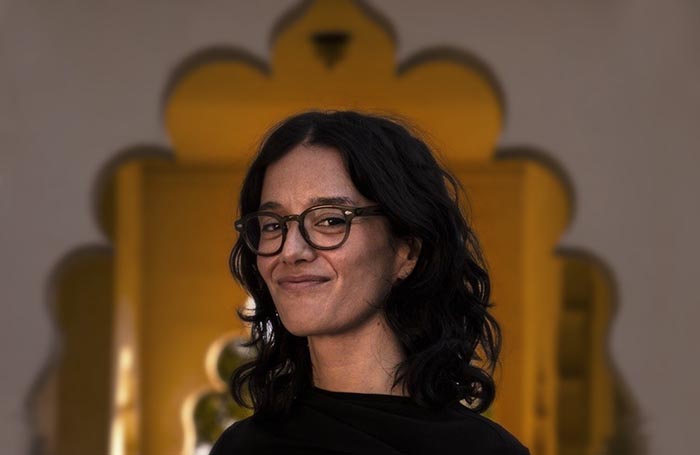
An Interview with LD Deutsch
Transcript
Welcome to the Beshara magazine podcast, whose aim is to provide a forum for leading edge thinkers looking at the contemporary world from a perspective of unity. On our website, you will find nearly 200 articles by scientists, economists, artists, ecologists and followers of spiritual traditions who are focused on oneness and integration rather than fragmentation and discord. I’m Nikos Yiangou, podcast editor for the magazine, speaking to you from California, and I’m joined by our executive editor, Jane Clark, who is based in Oxford in the UK. Hello, Jane.
Jane: Hi, Nick.
Nick: Today we welcome Laura Deutsch as our guest. She’s a writer based in Los Angeles and holds an MA in Religious Studies. Her work focuses on time, consciousness, technology, mythology, and the fall of the materialist paradigm. Laura’s first book, Time, Myth and Matter: Essays on the Natures and Narratives of Reality, was published by Sacred Bones Books in May 2025. As reviewed by Eric Davis, and I quote:
“Deutsch can discuss physics with clarity, respect, and rigor. But like the first wave of quantum theorists, she allows herself to move deeply into philosophy and myth as well. And when she does wrestle with uncanny things like gods and oracles and Jung’s ideas of synchronicity, she does not sink to the usual archetypal mysteriosa.”
So, after that laudatory quote, Laura, let’s jump into our conversation today. So just give us a general idea of your work, which weaves myth and science into a cohesive narrative and that shows the intertwining of the inner or psychic dimension with the outer world of physics. Can you tell us what led you on this journey?
Laura: Yes, sure. You know, I think really, ever since I was a child, I’ve been interested in wide questions about reality and consciousness. And in a way where I don’t really ever feel like I could leave that call unanswered. I’ve been lucky enough to get to explore these questions from a variety of different perspectives. Scientific, philosophical, mythological, through the analytical psychology of Carl Jung. And while on that journey, you begin to see certain patterns or structures between these different fields that are correlative and, in some cases, isomorphic. And I think, you know, as that kind of began maybe intuition starts to flare and you ask yourself, all right. Is there some sort of deeper order of organization underneath here? Are these opportunities to make meaning? Do those overlap? In what way is the question that I’m asking in one direction the same or different than you’re asking in another? And how can we approach all of these intersections in grounded ways?
Jane: Thank you. Your book’s called Time, Myth and Matter. But we thought that we might begin with myth. You point out that through most of human history, in pretty much every culture, myth has been the main way in which people have made sense of the world. For instance, through creation myths, whether they’re Indigenous or Greek or those in texts like the Bible or the Upanishads. And it was kind of assumed by Enlightenment thinkers that as science or rationality became culturally dominant, that these myths would be replaced. And you know, in a way, they have. Very few people now believe that the world was created in seven days, as it says in Genesis. But the activity of myth making, you say, has not died out. In fact, if I can quote, you say:
’As we as a species are now increasingly thinking and acting by means of techno scientific systems, there has been a huge re-emergence of the mystical in the very space where it was thought to have been destroyed.’
So basically, two questions: One, basically, is what is the importance of myth and why do you think as human beings we seem unable to stop doing it? And secondly, what do you mean by ’this space in which it was thought to have been destroyed?’
Laura: Absolutely. You know, it’s such a rich question and I think can be approached from a few different angles. The first I would say, you know, the book itself and my work in general, I use a lot of the theories of Carl Jung, some of his more mythological theories, for sure, and some of his what might be considered more harder scientific theories. But he wrote, you know, that man has always lived with a myth. And, this time period where, you know, after the enlightenment is actually a very short period of time for mankind. And to think that modern man can live without a myth is a disease, as Jung would say. But because man is not born every day, he’s born into a historical circumstance with a specific historical setting, one needs to have a relationship to these things, and that relationship can’t be entirely rational. And it’s interesting because this kind of weaves into the second question. But, you know, I think scientists, in my opinion, if they’re worth their snuff, will admit that at the heart of science, there is a mystery. You know, the scientific method is fantastic in exploring a very local province of the universe, but we don’t know the specific origin of the universe or how life came to be or how consciousness came to be.
These are deep, vast mysteries, and scientific thinking, with its reliance on experimental viability falls short of being able to answer these questions, and so I think the mythic dimension sort of opens up around these questions at the edge of what can be known. Jung would also say that without some sort of understanding of our universal origins, some sort of deep understanding, we end up with a rootlessness that can be quite detrimental to our psychological health. So, I think that mythology, especially as it relates to a creation mythology, man has always lived with creation mythology. And I don’t think that in the scheme of humanity, our modern day is any exception towards that. However, we, you know, have seen the sort of systemic, if not breaking down of organized religious structures, then a great relocation within the cultural significance of these systems and organized religion, And, you know, these were the territory where the production of myth flourished, especially creation mythologies. Now, if we look towards technology, especially information technology, we can certainly define it as something that brings the world together, that, you know, you have an enormous amount of information at your fingertips.
I’m in Massachusetts, you’re in California, you’re in the UK. You know, this is a connecting principle. So, in some ways, I think that can speak to the migration of these mythological structures from one space to the other. You know, I think there’s something that gets kind of missed where science and religion have the same goal, which is an understanding of reality and of humanity’s place within it, but on both sides, you have people and systems and histories of trying to keep them completely partitioned from each other. But the problem with that, with not having them in conversation with each other, is that thinkers tend to wander blindly into the territory they try so hard to partition off, and so that’s when I think you have these really interesting structures, like the simulation hypothesis, which I write in the book and argue is a secular creation mythology or in many sorts of aims and goals of the transhumanist movement. You have very recognizable religious structures showing up under the guise of pure techno scientific thinking. So, yeah, it’s a strange conversation that happens between two systems that people try to keep very far apart.
Nick: Yeah. So, this activity of myth making, could you say a little bit more about that in terms of how the archetypal energies of the collective unconscious operate as a sort of a natural response to this quest for meaning? I mean, it seems like this is not separate from who we are. And the symbols and the images that that emerge from the activity, the archetypal, you know, myth creation are spontaneous and something that we need to be aware of rather than, you know, question the validity of.
Laura: Yeah. You know, Jung’s theory of archetypes is so rich and kaleidoscopic and includes things that might be considered sort of mathematical symbols all the way up to the ideas of the old wise man and you know, the Virgin and the monster, these sort of anthropomorphic or alive entities, but the thing that sort of grounds all of these ways in which it’s seen or applied is that the archetypes are considered to be a priori organizational principles of psyche. They, like you said, they have their own agentive nature. They constellate within the collective unconscious and show up in consciousness via the archetypal image. But we don’t have access to them as they are in themselves, because they exist within the unconscious, meaning that we in our conscious lives, in our personal unconscious lives, and our subconscious lives do not have access to the archetypal level of the collective unconscious.
In terms of myth making, you know, if we take for a specific example the creation myth, Marie-Louise von Franz, who was a disciple of Jung’s, a psychoanalyst and a close collaborator with Jung, she sort of points out that whenever we brush up against the unknown, an archetypal formation comes to fill in the blanks. She would point to old sailing maps. If you look at these old maps, you would have sort of whatever landmass was known would be rendered in the middle. And then all around in the seas, or where there were landmasses or aspects of the ocean that we did not know had not charted, there’d be images of mermaids or monsters or these other archetypal entities that really represent the unknown. So, as we kind of brush up against the limits of what can be known, we see spontaneous activity of archetypes, and then those archetypes kind of emerge into consciousness via the archetypal image. So, if we take the creation myth, as a whole, like we were discussing earlier, we can’t know the origin of the universe. We can’t know the origin of life. So, when we get to those questions, these archetypal structures form and they have a pattern to them, and you can see that pattern in classic creation mythologies from the Upanishads, from the Bible, from indigenous cultures. And you can also see it in something like the simulation hypothesis, which, you know, argues that we are living inside of a computer programmed reality. But if you start to investigate that claim and the philosophies, that support it and the stories that expound on it, you start seeing the same archetypal creation myth patterns. And I think to believe that we are not under the influence of other, larger organizational forces within the collective unconscious is to, perhaps be, you know, more blindly, even controlled by them. You know, I think that people who are proponents of the simulation hypothesis, for example, would argue its merit as a real, possible structure of reality without, you know, maybe conceding to the idea that other organizational forces may be at play.
Nick: So, the computer simulation hypothesis is real, inasmuch as it shows certain structures that correlate, for example, to the Vedic idea of Maya or the Platonic idea that we are merely shadows for pure being. But that’s what you’re saying, is that it’s not that the computer simulation could be real, that we are actually in a computer simulation, but if you investigate, those structures can be broken down into very common themes.
Laura: Yes, absolutely. And I think there are, you know, there are also a couple of other things that I would argue support this perspective on something like the simulation hypothesis, which is if you look back at the history of the West, we have always used the highest point of technology to describe the brain and to describe the universe. In the 14th century, the universe was described as grand clockwork. If you look back at Freud’s model of psyche, it’s incredibly influenced by the steam engine. It’s a hydraulic model. You push something down, something else comes up. Axons in the brain were modelled after telephone wires. Telephone wires came first and neuroscientists were like, could this be how it worked? And it is how it worked. And in the 1980s, you had David Bohm and Karl Pribram and the holographic model. And now, of course, we live in a computer and the brain is a computer. So there is a hermeneutical aspect to how we think about reality. I would also point to this wonderful thinker, Jeff Kripal. Jeffrey Kripal is a religious studies professor at Rice, and he talks about this looping hermeneutics of reading the past through the present or reading the present through the past or the future through the present, this kind of reading that we do, that we tend to think of as truth but are influenced culturally and historically in ways that we don’t necessarily always identify. You can see it, you know, in modern day when people read the, you know, earthquakes or volcanoes as biblical prophecy coming to life, or you can look back at old paintings, old religious paintings, and it looks like there’s a UFO in the corner and people will say, oh, that’s a UFO. You know, that would be reading the present through the past or the past through the present or the future, however you feel about UFOs. And so I think something like the simulation hypothesis, which, you know, many do claim solves age old religious and scientific mysteries, it falls under that kind of reading and I think that many of the people who are proposing it as a viable structure of reality, you know, I haven’t seen them sort of reconcile with this hermeneutical aspect of things.
Jane: So, thinking about Jung’s theory of archetypes, as I understand it, or certainly how somebody like Bernardo Kastrup argues it, he would argue that these archetypal structures are not only shaping the psyche, but actually also shaping the world. And this is because actually that there is not really an essential separation between mind and the world that Descartian philosophy would posit, so we get a phenomenon such as, say, synchronicity. Would you like to say something about this, this matter of synchronicity?
Laura: Sure. And just to kind of set it up, via Kastrup’s analysis of Jung’s metaphysics, as you brought up, you know, thinking about the relationship between consciousness and matter, consciousness in the world, you know, we in the West have inherited a Cartesian materialist paradigm that has an aspect of dualism in it. How does consciousness arise from matter? They present as two separate things. Does that mean they are two separate things? Jung had a way of talking about psyche and matter and the relationship between them, and Jung’s idea of psyche was broken down into three main components. There’s the personal psyche, there’s the personal unconscious, and then there’s the collective unconscious. And as he kind of approached looking at psyche as a whole, he would use the analogy of the electromagnetic spectrum and he would say, you know, in the middle of the spectrum corresponding to the light that we as humans can see is where you would find personal consciousness. If you were to move towards infrared, you would see consciousness kind of start to mix with physiology and then eventually move into matter. And then if you were to go to ultraviolet, you would see consciousness, kind of the personal conscious go to the collective unconscious and to archetypes, past an archetypal realm into the realm of spirit. He’s defining as the dynamic aspect of consciousness that which makes thoughts move, that we don’t have just one brick thought.
But what’s important about this analogy is that it’s all one substance, and what it means is that there is actually no separation between matter and consciousness. How I sort of think about this, personally, is as a bit of a toroidal structure that consciousness, in part, creates and pervades reality and is not separate from matter at any point, although it can be sort of, you know, it can appear as such because perhaps matter and consciousness exist in differing ratios to each other, throughout what would be called a unitary substance of reality. Kastrup does a wonderful job in a book called Decoding Jung’s Metaphysics of kind of explaining how Jung had considered the collective unconscious and nature to be one and the same, that the collective unconscious via the ultraviolet pole via what we would consider maybe more classically as an aspect of consciousness impinges on the personal consciousness through the inside of our minds, but that the collective unconscious as nature itself impinges on us through nature and through the outer world. Now, if archetypes are organizing the collective unconscious, we will see that both in psychic structures and in the structures of nature. Maybe one more connecting flight before getting back to synchronicity, one of my favourite examples of this is from the University of Ottawa and the Sapienza University of Rome in 2023. They imaged through a holographic imaging technique, quantum entangled photons. And if you go and look up this photo, it is a yin yang. It is impossible to deny that what you’re looking at is a yin yang.
And you know, so you have this incredibly specific archetypal structure that has come to mean, you know, it’s in Taoism, it has a variety of meanings, but, you know, the light and the dark, the creative and the receptive interacting with each other, creating the Tao, creating the flow of life itself, showing up in a physical structure. So in that way, you could consider maybe an archetypal organization, the same structure, creating both. Now returning to synchronicity. If you know, synchronicity is, you know, maybe defined as a moment in time where outer events in reality align with inner events in one’s psyche to create an enormous amount of meaning, and that this interaction isn’t causal. Causality could not have brought it to be. But as Kastrup points out, if archetypes are organizing, if the same archetypes are organizing the outer world and the inner world, perhaps it has something to do with synchronicity that both of these archetypes become activated in a moment, and you can see it in the outer world, and you can see it in the inner world, and that itself becomes the nexus for synchronicity.
Nick: So you’ve touched on Jung’s theory of consciousness, this idea of the electromagnetic spectrum of light. And the visible part is kind of what we are aware of. But there’s the ultraviolet and the infrared, which tends towards spirit and to matter, kind of encompassing all of reality. How much have you expanded on Jung’s original theory, would you say? And are there other theories of consciousness that you have come across that help illuminate this idea, perhaps, you know, from philosophy or science or any other theories that are current in the contemporary world today?
Laura: Yeah. You know, I don’t know that I have expanded it so much as kind of maybe looked into it and applied it a little bit more out into the, into the world and into these, correlations and isomorphic structures between mytho-religious thinking and scientific thinking. You know, von Franz, as she expands upon Jung’s light spectrum analogy suggests that, you know, instead of just a straight line, it’s actually a circle, where matter and spirit meet. And then she asks us to maybe envision that circle as a sphere. And we can think of these things, this relationship, I suppose I kind of took that and kind of teased it out to imagine that perhaps we could then see, you know, matter and consciousness existing in differing ratios, in differing, you know, entities in what we think is solid and what we think is pure consciousness. You know, this is in some ways like panpsychism, which would say that every, you know, that all matter has an aspect of consciousness within it, but I think there are distinct differences in that panpsychism, often when people investigate panpsychism, they then ask, well, if a kernel of consciousness exists in all matter, how does that matter? The systems within that matter have to cross a certain threshold of complexity to display consciousness.
I think it’s still a very materialist paradigm, which I somewhat reject. I do think that there are, you know, returning to Kastrup again, he has a really wonderful way of rejecting the materialist paradigm, for what he calls analytical idealism. And he would say that in some ways, this maps incredibly well onto Jung’s spectrum analogy, but Kastrup kind of argues that beginning in the 17th century, you know, science, as we come to understand its inception in the West, began as a qualitative investigation. Everything, all the information that was taken in by early scientists and still by scientists today, is taken in qualitatively through the senses, even if we’re using sense-enhancing instruments like microscopes or telescopes. You know, we began the idea of science as describing the qualitative world in which we live in. But at some point in that early enterprise, we began sort of using quantity as a way of describing quality, especially the differences between quality. So, things like angle, length, mass, they did a very good job at describing differences between the qualitative world we live in.
At some point, Kastrup argues that we started assigning substantiality only to quantity and removed it from quality, even though quality is the substrate of all that is quantitative. And, you know, but then we end up in this cul de sac when it comes to consciousness, because we start asking, how can quality emerge from quantity, forgetting that we invented quantity from quality? And so he likens it to a painter who’s painted a self-portrait and expects it to come to life. And, you know, he then talks about what’s called the hard problem of consciousness, which is a term coined by a philosopher named Dave Chalmers in the 90s, which asks from a dualistic Cartesian paradigm, how does consciousness emerge from the physical structures in the brain? That’s, you know, the hard problem that has never been solved, but Kastrup looks at it and says it actually can’t be solved. It needs to be circumvented. He calls it something that would be comic if it wasn’t so tragic, that we’re stuck in this rut, forgetting that, you know, we invented quantity to talk about quality. So, I think you can take these sorts of ideas and think about materialism at large.
Kastrup calls the materialism that we operate under a metaphysical materialism because, you know, science as we know it describes behaviour, but we can’t ever know matter outside of psychic content, outside of a qualitative experience. And this is something Jung would say, too. So, to say that matter is the basis of reality is not something that we can actually ever know, because consciousness is the basis of our reality. And so, it is an inference. It’s a metaphysical inference. I certainly believe that consciousness is the prima materia of reality. I think if you investigate matter, you come to understand that the bottom has no bottom, and you do kind of wind up in these cul de sacs that can’t be solved. What’s interesting, though, especially right now and I would say in the last ten years, is you see this emergence of non-material scientific philosophies, especially having to do with consciousness theories, and with quantum physical theories coming to the forefront and being taken very seriously. There are, you know, looking at quantum physics, you have something like the transactional interpretation, which posits that there are real realms outside of the space time dimension in which quantum processes take place. And then through a specific interaction, the material world materializes space time within spacetime coordinates.
And although we don’t have access to these realms outside of spacetime, they are real, even though they’re not actual. And that’s their distinction. And then if you look at, you know, leading theories of in the science of consciousness, one of my favourite theories that I don’t necessarily talk about in the book, but have followed for a long time, is called the orchestrated objective reductionist theory of consciousness. And it’s a little bit complicated, but it’s sort of a materialist idealist hybrid, because it does posit that there is a location of consciousness in the brain in the microtubules, these sort of hollow protein structures that have to do with cellular health, but that the processes that take place there involve quantum non-computational processes, so they take place in a dimension that’s not within a space time in that way. So, it’s interesting that, as soon as you crack open the limitations of materialism, you kind of wind up a little bit closer to some truth, I think, and some very interesting possibilities. But I think part of losing the shackles of materialism is a reimagining of what we can know and how we can know it.
Jane Can we go back to myth a little, as we’re going to be running out of time. A couple of things I wanted to ask. We haven’t talked very much about your theories of time, but in your exposition you talk about the tension between present scientific models of time where the past and the present and the future are like predetermined points in the space-time continuum and the way that we actually experience time, which is an unfolding moment by moment and in which the future is undetermined from our point of view. And what interested me was this other way in which you talk about myth, is you actually bring in mythical figures like Chronos, Kairos and Aion to actually show how making this correlation with these mythic figures can actually help us to resolve this kind of paradox.
Laura: Yeah. You know, I think time is one of those cornerstones of my intellectual process and development because if you pull on the thread of time, you get to consciousness, and if you pull on the thread of consciousness, you get to time. Can consciousness exist if it’s not extended in time. Our understanding of time and our experience of time as a conscious property is so different from the physical models of time that we operate under, and that we have a lot of experimental, you know, suggested proof that exists. If you look at Einstein’s theories of relativity, especially let’s look at special relativity, that motion through space affects the passage of time, that theory at its core does suggest, has to suggest, that the past, present, and future all exist right now, and that the idea of now is a lot like the concept of here. That even though there, you know, I’m in Massachusetts, you’re in the UK, you’re in California, those are three different places, that you know, you can liken that to this idea of in time where I exist now, but there are real places in the block universe where past versions of myself exist and where future versions of myself exist. The wild thing about this is that, you know, there’s a lot of reason to believe that special relativity is a true theory.
We use it. It works. For instance, the GPS in your car, the clock on your phone would not work unless special relativistic phenomena was taken into account on the corresponding satellites. So we have all of this verification, but yes, it goes completely against one of the most ubiquitous features of being alive, which is this experiential flow of time. What’s so interesting about looking at the mythology of time is that every culture that has a concept of linear time has a mythology of time. Every single one, and if we stay within the Greek canon thinking about different properties of time, Chronos, from which we get the word chronological, is linear time. Later he becomes associated with Saturn and mortality, and all that time can kind of take away. And if we think about Saturn eating his children, it’s an easily mappable analogy onto the way that linear time takes us from our birth to our death. And then Kairos is a very interesting aspect of time. Tyrannic time, you know, is like synchronicities. It’s moments. It’s an aspect of time that has great meaning, that has an element of consciousness within it because it has this great meaning, and it has to be seized. It can’t be saved, it can’t be relied upon. It is something about an individual consciousness interacting with the world at large or consciousness at large and creating, you know, moments and meaning.
And, he’s depicted as a god with wings, catching a scale. And you have to catch it. You have to catch the right moment, the right balance. And then Aion is, you know, a sort of larger, encompassing figure, that has all of time within his properties and all of timelessness and would encompass both Chronos and Kairos and sort of, you know, the aspect of time and timelessness that almost extends out into infinity. And I think that as we kind of look at these spaces where our personal experiences of reality don’t line up with what the science says or what, especially what physical science says it, you know, we can turn to myth to recognize that in some way humans have been grappling with this idea outside of a scientific paradigm for millennia. And what’s amazing is that the human experience, I think in some ways, is continuous in that matter. You know, synchronicity or something where you have a great inner meeting, met with an outer event, has an aspect of timelessness in it. Time holds still. And these are real experiences. Reality in life is experiential first. So, I do think that there are ways in which we can locate within these mythologies deeper truths than we have access to as we come up against these, you know, incongruities between our scientific theories and the ways we experience life.
Nick: Great. As we move through this conversation, I think you’ve covered quite a few topics, overlapping with various themes that we wanted to explore. There was one quote that’s been asked by many people throughout the ages:
“Will we actually never find the thing we keep looking for? Because the thing we are looking for is really the thing that is doing the looking.”
And, you know, this is a really interesting question, that maybe comes up, you know, in the context of your discussion around the, you know, the qualia, or the common experience of time which can be seen as illusions, perhaps because of the way the brain works. And neuroscientists like Buonomano may, you know, also point to this, that scientific theory also can only arise because of the way the brain works. So, this question is an interesting one, which, you know, you’ve essentially touched on, but I’m just wondering if you have anything more to say about how scientific theory arises because of the particular way that we’re structured.
Laura: Yeah. You know, we’ve talked a little bit about consciousness and matter sort of being intermingled. But this is an interesting sort of, I think, adjacent topic, as Buonomano points out, and what I write about in the book having to do with time, because our physical models of time are what we would call eternalist, which is what we were talking about before that the past, future, and present all exist in a block universe right now. But that goes so against our lived experience of time, which would be called presentism, which is this succession of the present succession of nows. And how did we get here? How did we get into this kind of place where we would have to consider the passage of time an illusion in order to, you know, accept our physical models and you know, the fact that they do work and these kinds of things. And, in a wonderful book by Dean Buonamano called Your Brain Is a Time Machine, he points out that, you know, physics has a lot of, there’s very good reasons why it operates under an eternalist paradigm, but neuroscience operates under a presentist paradigm. The brain, you know, looks to the past to make predictions in order to survive the future, so he’s sort of approaching the question from an evolutionary perspective. How did we end up with, you know, these physical models that go so against our lived life? And he suggests that, evolutionarily, it, you know, the brain is constantly borrowing and recycling features from itself.
It’s a very sort of, you know, thrifty and adaptive entity. And if you look back in time, there was probably more evolutionary pressure to understand space than there was to understand time first. Meaning that it was probably more essential to survival, to understand back, forward, up, down than it was to understand next Tuesday. And so, he and other neuroscientists suggest that the brain we may have actually developed our understanding of time on the neural correlates that were already in place to understand space. And if that was the case, then the spatialization of time, you know, comes under a whole new sort of dimension. And we see it with our physical models of time. But we also can see it very plainly in language. We use spatial language to talk about time. The meeting was pushed up. The hour was long. That went by very fast. These are physical words, physical language. So getting back to the thing we’re looking for is the thing we’re doing the looking, anytime we ask a question or answer a question, we are constrained by the organ that is asking or answering those questions. And so, if the brain itself, came to understand time, or if I can be so far out, to co-create an aspect of time, via how it understood space, then we actually can’t ever understand an objective outer world, because there is no outside to the world.
Jane: It’s a wonderful answer. Thank you. Just to wrap up, one of the things that really struck me about the book is also how you talk about how myth, these mythological structures come into play for us at the edges of knowledge, places where we really don’t know and we’re looking into the unknown. But you also talk about it in terms of these are also things that we’re afraid of. And so mythological structures, mythological things are also there to help us to deal with the unknown and things that are frightening for us.
In the first chapter of the book, you talk about the discovery of the planet Pluto in the 1930s and the generation of the new element which came to be called plutonium, which is this essential element in the production of nuclear weapons. And you describe how the arrival of the atomic bomb generated enormous fear in the 1930s about the potential annihilation of the whole human race. And you say, that you think there are many parallels now with the concerns that we have about AI and its potential destructive effects. And you actually show in the book how you can just take statements that were made in the 1930s and replace nuclear weapons with AI. And they read incredibly contemporaneously.
But what I was interested in was in relation to the Pluto issue, you bring in the myth of the goddess Persephone, who was the daughter of Ceres, who was the goddess of fecundity and nature, and how she was snatched from the world and plunged into Hades, which of course is ruled by the god Pluto, and which is a place which is full of fear and uncertainty. And you show how this myth, while it also encapsulates, on the one hand, our deepest fears, also points to the possibility of renewal. There seems to me a very important part of myth that it doesn’t just describe, but it also, if you like, gives us ways of dealing with things, of transforming the negative into the positive. So, you say:
’Persephone appears to show us what to do in the face of fear, of great fear and overwhelm.’
So, could you say how you see this matter? Or how does Persephone do this?
Laura: Yes, absolutely. You know, the discovery of the planet Pluto and the splitting of the atom and the development of nuclear bombs and the dropping of the bombs, is a remarkable synchronicity that we discovered a planet, named it after the God of death and then had this, you know, encounter that we haven’t had before or since. And Persephone is, you know, it’s very difficult to know a lot about the god Pluto or the god Hades because there isn’t a ton of art depicting him because the ancient Greeks didn’t want to draw his attention. So, I think you can look to the myth of Persephone to see the most kind of plutonic themes, and a big theme is also invisibility. It’s in the invisible realm, the underworld. And Persephone, yes, she’s the daughter of Demeter, she’s the daughter of the great mother of this, you know, archetype of nature and fecundity that, you know, I think has been operating as the largest feminine archetype in the West until modern times. But what’s remarkable about Persephone’s myth is that she is abducted into this realm, and it’s a great trauma, and it’s a great initiation, but she makes the transition, she transitions, and when she transitions into her new reality, she then has, she’s the only Greek mythological character that’s allowed both in the upper world and the lower world.
She spends half her time, well, she spends two thirds of her time in the upper world and one third of her time in the underworld. And until the point that she is abducted, she’s identified mainly as Demeter’s daughter. Once she is abducted, she becomes Hades’ wife and she becomes her own self, her own sense of merciful queen. She becomes a queen. And what’s interesting about Persephone’s descent and ascent is that Hades is a realm. Yes, it is invisible, yes, it is full of great overwhelm and fear and death. But it’s also considered a gift giving realm. And often in mythological stories where Hades shows up, he’s there to bring some kind of balance. Now, it’s not as Persephone is being taken down into the underworld, she doesn’t have the ego perspective to see this larger reality at play. She just experiences this trauma into this world that she could never understand and would never want to go in, and I think you can see, I mean, if we stay with the 1930s for a minute, who would want to be initiated into a world with that great a risk? And, you know, it’s a risk we still live under today with nuclear weapons, but there is an element of progress that cannot be devolved, that doesn’t seem to be able to be de-escalated when it comes to scientific, techno scientific progress.
And we see that in the history of nuclear weapons. We also see that right now with the history of the unfolding history of AI, especially AGI, the development of artificial general intelligence, which would be any kind of artificial intelligence system that would be capable of performing at or above the levels of human, intellectual and creative capacities. As you mentioned, there are direct correlations, and people have written about this, especially recently, between how we spoke about the atom, how we thought about the atom as it was being split, how we thought about the development of nuclear energy and how we think about AI and AGI specifically, that these are technologies that have the power to transform the world for good or to destroy humanity. There was just recently project AI 2027, which was pretty terrifying, and its predictions of what’s coming up. And I think that there is often a desire for a return to a Gaia principle, to a Demeter principle, to an idea of humanity and reality that was at play for a long time. And I don’t mean to be pessimistic when I say that it’s not in play anymore. And I think to kind of look right at where we are to accept that this Hades realm, this realm of great overwhelm and fear and potential destruction and great, you know, potential of great death, is important because if we don’t do that, we will miss whatever renewal is available in this evolving reality that we live within.
Persephone herself, she undergoes the trauma and the split, but she makes the transition. She develops a maturity to understand that there are things that cannot be changed. There are processes at play that cannot be devolved. So how can we, like, look right at it? And by doing so, find whatever aspects of love and light and renewal and regeneration and possibility for futures are there. You know, I think that we can get stuck in thinking of things as doomed or beyond repair. And while there is a world to be grieved, just like Persephone grieves her innocence in her life, there’s also a whole world to discover. And the last thing I would say about that is that I think of her as a great guide for the transition. What happens after that? I don’t know. But in terms of maturity and being able to make this kind of hard transition and to be merciful and understanding of a great amount of fear that is surging through the world at the moment, it’s incredibly important. And, you know, any kind of soulful guidepost that we can find in those processes, I think is going to be important.
Jane: Very interesting, because actually you say that Ceres or Demeter is a kind of Gaia figure, but actually the other existential threat that we’re facing is from nature itself, isn’t it? From climate change. And I suppose that what we might be experiencing in climate change is actually the negative face of nature.
Laura: Yes, absolutely.
Jane: It too contains destructive potential. Yeah. Very, very interesting. Nick, you had something finally to say?
Nick: No, I think, that Laura’s, last point of, you know, Persephone as a guide, as a very mature, symbol for how one moves forward in the face of uncertainty and not knowing, but yet optimistically, you know, going with the flow of life and following the archetypal energies into the future is really quite a great symbol for us. So, you know this issue of myth being vital for the holistic health of our human experience and how it connects us with an understanding of psyche’s interconnected vastness beyond the scope of everyday orientation, I think, is a very strong point that you’re making. So, I don’t know if you have any final thoughts on this conversation or this last point that we’ve been making, but this myth of Persephone does seem like a really clear example of how we can overcome these challenges we’re facing.
Laura: Yeah. I suppose the last thing I would say in terms of Persephone is that she’s a bridge between two worlds, you know, And I think that that’s really where we are, and in some ways, I’m sure that in every era, every human feels that way. You know, I think about this sometimes, but I do think with this surge of technology and these ideas of, you know, technological singularities or Moore’s law, these exponential growths, technological growths that so vastly outpace psyche’s processes. You know, it’s in this kind of space where I think human evolution occurs in bursts and we might be in a burst. And I think it’s important to have these bridge figures that still has access to the old world. She still has access to nature, to her mother, to these things. And she also has access to these, you know, sort of maybe more invisible, more intense evolutionary processes. So I think, you know, not everybody has to know everything at once, but mature, measured, careful, caring steps forward is the way to go.
Jane: It’s a wonderful ending. Thank you so much for talking to us.
Laura: Thank you. I’ve had a lovely time.
Nick: And a note to our listeners that Laura’s book Time, Myth and Matter is available now in bookstores in the US, the UK and Europe. Thank you for listening and don’t forget to visit our website besharamagazine.org
Our thanks to Chris Brierley for composing the music that introduces our podcasts.
The text of this article has a Creative Commons Licence BY-NC-ND 4.0 [/]. We are not able to give permission for reproduction of the illustrations; details of their sources are given in the captions.
read more in beshara magazine



More Podcasts
Podcast Interview: Christof Koch: The Neuroscience of Consciousness
The eminent physicist talks about his research in the nature of consciousness, its therapeutic applications and his own experience of non-dual states whilst taking psychedelic drugs. ‘I have to try to integrate what I experience with everything else I know about the world, including the scientific method.’
Podcast Interview: Cynthia Bourgeault: The Christian Contemplative Tradition
The radical theologian talks about Jesus as a wisdom teacher and a master of the transformation of consciousness, the practice of ‘self-emptying’ and Centering Prayer, her understanding of Mary Magdalene, and the transitional nature of our times: ‘We’re stuck in a very, very difficult birth canal…
Interview: Satish Kumar: Peace Is Possible
The ecologist and activist talks about his commitment to peace and peace-making, and understanding that peace is not just an absence of war but a positive, harmonious way of living with three aspects: peace with one self, peace with society and peace with nature.
Interview: Clare Carlisle on Transcendence for Beginners
The distinguished biographer and professor of philosophy explores what it means to live a ‘good life’ and the idea – as expressed in the lives of Spinoza, George Eliot and the Indian sage Ramana Maharshi – that we are all ‘modes of the infinite’.
Interview: Professor Mark Williams on Mindfulness Meditation
The Oxford psychologist talks about the development of MBCT, how it can help us look upon ourselves with a compassionate gaze and find peace in a chaotic world. ‘If we live in a universe which is, as David Bentley Hart’s book says, All Things are Full of Gods… then we can’t distinguish a secular practice from a sacred practice.’
Interview: Alastair McIntosh: ‘Riders on the Storm’
The Scottish writer, theologian, and environmental activist talks about climate change as fundamentally a spiritual crisis – a wake-up call inviting us to understand the world as a manifestation of the divine. ‘This is where the evolution of conscious life on Earth has brought the planet to.’
FOLLOW AND LIKE US
@Beshara_Mag








——————————————
——————————————
——————————————
FOLLOW AND LIKE US
@Beshara_Mag
If you enjoyed reading this article
Please leave a comment below.
Please also consider making a donation to support the work of Beshara Magazine. The magazine relies entirely on voluntary support. Donations received through this website go towards editorial expenses, eg. image rights, travel expenses, and website maintenance and development costs.
FOLLOW AND LIKE US
@Beshara_Mag
READERS’ COMMENTS
0 Comments