
Podcasts
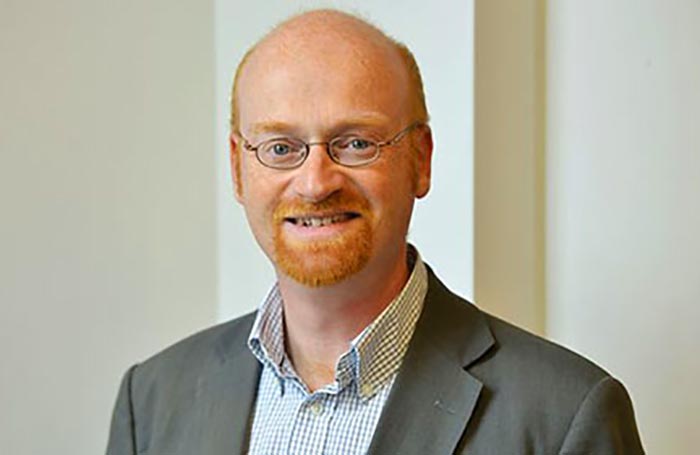
An Interview with Mark Vernon
Transcript
Nikos: Welcome to the Beshara Magazine podcast, where we aim to provide a forum for leading edge thinkers who look at the contemporary world from a perspective of unity. On our website you will find nearly two hundred articles by scientists, economists, artists, ecologists and followers of spiritual traditions who are focused on oneness and integration rather than fragmentation and discord. I’m Nikos Yiangou, podcast editor of the magazine, speaking to you from California, and I’m joined by our executive editor, Jane Clark, who is based in Oxford in the UK.
Jane: Hello Nick.
Nikos: Today we’re talking to the British author and psychotherapist Mark Vernon about his new book on the visionary poet and artist William Blake with the exciting title of Awake! William Blake and the Power of the Imagination. With a background in theology, physics and philosophy, Mark’s previous books have included A Secret History of Christianity, based on the ideas of Owen Barfield, and Dante’s Divine Comedy, which gives a canto-by-canto analysis of this epic poem designed to open up its meaning for the modern reader. Mark has also been a regular contributor to the Beshara magazine. We talked to him at his home in South London.
Jane: Hello Mark
Mark: Hi there. Jane. Lovely to join you.
Jane: First of all, a question about the book. You aren’t the first person to write about Blake by any means. So, what inspired you to do this? And what is it that’s new or different about what you’re trying to bring out in the book?
Mark: It’s partly a sentiment that you and I know well because of our involvement with the Temenos Academy, this wonderful organisation where the founder, Kathleen Raine, was particularly keen that you don’t just learn about these essential texts and these great figures, these inspired people, but you learn from them. So you kind of sit at the feet of them as well as study them in a historical context or their reception. You do that as well, but it’s really because there’s a sense that these people have got something to communicate to us, transmit almost. And so, there was that general sense.
But in particular, I wanted to draw out two facets of Blake, which I think get routinely sidelined now. One is that I think he was a very sharp thinker. He had a very accurate and clear critique of the ideas that were beginning to really bed down in his time and have really shaped our times in the modern Christian West. But also, I wanted to draw him out as a religious figure, and I think in two ways that also gets sidelined. One is, you know, he was a chap that lived with what we would call in shorthand ‘the supernatural’. He lived daily with perceptions of angels and other entities, the divine, the dead. I was very fascinated by that and didn’t want us to explain it away, which basically these days means pathologising it. We could say more about that because I’ve worked in a psychiatric hospital, so I know that that is worth doing sometimes, but I felt not in relation to Blake.
The other side of it is that I think he’s a very clear Christian mystic, and I wanted to draw that out because I think he’s a very important voice again in Western Christianity since the Reformation, connecting dissenting Protestant traditions back to a mystical core, which again very often gets sidelined, certainly in writing about Blake but also even more broadly in Western Christianity. So, it’s those two/three things which motivated me to write the book.
But also, you know, Blake is a person who a lot of people have affection for, and they know a line or two – ‘to see a world in a grain of sand’ and so on. Or maybe they’ve sung Jerusalem – the hymn – and they love that, and they feel there’s something in that but quite where to go next is often not clear. If you just pick up the collected works of Blake and so on and dive into a long poem, it can be very discombobulating at first. So, it’s to help people befriend Blake and not just appreciate him from afar.
Nikos: I think that’s a great introduction to Blake, Mark. I’ve noticed you’ve also subtitled your book William Blake and the Power of the Imagination. You’ve mentioned the imagination there. Blake encourages the development of imagination as a way to perceive deeper realities. As you said, he sees angels and otherworldly beings by means of imagination, but not in the sense of imaginary or fantasy or in any pathological way, but rather as a deeper way to understand the nature of reality. It’s the interplay of imagination and perception that yields true vision, so to speak. I’m reminded of something that Ibn ‘Arabi says, who I know you have talked about as well – that the realised human has two eyes with which they see. One is the eye of reason, and the other is the eye of imagination. It’s these two – the one that discriminates and the one that unifies and re-attaches matter to meaning – that really bring about this idea of true perception. Can you say some more about the central role of imagination in Blake?
Mark: I’m sure that there are lots of similar sentiments about the imagination – well, stronger than sentiments – the understanding of the imagination between Blake and Ibn ʿArabi. I think that what Blake, in the Western context, is saying now is that the imagination is not something that I might have or you might have, whilst a creative person probably has a little bit more of it, as if it’s a private possession that we beam out across an otherwise inert cosmos, hoping to stir it into some sort of life through our capacities. No. I think Blake thought that the imagination has us and that we move in a great sea of imagination. He says that imagination is reality itself. And our challenge is to collaborate, align ourselves, with that imagination. Even a narrow view of reality, even the kind of inner mechanistic, reductive, materialistic perception of reality which can dominate now, is an imaginative achievement in a funny sort of way, because it’s not self-evidently the case that the world is like that. So to organise a whole culture around that perception is an enormous imaginative undertaking.
But for Blake, sadly, it’s a reduction of what we can perceive in the way that you describe so beautifully. He wants us to realise how our imagination – no, how the imagination in us, I should say (watch your language!) – has been kind of directed in this narrow way – as he puts it: ‘as if we see through the chinks of a cavern’ – in order that that understanding can be cleansed, can be purged, and we can therefore be released from it. And then when the doors of perception are cleansed, the imagination becomes our ally again, in the sense of enabling us to make contact with – well, with the ‘infinite’ as Blake puts it in the famous remark. But the infinite for him is known in the minute particulars. Hence the idea that you ‘see a world in a grain of sand and heaven in a flower’. That’s what the imagination can tell you.
Another way which he describes it is that when you look through a window, you don’t look at the glass. You don’t sort of say: oh, what clean piece of glass, or has it got a bit of a bubble in it or whatever? No. You look through the window, and the window therefore transmits reality to you. The imagination is a bit like that as well. It exists somewhere in between the subjective and the objective. Even putting it like that is slightly to read back into Blake’s time, because the two words didn’t even have that meaning at the time. The separation between exterior and interiority hadn’t been fully, imaginatively achieved. Blake is at the time when it’s still in the air to feel that to know the truth of something is to know it imaginatively. Rather than the task which we have now, which is overcome our prejudices about imagination and realise that it’s not a faculty that we have, but something that has us and that we can collaborate and align with. We’re actually already doing that anyway, but there’s a sort of resistance to the imagination now, rather than an embrace of the imagination as divine, as Blake would also put it.
Nikos: So I think what you’re saying is that there’s an ontological reality to imagination. It’s not something that’s just pure subjectivity that individual people express, and that you hope to communicate to someone else who has their own subjectivity. But there’s a deeper connection in all of this. You mentioned this wonderful quote:
If the doors of perception were cleansed everything would appear to man as it is, Infinite. For man has closed himself up, till he sees all things thro’ narrow chinks of his cavern.
You’ve already referred to this, but just to dig a little deeper. How do we open these doors of perception? What is Blake’s thinking around this?
Mark: I think in the first instance, it is to trust your inklings. Trust what comes to you through the chinks of the cavern and dwell with them and move more into what can seem like subtle perceptions at first, and to test those perceptions with the powers of discernment. By which I mean, reason. With Blake, sometimes people feel that he was anti-rational. He wasn’t at all. He just understood that reason needs to discern this wider resonance, this wider sympathy that we have with reality in order to kind of focus it and to help us travel more deeply into it.
Also, I think another really important element for Blake is that he doesn’t quite use this expression, but it’s a well-known expression from the New Testament: ‘that by their fruits you shall know them’. So, [you can ask]: is this expansive? Is this taking you towards an enriched vision of reality as opposed to closing it down or do you feel locked in a kind of private fantasy? A figure who I think understood this in a way from a very different world was Albert Einstein. Einstein – well, it’s well known that he remarks that the imagination was given to us. So again, [for him] it’s given to us, not something we conjure up. And it was given to us in order to explore the cosmos. He famously imagines what it’s like to travel on a light beam. At first pass, you might think that’s what a child does, but he, luckily for the rest of physics, wasn’t embarrassed by that, but went more and more into it and then was able through, you know, other powers of imagination and understanding and discernment eventually [come up with what] became the Special Theory of Relativity. And I think that that is an actual story of how Blake – Einsteins a genius so we’re not all going to come up with a Special Theory of Relativity – but the broad thrust of that, the broad journey, is one that Blake wants us to undergo as well.
Another parallel for me is that I work as a psychotherapist, and I think that what in psychotherapy is called ‘the transference’ and ‘the counter transference’ give you intimations – felt intimations – of what might be going on in the room. That is not like a forensic readout but it’s a powerful guide when you can learn to become more attuned to it. And that is to use the imagination, relating to what you’re sensing in your body. Blake’s quite clear that it all begins with our empirical senses, but if we think that the empirical is all, that’s when we’re cutting off imaginative possibilities.
So, the short answer is to trust what you might half sense already. Develop some kind of practice that can amplify it. Of course, artists do this – that’s what it is to be an artist. But there’s other possibilities. See where it leads and test it. Always test it.
Jane: So, you’ve mentioned already his critique of the sort of very narrow kind of mechanistic science that was becoming more common in his day. He believed in all kinds of sentience; he did not believe in the mechanical view, but he believed in the sentience of animals and in all life, and that everything in nature is interconnected. So, I wonder if you had a comment about the passage of science from narrowing down in his day to what’s happening now, when it seems to be actually broadening out and these ideas are entering into the into the scientific realm again.
Mark: Yeah, there’s something quite specific, I think, that Blake got on to because, sure, he didn’t like the idea that the cosmos was being imagined mechanically, although that has a powerful aspect to it. In particular, it enables technology. And in a way he was quite a technician himself. If he went into his workshop with Catherine there as well, it would have been, I think, like a chemist’s laboratory. There would have been metal plates and acids and all sorts of other potions hanging around that are required to make prints as he and they did. But it’s when that becomes what he calls ‘single vision’ – when it becomes the only way that you view reality – that the real trouble sets in. I think that he felt that it’s really when you believe single vision as if it is the whole of vision that the trouble sets in. Single vision has its uses, but it’s when you take that to be reality itself. And so he is really more accurately against treating abstractions as if they are reality, which he felt was the seductive power of Newtonian physics.
Again, it’s not just Blake who said this. Einstein said that Newtonianism gripped the scientific imagination for way too long. It wasn’t until he popped up and published his papers in 1905 that perhaps that began to be shaken and to be seen even within the strict imaginative approach of science that it wasn’t adequate. A lot of early modern scientists, early quantum physicists particularly, were onto this. There’s a rather wonderful book written by Werner Heisenberg – he of the ‘Heisenberg Uncertainty Principle’– called Physics and Philosophy. And there what he says is that no one should imagine that what science captures in its formula, its laws and so on, is reality itself. It’s really not. It’s an abstraction from reality that then becomes useful when you want to build other abstractions from reality, also called technology, which can be very practically of benefit.
But Heisenberg says that we need language to stay in touch with reality. He says that we need words like ‘soul’, like ‘minds’, like ‘God’, because although they’re disputed, they have a kind of energetic quality that can keep us in contact with things as they are, in themselves. Heisenberg doesn’t talk about the imagination himself. But language is another way that the imagination functions in us, is manifest in us – when we’re trying to reach for the right words, when we’re trying to contemplate meaning, when the prose writer or the poet puts words together in order to act as a kind of portal to help us to stay in touch with reality.
In a way, modern science has it became ontologically destabilised, say, by quantum theory. Famously, no one quite understands what quantum theory means in terms of the way reality is itself. And I think that Blake would say, well, that’s because it is an abstraction. But we can know what reality is in itself, which is through our engagement with it. Again, it’s quite well known that amongst these early quantum physicists like Heisenberg, like Schrödinger, they actually resorted to the great mystical traditions – particularly of India, I think because the Christian tradition in the West had got lost. But they said, these already existing perceptions of reality can be used to help us understand what we’re seeing more narrowly in the quantum world.
So I don’t think it was that the quantum world suddenly proves these Indian perceptions of reality. It’s the other way round, actually – that the quantum of itself is inadequate but you can use these particularly mystical perceptions of reality to give the quantum abstraction a place. People like physicists and philosophers are less keen on that now, partly because I think these disciplines have become so siloed; it must be a pretty rare thing now for a philosopher of science to also be well-versed in Vedantic philosophy. But I think that that’s the direction of travel that Blake would have us go. I hope that some of the imagery and metaphor that he comes up with about the way things are connected [is useful now]. He’s very keen on how the difference between, say, the centre and the circumference collapses in what he calls eternal vision. These images might help us to be able to receive what the science is, has destabilised, and give us a worldview again – a mystical worldview, essentially– that can be in touch with reality and be comfortable with the abstractions of science. I hope that’s not too tortuous a way of putting it.
Jane: So going on from that and the matter of language. One of the things about your book is that it is full of fascinating new insights, such as the fact that Blake saw music and poetry as absolutely interconnected and would sometimes perform his own work as music. And of course, he also illustrated his poetry with images. So can you say more about the impact of this kind of multimedia part of his message?
Mark: The music side is very enticing because of course we don’t have any record at all of the tunes that he turned. But we do have records of how in soirées – you know, this is the era of the Blue Stockings, and particularly earlier in his life, he attended many of these evening and afternoon [soirees]. And he was acquainted with the great figures of London, particularly one host called Mrs. Matthews. She said that Blake’s musicality was so striking that she invited professors of music along, and they all agreed that he could compose a melody that was very engaging. He lived in a time of great music – the high music of the court, Handel and so on. But also of hymn writing – he lived just after the Wesley’s, so it was a great time of lyrical song of all sorts and kinds, to say nothing of the songs of the street which no doubt he was versed with as well. Some of his plates survived because he illustrated books of English songs, and they’re quite bawdy songs, some of them. So he was very much immersed in this musical world as well as the wider world of the artist, of the creative person
Much as we now can enjoy the poetry alongside the imagery and how he very explicitly weaves the imagery and the poetry together. If you look at one of his books, like The Songs of Innocence and Experience, there are flames and leaves and trees and people and nymphs and flowers and so on, moving often amongst the words themselves, not just alongside the words to. So, this is clearly an expression of how a poem for him is a living entity. It transmits life, soul, vitality, and because of the, as you say, the multi-faceted mind that Blake had, he wanted to draw that out, to communicate that whole experience that was his experience. He devised particularly these methods of printing so that he could produce these books that look like illuminated manuscripts, he hoped cheaply and successfully. He wanted to be commercially successful. He wanted his work to get out there, much more than it did.
So, he was partly driven by the challenge of how you can make books like that cheap, affordable. That was part of the task with the printing innovations. But he was also driven by how he experienced these poems, how they were alive in him. And the imagery was very much part of that, necessary to that. Sometimes it amplifies the words. Sometimes it’s in a sort of distinction, a resonance, disharmony with the words. Another famous part of Blake’s way of describing things is the talk always of contraries. So how they’re almost like the poles of a magnet – the words and the image can be, on the page, like the poles of a magnet, creating the field of the magnetism. So the imagery and the words can create a kind of field that’s sort of buzzing in front of you when you read his texts. It’s always worth making sure that you at least look some of the time at the text with the imagery as well, not just a production of his complete works in prose alone.
Nikos: You mentioned one of his works, Innocence and Experience. He celebrates innocence, doesn’t he, as a way to counterbalance the harshness of experience. Though not innocence as ignorance or anything like that – rather an opening of the soul to a sense of wonder and joy. So, from what I’m understanding, innocence can thus be a partner to wisdom in providing a more cohesive perspective on life. So can you say a little bit more about how this is still applicable today, given he was dealing with similar afflictions of modernity in his era that lead so many to more of a sense of nihilism and a sense of meaninglessness.
Mark: Yes, he explicitly says innocence dwells with wisdom and never with ignorance. So it’s an innocence that’s not a kind of naivety, but it is innocence that is an openness, a constant capacity to try and stay alert to that which is most vital, that which is most soulful and that which is most good as well, even amidst various kinds of horror, which he knew well. You know, he lived in a time where England, Britain, was at war pretty much all his life, or threatening a war against the French, maybe the Dutch Republic.
So he’s saying these things knowing perfectly well that many times grow very dark. And he struggled too; he talks about his nervous fear quite often. If you’re open, you’re also vulnerable. But the vulnerability is worth tolerating and learning how to manage, because if you lose this openness, this innocence, again, maybe related to what we were saying before, you lose touch with reality. You close off. It’s another way in which we shut ourselves down. I think this has got relevance today because, to take another issue, of the issue of justice. [This is] a very, very important and valuable ideal today. But there’s always a risk with justice that again, it’s like it can become an abstraction. And so it can take us away from the human that it’s also supposed to be protecting.
That’s rather abstractly put. But you know it when rights conflict. When you have wars of justice, there can be a loss of really what you’re fighting for, a loss of the vision in the combat that goes on. And I think in the so-called culture wars, that’s partly what’s happened now. What I think innocence helps you to maintain is the sense that whatever is most immediately in front of you, it’s [just] the most maybe pressing or manifest side of a wider concern, a wider life, a wider vitality – the transcendent, really – that the particular squabble you might be involved with, or quite rightly fighting, is but a part of.
Let me be a bit more try and be a bit more specific. You know, one of his poems in The Songs of Innocence and Experience? – well, actually, it’s two poems; it appears in both collections, the innocence one and then the experience one – is about chimney sweeps. Blake was perfectly clear that child labour, the sweeps, was a horror, and a very widespread horror that horrified other people in Georgian London as well – exacerbated by government policy, for example, because you got taxed on the number of chimneys that you had on your house. And so the temptation to have more flues going up one chimney was very incentivised. And that meant you needed more chimney sweeps to clean out all those flues. So it was a systemic problem. But both of Blake’s poems, whilst evidently aware of the horror, want to maintain a sense of what we’re actually fighting for here, which is the innocence of the kids sent up the chimneys and what their souls might be singing to us from beneath the encrustations of soot on their bodies.
So what are we fighting for? Innocence helps us to return to that, and that keeps us human even in the midst of battles that otherwise might be necessary to fight. If you lose touch with that side of life, then you risk becoming, with your enemy – well, dragging each other down, if you like, and everyone loses their humanity in the process.
Jane: So you get stuck in an oppositional problem, rather than looking at the essence of what’s going on.
Mark: Yeah. I think this is a real problem in a kind of flatland world like ours where the kind of transcendent element, the vertical, if you like, isn’t part and parcel of everyday culture anymore. It’s remembered when you walk into a Gothic building and your eyes get drawn up and you suddenly think: goodness me, what vision was it that built this building, when I live all my day in rather utilitarian flatland kind of buildings. Returning to this kind of freshness of innocence, I think is a really important remedy to an otherwise very functional world in which we live.
Nikos: Perhaps this is a good lead into my next and maybe final question about his Christianity. Blake views Jesus as a revolutionary figure advocating for forgiveness – a concept that I think you or maybe someone else has said was absent in pre-Christian philosophy, interestingly enough – that all people would ultimately be saved through forgiveness. He also has a mystical understanding of Christianity, emphasising not so much that Christ died for our sins, but to reveal the divine presence within humanity in the here and now. I’d love to hear more about your thoughts about how Blake framed his understanding of Christianity, and how that was important to him.
Mark: I think it was absolutely central. And moreover, I think he was quite orthodox. It’s quite common to qualify Blake’s Christianity with the word ‘heterodox’ but I think he was actually quite orthodox. And this makes sense when you factor in the mystical element.
So on the forgiveness point. Yes, if you read the pages of Aristotle, you won’t find reference to forgiveness. You’ll find reference to justice – not meant in the modern sense of the individual and their rights, but the justice of the cosmos as a whole. The balance, the harmony of the cosmos as a whole. Forgiveness, were Aristotle to consider, it would be an offense to that vision of the cosmos. And that’s quite a common pre-modern understanding of things. So if there were one thing that Christianity offers in the world of ideas – I mean, it’s offered a lot more than just this, but forgiveness would certainly be on the list, because it’s an affront, forgiveness, really. It’s also very hard to do unless you’re divine. So Blake was really on to that.
But I think he’s also pushing back against how he felt Christianity had become, which I still actually feel it often is in the Georgian world and in our world, which is a sort of moral creed. He talks about ‘the wastes of moral law’. So when a religion becomes a moral creed, it wastes life. And you see this in the number of Christians that you meet where a dominant feeling they have is guilt, for example – this sort of constant self-checking. Am I doing the right thing? And then again, with Christian disputes, the ones that are most fiery are all about details of moral code. It’s really a complete disaster for Christianity, and I think that’s one of the reasons why it puts so many people in the West off now. It just doesn’t feel life giving. And then you get this sort of reactionary Christianity a bit now where people are saying: but we need Christianity to protect ourselves against, you know, Islam or these kinds of battles which people feel are going on as well. But that’s only going to go one way, which is to turn up the heat of the battle. It’s not going to be liberating at all.
Blake’s Christianity is central. One way of putting this is to flag up the work of someone else who will be known to many listeners, I’m sure, Susanne Sklar. She’s a very great Blake scholar, and she has made the point – and tracked it down a bit as well – that Blake would have been informed by Eastern Orthodoxy by two sorts of vectors. One was that his mother was a Moravian. And the Moravian Church, coming from Eastern Europe, took its authority from Orthodox traditions rather than, say, Catholic or Protestant traditions. But then also Suzanne has shown that Blake would have known the Orthodox Church in London. This actually is not a great surprise because of some of his images; he painted a picture of the Virgin and Child, for example, that clearly is inspired by iconography – orthodox iconography. But he would have known Orthodox priests in London as part of the milieu in which he lived.
And the point about this is that it makes sense of why, when you’ve got a bit of theological awareness, you see that Blake seems to quote Church Fathers. One of his early works is called There Is No Natural Religion. And the final plate in this short pamphlet is a full page [given over to] the line ‘Therefore God becomes as we are, that we may be as He is.’ That is the central expression in the early church of the meaning of the incarnation, the heart of Christianity. ‘Therefore God becomes as we are, that we may be as He is.’ It rings like a bell across the early Christian centuries, and many, many great orthodox theologians express that in some way or another, including Gregory of Nyssa, who’s called ‘the Father of Orthodoxy’.
I think that Blake understood that the divine presence is absolutely immanent within us. He says, ‘I’m not a God afar off. I’m a brother and a friend. I live in you, and you dwell in Me. Mutual in love divine.’ To many Christians, informed by particularly the Reformation, that can seem like a kind of heresy, especially when it invites the imaginative exploration of that intimacy with the divine. Which, again, you see in earlier church traditions, for example, in the way that the Bible was read, when it was read allegorically and the imagination was applied to the texts, because texts were again seen as living only when you applied the imagination to them. Otherwise they become sort of static codes.
So, yes, I think Blake’s Christianity was, you might say, radically orthodox in the sense that he was part of this recovery of these older ways of engaging with texts, understanding the nature of the incarnation. It’s to my mind one of the reasons why he’s so important today because for me it’s that kind of Christianity – very reduced single vision kinds of Christianity – [that Blake aims to correct].
Nikos: Wonderful. Thank you, Mark, very much. That that wraps up my questions. Jane. Anything else from you?
Jane: I just wondered if Mark had got anything else he wanted to say. I mean, we could go in all sorts of different directions from here, but is there anything that’s popped up that we’ve not asked you that you’d like to say about Blake?
Mark: I think that there is a more philosophical side too. He read figures like Adam Smith and David Hume and John Locke and others. He doesn’t write treatises in response, but can kind of cut through what they were saying in a couplet or in a quatrain. Particularly John Locke, who had a massive influence on Georgian thought and still shapes British empiricism, as it’s called today. The idea that our minds are isolated islands of consciousness, hoping against hope to reach out and make contact with other islands of consciousness. Blake was very against all that understanding of what it was to be human. His anthropology, I think, is so necessary [today].
And maybe also just to say that he does kind of offer, I think, in his poetry, almost an education into this wider gift of the imagination. He talks about different modes of dwelling in the world. I’ve referenced several times already ‘single vision’ and ‘Newton’s sleep’, as he famously puts it. But there are different kind of levels, if you like, of imaginative awakening. One is ‘generation’ and then he talks about how that can tip into ‘regeneration’, and then you get this state known as ‘Beulah’. And Beulah is on the threshold of eternity, which is the re-incorporation of divine vision. So he’s offering a kind of life journey, I think. And I hope that’s one of the things that comes out in the book as well.
Nikos: We definitely congratulate you on your book, Mark, and we should remind our listeners that your book will be available in the UK in June and in the US in September. The book is called Awake! William Blake and the Power of the Imagination.
Mark: Well, thank you to you both. It’s lovely to join you at Beshara once again, [which is very much, you know, part and parcel of this awakening, I hope. So thanks for all you do as well. It’s lovely to talk about these things because it’s often in the dialogue, you know, that you’re reaching for ways of trying to express things and the imagination is active and alive. So I do appreciate talking.
Jane: Thank you.
The text of this article has a Creative Commons Licence BY-NC-ND 4.0 [/]. We are not able to give permission for reproduction of the illustrations; details of their sources are given in the captions.
More Podcasts
Podcast Interview: Christof Koch: The Neuroscience of Consciousness
The eminent physicist talks about his research in the nature of consciousness, its therapeutic applications and his own experience of non-dual states whilst taking psychedelic drugs. ‘I have to try to integrate what I experience with everything else I know about the world, including the scientific method.’
Podcast Interview: Cynthia Bourgeault: The Christian Contemplative Tradition
The radical theologian talks about Jesus as a wisdom teacher and a master of the transformation of consciousness, the practice of ‘self-emptying’ and Centering Prayer, her understanding of Mary Magdalene, and the transitional nature of our times: ‘We’re stuck in a very, very difficult birth canal…
Interview: Satish Kumar: Peace Is Possible
The ecologist and activist talks about his commitment to peace and peace-making, and understanding that peace is not just an absence of war but a positive, harmonious way of living with three aspects: peace with one self, peace with society and peace with nature.
Interview: Clare Carlisle on Transcendence for Beginners
The distinguished biographer and professor of philosophy explores what it means to live a ‘good life’ and the idea – as expressed in the lives of Spinoza, George Eliot and the Indian sage Ramana Maharshi – that we are all ‘modes of the infinite’.
Interview: Professor Mark Williams on Mindfulness Meditation
The Oxford psychologist talks about the development of MBCT, how it can help us look upon ourselves with a compassionate gaze and find peace in a chaotic world. ‘If we live in a universe which is, as David Bentley Hart’s book says, All Things are Full of Gods… then we can’t distinguish a secular practice from a sacred practice.’
Interview: Alastair McIntosh: ‘Riders on the Storm’
The Scottish writer, theologian, and environmental activist talks about climate change as fundamentally a spiritual crisis – a wake-up call inviting us to understand the world as a manifestation of the divine. ‘This is where the evolution of conscious life on Earth has brought the planet to.’
FOLLOW AND LIKE US
@Beshara_Mag








——————————————
——————————————
——————————————
FOLLOW AND LIKE US
@Beshara_Mag
If you enjoyed reading this article
Please leave a comment below.
Please also consider making a donation to support the work of Beshara Magazine. The magazine relies entirely on voluntary support. Donations received through this website go towards editorial expenses, eg. image rights, travel expenses, and website maintenance and development costs.
FOLLOW AND LIKE US
@Beshara_Mag
READERS’ COMMENTS
0 Comments